7 Tested Cattle Management Systems That Actually Work in 2026
Discover seven cattle management systems that actually work in 2026. Learn about their proven effectiveness and how they can enhance your farm operations.
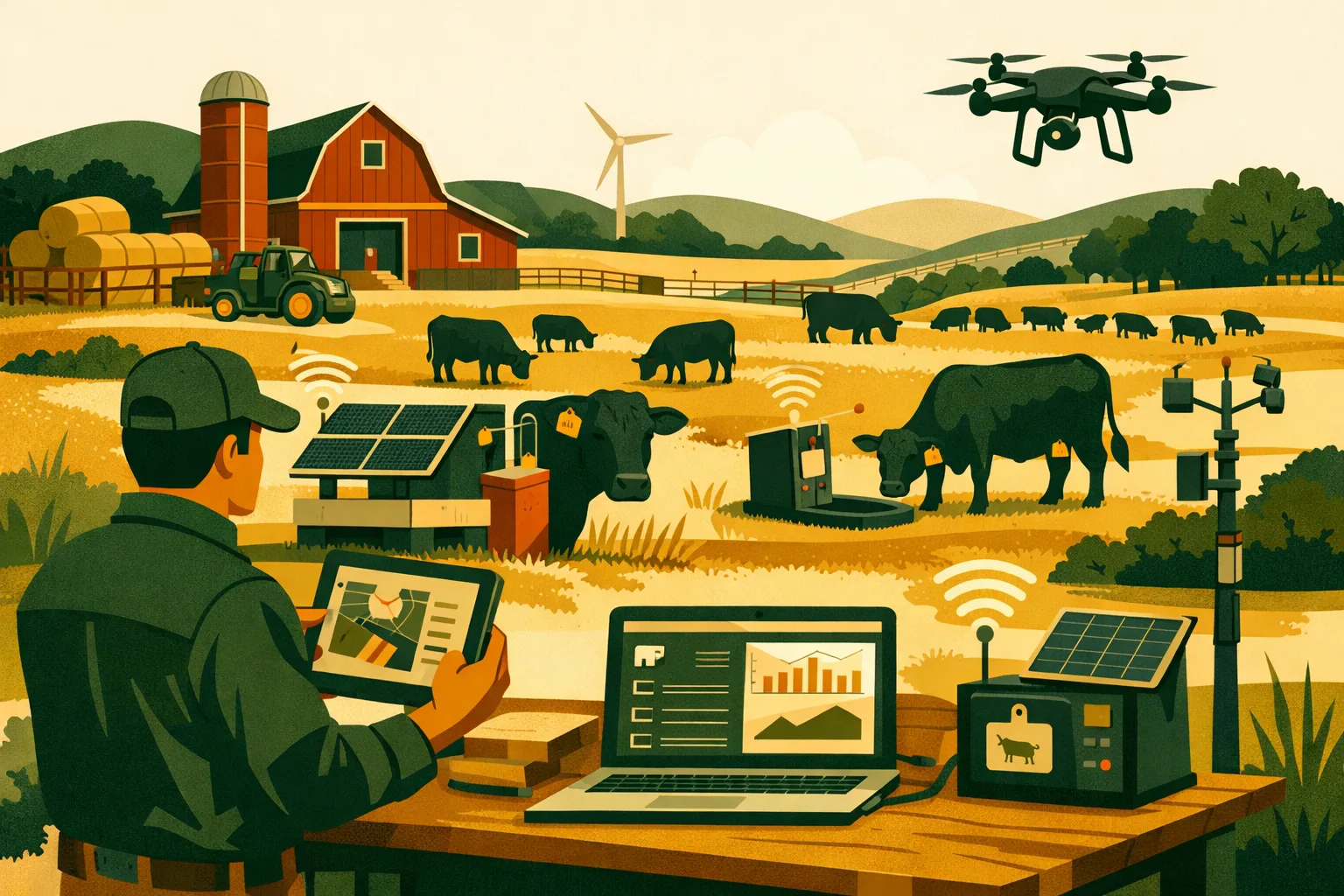
Margins are tighter, labor is harder to schedule, and cattle records are no longer just “nice to have.” If you cannot quickly answer which animals were treated, which pasture is carrying too much pressure, which calves are underperforming, or what inventory is tied up in feed and inputs, you are making operational decisions with gaps. The right cattle management system turns daily ranch work into usable management data without burying your crew in admin.
This guide is written for commercial ranches, cow-calf operators, backgrounders, stocker operations, feedlot-connected businesses, and diversified farms running cattle alongside crops or other livestock. It compares seven practical systems ranchers are using in 2026, where each one fits, what it costs to implement in time and process change, and how to choose without overbuying software your team will not use.
What a Cattle Management System Should Do on a Commercial Operation
A cattle management system is more than a digital notebook. At commercial scale, it should help you capture, organize, and act on the information that drives profit and risk control.
For most ranches, the core functions include:
- Individual animal records
- Herd inventory by class, location, and ownership group
- Breeding, calving, pregnancy, and weaning records
- Health treatments, withdrawal tracking, and vaccination history
- Weight records and performance tracking
- Pasture movement and grazing notes
- Feed, mineral, and supplement records
- Task management for staff and contractors
- Equipment, supplies, and input inventory
- Reporting for buyers, lenders, vets, auditors, and internal management
The right system depends on your operation. A 150-head cow-calf ranch needs something different from a 5,000-acre diversified farm running cattle, hay, row crops, custom work, equipment crews, and hired labor.
If you are also evaluating full-farm tools, see FarmsFlo’s related guide on farm management software and the practical breakdown of livestock record keeping.
Quick Comparison: 7 Cattle Management Systems for 2026
| System | Strong Fit | Main Strength | Watch-Out | Typical Setup Time | Cost Profile |
|---|---|---|---|---|---|
| FarmsFlo | Commercial farms and ranches needing cattle records plus tasks, inventory, equipment, and team workflows | Whole-operation visibility across livestock and farm operations | May be broader than needed for a very small single-species herd | 1–3 weeks for a structured rollout | Subscription-based |
| CattleMax | Cow-calf and seedstock operations focused on individual cattle records | Strong cattle-specific recordkeeping | Less focused on whole-farm operations outside livestock | Several days to 2 weeks | Subscription-based by plan |
| AgriWebb | Grazing-based livestock operations managing paddocks, movements, and field activity | Pasture and livestock workflow mapping | May require disciplined mobile entry from crews | 1–3 weeks | Subscription-based |
| Herdwatch | Livestock farms needing simple mobile records and compliance-oriented tracking | Easy daily record capture | Regional fit may vary depending on compliance needs | Several days to 2 weeks | Subscription-based |
| Farmbrite | Diversified farms with livestock, crops, customers, and sales records | Broad farm business coverage | Can require configuration to avoid clutter | 1–3 weeks | Subscription-based |
| Ranch Manager | Ranches wanting detailed animal records, often with desktop-style control | Detailed herd history and reporting | Workflow may feel less modern than mobile-first tools | 1–2 weeks | License/subscription varies |
| CowManager | Dairy or intensive cattle operations prioritizing heat, health, and behavior alerts | Sensor-driven monitoring | Hardware and training investment required | 2–6 weeks including hardware | Hardware plus service costs |
1. FarmsFlo: Whole-Farm Cattle Management for Operators Who Need More Than Herd Records
FarmsFlo is built for commercial farm and ranch operators who need livestock data connected to the rest of the business: people, tasks, inventory, fields, equipment, purchasing, maintenance, and operating plans.
For a cattle operation, the practical problem is not just recording that a calf was treated or a group moved to a different pasture. The bigger challenge is making sure the right employee knows what to do next, the vaccine is in stock, the chute crew is scheduled, the mineral order is not forgotten, and the manager can see what work was completed without calling five people.
That is where FarmsFlo fits well.
Where FarmsFlo Works Best
FarmsFlo is a strong choice for:
- Cow-calf operations with hired labor
- Mixed crop and cattle farms
- Ranches managing multiple locations
- Operators tracking cattle, feed, supplies, equipment, and fieldwork together
- Farm managers who want accountability without building spreadsheets
- Businesses transitioning from paper notebooks, whiteboards, and text messages
If your operation has cattle plus hay, grazing ground, feed inventory, equipment maintenance, spraying, fencing, seasonal labor, or contractor work, a livestock-only system may leave gaps. FarmsFlo helps centralize the operational layer so cattle tasks do not sit in a separate silo from the rest of the farm.
Key Capabilities for Cattle Operations
For cattle management, FarmsFlo can support:
- Herd and group tracking
- Livestock tasks and work orders
- Health, handling, and treatment workflows
- Inventory tracking for medicine, tags, feed, mineral, fuel, and supplies
- Team assignments and completion notes
- Equipment and facility maintenance tracking
- Calendar-based planning for breeding, calving, weaning, preg-checking, and processing
- Operational reporting for managers and owners
This is especially useful when the cattle enterprise shares labor and equipment with crop acres. For example, a ranch manager can schedule cattle processing while also seeing whether the same crew is committed to hay work, spraying, equipment repairs, or trucking.
For more on managing operational workload, read FarmsFlo’s guide to farm task management.
Practical Cost and Time Estimate
A realistic FarmsFlo rollout for a commercial cattle operation usually requires:
- Planning: 2–4 hours to define herds, locations, users, inventory categories, and workflows
- Initial setup: 1–3 days depending on how much historical data you import
- Crew training: 1–2 short sessions for managers and field staff
- Adoption period: 1–3 weeks to make daily use consistent
The biggest implementation cost is not software setup. It is deciding which records actually matter and making sure the crew enters information the same way every time.
When FarmsFlo Is the Right Pick
Choose FarmsFlo if you want a cattle management system that also handles the operational details around the cattle. It is especially strong when your biggest pain points are communication, accountability, inventory, task completion, and keeping multiple enterprises aligned.
2. CattleMax: Cattle-Specific Records for Cow-Calf and Seedstock Herds
CattleMax is one of the more established names in cattle recordkeeping. It is designed specifically for cattle producers and is commonly used by cow-calf, seedstock, and small-to-mid-sized commercial beef operations that want structured animal records.
If your main priority is detailed animal-level information, CattleMax deserves a serious look.
Where CattleMax Works Best
CattleMax fits operations that need:
- Individual cow, bull, and calf histories
- Breeding and calving records
- Pedigree and seedstock data
- Health events and treatment records
- Weaning and performance records
- Sale and culling notes
- Herd reports for decision-making
It is particularly useful for managers who want to make culling, replacement, and breeding decisions from reliable historical records rather than memory.
Strengths for Commercial Ranchers
CattleMax’s main advantage is focus. Because it is cattle-specific, the record categories make sense for beef producers. A cow-calf manager can quickly track calves by dam, review calving history, evaluate reproductive performance, and look at which cows consistently perform.
For seedstock operations, structured records also help with buyer communication and herd documentation.
Practical Cost and Time Estimate
A commercial operation moving from paper or spreadsheets should expect:
- Data cleanup: 4–12 hours if historical animal records are inconsistent
- Import/setup: Several hours to a few days
- Training: 2–4 hours for managers and primary users
- Routine use: Daily or weekly entry depending on operation style
The main time investment is animal data accuracy. If tag numbers, birth dates, dam records, or status information are messy, clean that up before importing.
When CattleMax Is the Right Pick
Choose CattleMax if your primary problem is cattle records, not whole-farm workflow. It is a strong fit for ranches that want better animal history, reproductive records, and herd reports without building a broader operations management system.
3. AgriWebb: Grazing and Livestock Operations With Strong Pasture Visibility
AgriWebb is a farm management platform with a strong livestock and grazing focus. It is useful for operations that manage cattle across paddocks, fields, grazing cells, or multiple properties.
For ranches where pasture utilization and livestock movement are central to profitability, AgriWebb can help turn field activity into usable records.
Where AgriWebb Works Best
AgriWebb fits:
- Rotational grazing operations
- Grass-based beef systems
- Ranches managing multiple paddocks
- Operators who need mobile field records
- Managers who want map-based pasture visibility
- Businesses tracking livestock movements and grazing history
If your team spends a lot of time moving cattle, checking water, monitoring forage, and planning grazing rotations, map-based systems can be easier to use than spreadsheet-style herd logs.
Strengths for Ranch Operations
The key value is linking cattle activity to place. That can include movements, grazing periods, observations, pasture notes, water issues, fencing work, and staff tasks.
For a commercial ranch, this helps answer practical questions:
- Which pastures have been grazed recently?
- Where are specific groups located?
- Which paddocks need rest?
- Which water points or fences need attention?
- What grazing history supports next season’s plan?
This matters because pasture records often live in someone’s head. When that person is unavailable, the operation loses visibility.
Practical Cost and Time Estimate
A realistic setup includes:
- Property mapping: 2–8 hours depending on number of paddocks and locations
- Livestock group setup: 1–3 hours
- Team training: 1–2 mobile-focused sessions
- Adoption period: 2–4 weeks during active grazing
The biggest success factor is mobile discipline. If pasture moves are not entered when they happen, the map loses value quickly.
When AgriWebb Is the Right Pick
Choose AgriWebb if grazing visibility is one of your highest priorities. It is especially useful when cattle location, pasture history, and field activity are harder to manage than individual animal records.
4. Herdwatch: Simple Mobile Livestock Records for Daily Use
Herdwatch is a livestock management system designed around easy mobile record entry. It is commonly associated with cattle and livestock farms that need quick recording for daily events, compliance, and herd activity.
For commercial operators, the appeal is simplicity. A system that is technically powerful but too slow for the crew will fail. Herdwatch focuses on practical record capture.
Where Herdwatch Works Best
Herdwatch is a good fit for:
- Farms wanting a mobile-first livestock app
- Managers who need quick treatment, breeding, calving, and movement records
- Operators who want straightforward compliance documentation
- Teams that are replacing notebooks and pocket diaries
- Livestock farms where ease of use is the deciding factor
It may be especially appealing where regulatory or assurance program records are part of daily management.
Strengths for Cattle Operations
The main strength is fast entry. For cattle work, timing matters. Records are most accurate when entered close to the event: at treatment, at calving, at breeding, at movement, or shortly after a handling session.
A simple mobile workflow can improve consistency because it reduces the need to “catch up” from memory at the end of the week.
Practical Cost and Time Estimate
A typical implementation may involve:
- Account setup: Same day to a few days
- Animal data entry/import: Several hours to several days
- Mobile training: 1–2 hours per user group
- Routine use: Short daily entries during active periods
The cost of adoption is generally lower when the team already uses smartphones in the field and has reliable connectivity or offline workflows where available.
When Herdwatch Is the Right Pick
Choose Herdwatch if your biggest need is getting livestock records captured quickly and consistently by people working around cattle every day. It is less suited if you need a broad system for inventory, equipment, staff scheduling, crop work, and full farm operations.
5. Farmbrite: Diversified Farm Management With Livestock Features
Farmbrite is a broader farm management platform that includes livestock tools, crop management, farm business records, customer management, and sales-related functionality.
For ranches that sell direct, run multiple enterprises, or need business records alongside production records, Farmbrite may be worth evaluating.
Where Farmbrite Works Best
Farmbrite can fit:
- Diversified farms with cattle and crops
- Farms selling meat, breeding stock, or farm products direct
- Operations needing customer and sales records
- Livestock farms wanting broader business tracking
- Managers who prefer one platform for multiple enterprises
If you only need advanced cattle reproduction analytics, Farmbrite may not be the most specialized option. But if cattle are part of a larger business, its breadth can be useful.
Strengths for Commercial Operators
The advantage is business coverage. A cattle enterprise does not operate in isolation. Feed, inventory, customers, marketing, sales, fields, expenses, and labor all affect the actual return.
Farmbrite can help operators organize production records with business activity, particularly if the farm sells animals, beef, or other products into direct or local markets.
Practical Cost and Time Estimate
For setup, plan on:
- Enterprise configuration: 2–6 hours
- Livestock record setup: 2–8 hours depending on herd size and detail
- Sales/customer setup: 2–6 hours if applicable
- Training: 2–4 hours for core users
- Adoption period: 2–4 weeks
The risk with broad platforms is overconfiguration. Start with the workflows you will actually use every week, then add more later.
When Farmbrite Is the Right Pick
Choose Farmbrite if cattle management is one part of a diversified farm business and you want production records connected with customers, sales, and other farm enterprises.
For more guidance on managing supplies and operational data across enterprises, see FarmsFlo’s guide to farm inventory management.
6. Ranch Manager: Detailed Herd Records for Ranches That Want Control
Ranch Manager has long been used by cattle producers who want detailed animal records and reporting. It tends to appeal to operators who like structured herd history and are comfortable with a more traditional software approach.
For ranches that want control over data and detailed cattle records, it can still be a practical option in 2026.
Where Ranch Manager Works Best
Ranch Manager may fit:
- Cow-calf ranches with detailed animal history
- Seedstock or registered cattle operations
- Operators who want structured reports
- Ranches that prefer deeper record control
- Managers who do not need a mobile-first crew workflow as the main feature
It can be a good fit where a manager or office person is responsible for data entry and reporting after cattle work is completed.
Strengths for Cattle Records
The value is in detailed record depth. Ranch Manager-style systems can help track animal histories, breeding, calving, health, performance, sales, purchases, and inventory changes.
For ranchers making replacement and culling decisions, having years of structured data can support more disciplined decisions. That said, the quality of the output depends entirely on the quality of the inputs.
Practical Cost and Time Estimate
Expect:
- Historical data preparation: 6–20 hours for operations with years of records
- Setup: 1–2 weeks if importing and organizing many records
- Training: 2–6 hours for users handling records
- Ongoing entry: Often batch-based after workdays or events
If you rely on batch entry, build a same-day or next-day process. Waiting weeks after processing cattle increases error risk.
When Ranch Manager Is the Right Pick
Choose Ranch Manager if you want detailed cattle records and reports, and your operation has someone responsible for maintaining data accurately. It is less ideal if your primary need is real-time team coordination across ranch tasks.
7. CowManager: Sensor-Based Monitoring for Health, Heat, and Behavior
CowManager is different from the other systems in this guide because it is built around animal monitoring hardware. Rather than relying only on manual entries, sensor systems collect behavior and activity data to support health, fertility, and management alerts.
This type of cattle management system is most relevant where the value of earlier detection justifies hardware, setup, and staff training.
Where CowManager Works Best
CowManager is commonly suited to:
- Dairy operations
- Intensive cattle systems
- Operations where heat detection is a major management priority
- Herds where health alerts can materially affect labor and outcomes
- Managers willing to invest in hardware and monitoring workflows
For extensive beef ranches spread across large terrain, sensor economics and connectivity need careful evaluation. For confined, dairy, or intensive operations, sensor-based monitoring may make more operational sense.
Strengths for Commercial Operations
The value is proactive monitoring. A sensor system can help flag animals that need attention based on behavior patterns. That can support:
- Heat detection
- Health monitoring
- Group observation
- Labor prioritization
- More timely intervention
The system is not a replacement for stockmanship. It is a decision-support tool. The operation still needs a clear process for reviewing alerts, checking animals, recording outcomes, and following up.
Practical Cost and Time Estimate
Plan for a more involved rollout:
- Hardware planning: 1–2 weeks depending on herd size and facility layout
- Installation: Several days to several weeks
- Training: Multiple sessions for managers and animal care staff
- Workflow adjustment: 2–6 weeks as the team learns which alerts require action
Costs typically include hardware, sensors, service, and support. The business case should be built around labor efficiency, reproductive management, animal health response, and the value of earlier detection in your specific system.
When CowManager Is the Right Pick
Choose CowManager if active monitoring creates enough value to justify hardware. It is not the first choice for a ranch simply trying to digitize records. It is a fit when animal-level monitoring is central to management.
How to Choose the Right Cattle Management System
Buying software is easy. Getting it used correctly by a working cattle operation is harder. The best decision starts with your management problem, not with a feature list.
Start With the Records That Drive Decisions
Before comparing platforms, identify the decisions you want the system to improve.
Common examples:
- Which cows should be culled?
- Which calves are underperforming?
- Which bulls produced the strongest replacement candidates?
- Which animals have withdrawal restrictions?
- Which pastures are overused?
- Which groups need processing this week?
- Which crew member completed a task?
- Which medicine, feed, or mineral needs reordering?
- Which equipment repairs are delaying cattle work?
If a record does not support a decision, compliance requirement, buyer requirement, or financial outcome, do not make it part of day-one implementation.
Match the System to Your Operating Model
Use this practical matching framework:
- Need whole-farm coordination: FarmsFlo
- Need cattle-specific cow-calf records: CattleMax or Ranch Manager
- Need grazing and paddock visibility: AgriWebb
- Need simple mobile livestock entry: Herdwatch
- Need diversified farm and sales records: Farmbrite
- Need sensor-based heat and health monitoring: CowManager
Many farms make the mistake of buying for the most complex possible use case. Buy for the workflow your team will use every week.
Consider Crew Adoption Before Advanced Features
A cattle management system must work under real ranch conditions:
- Muddy boots
- Low connectivity
- Long days
- Multiple users
- Seasonal labor
- Processing days with little spare time
- Managers who need answers fast
Ask vendors these questions before committing:
- Can records be entered quickly from a phone?
- Can multiple employees use it without corrupting data?
- Can permissions be controlled?
- Can reports be exported?
- How does the system handle offline or low-signal work?
- Can historical records be imported?
- What support is available during setup?
- How easy is it to correct mistakes?
- Can tasks be assigned and verified?
- Does it integrate with other farm workflows?
Budget for Implementation, Not Just Subscription Fees
The subscription price is only one part of the cost. You also need to budget time for setup, training, and process change.
For many commercial cattle operations, a realistic first-year implementation budget includes:
- Manager planning time: 5–15 hours
- Data cleanup and import: 5–40 hours depending on record quality
- Crew training: 2–8 hours per user group
- Process meetings: 1–3 short check-ins during the first month
- Ongoing admin: 1–3 hours per week during the adoption period, less once stable
If you add sensor hardware, scales, EID readers, or integrations, the time and cost increase. Those investments may be justified, but they should be tied to a clear management return.
Practical Checklist: Rolling Out a Cattle Management System in 30 Days
Use this action list to avoid a messy launch.
Week 1: Define the System
- Name one person as system owner
- Identify the main business problem to solve first
- List required records: animal, group, pasture, treatment, inventory, tasks
- Decide whether you will track individual animals, groups, or both
- Standardize tag formats, pasture names, herd groups, and treatment names
- Decide who can enter, edit, and approve records
- Choose 5–10 reports or views managers actually need
Week 2: Clean and Import Data
- Remove duplicate animal IDs
- Confirm active herd inventory
- Archive sold, dead, or culled animals where appropriate
- Clean up pasture and location names
- Enter current medicine, vaccine, mineral, and feed inventory
- Add key equipment and facilities if the system supports it
- Import only useful historical records for day one
Week 3: Train the Crew
- Train managers first
- Train field users on only the tasks they need
- Use real examples: treating a calf, moving a group, assigning a repair
- Create a simple naming standard sheet
- Decide when records must be entered: immediately, end of day, or after processing
- Run one live cattle workday using the system
- Collect issues and simplify workflows
Week 4: Review and Lock In
- Review missing or incorrect records
- Adjust forms, categories, or workflows
- Remove unnecessary fields
- Confirm reports are useful
- Schedule weekly review time
- Make the system the official record, not a duplicate of paper
- Set the next phase: breeding, calving, inventory, grazing, or equipment
The goal is not to digitize every old notebook. The goal is to create a system your team will trust next week, next month, and next season.
Common Mistakes to Avoid
Tracking Too Much Too Soon
If the first rollout requires every employee to enter 40 fields per event, adoption will fail. Start with the records that drive decisions: animal ID, date, event, treatment, location, responsible person, and notes where needed.
Add more detail after the basic habit is stable.
Keeping Paper as the “Real” Record
Many ranches use software but still treat the notebook, text thread, or office whiteboard as the official source. That creates duplicate work and confusion.
During rollout, decide which records must live in the software and hold the team to that standard.
Ignoring Inventory
Medicine, vaccine, tags, mineral, feed, fencing supplies, fuel, and repair parts affect cattle work. A cattle management system that does not connect with inventory can still leave managers exposed.
For a deeper operating framework, read FarmsFlo’s guide to farm budgeting and operating costs.
Failing to Assign Ownership
Every system needs an owner. That person is responsible for data standards, user access, cleanup, training, and reporting. Without ownership, records slowly become inconsistent.
Buying for Features Instead of Workflow
Advanced reports, dashboards, and integrations are useful only if the field data is entered correctly. Choose software that matches how your cattle are actually managed.
What Real Results Look Like From a Good System
A cattle management system should produce operational improvements you can see in daily management. Reasonable outcomes include:
- Faster access to treatment and withdrawal records
- Cleaner breeding, calving, and weaning histories
- Fewer missed tasks during busy seasons
- Better visibility into cattle location and pasture use
- More accurate inventory for medicine, feed, mineral, and supplies
- Stronger handoff between managers and crews
- Easier reporting for owners, lenders, vets, and buyers
- More consistent culling and replacement decisions
- Less reliance on memory, notebooks, and scattered text messages
Do not judge success by how many features are turned on. Judge it by whether managers can make better decisions with less chasing.
Which System Should You Shortlist?
For most commercial operators, the shortlist should be based on the primary bottleneck:
- If the ranch is struggling with crew coordination, inventory, work orders, and whole-farm visibility, start with FarmsFlo.
- If the main issue is individual cow-calf records, evaluate CattleMax and Ranch Manager.
- If the biggest need is grazing planning and pasture movement records, look at AgriWebb.
- If the priority is simple mobile livestock entry, consider Herdwatch.
- If cattle are part of a diversified direct-market farm business, review Farmbrite.
- If the operation needs sensor-driven heat and health monitoring, evaluate CowManager.
For a 50–5000+ acre operation, the right answer may not be the most specialized tool. It is the one that your managers and crew will use consistently under real operating pressure.
How FarmsFlo Helps
FarmsFlo helps commercial farms and ranches manage cattle work as part of the whole operation. Instead of keeping herd notes in one place, inventory in another, equipment repairs on a whiteboard, and crew tasks in text messages, FarmsFlo gives managers a practical system for daily execution.
With FarmsFlo, you can organize livestock workflows, assign tasks, track supplies, manage equipment maintenance, coordinate teams, and keep operational records connected across the farm. That makes it a strong fit for ranches and diversified farms that need more than a basic cattle log.
If you are evaluating a cattle management system for 2026, start with the workflows that cost you the most time: missed tasks, unclear records, inventory surprises, and scattered communication. FarmsFlo is built to solve those problems at commercial scale.
Start a FarmsFlo trial at farmsflo.com and see how your cattle operation can run with clearer records, better accountability, and fewer management gaps.