7 Cattle Apps That Actually Transform Ranching in 2026
Discover the cattle apps that are changing ranching practices in 2026. Learn how these tools improve efficiency and management on modern farms.
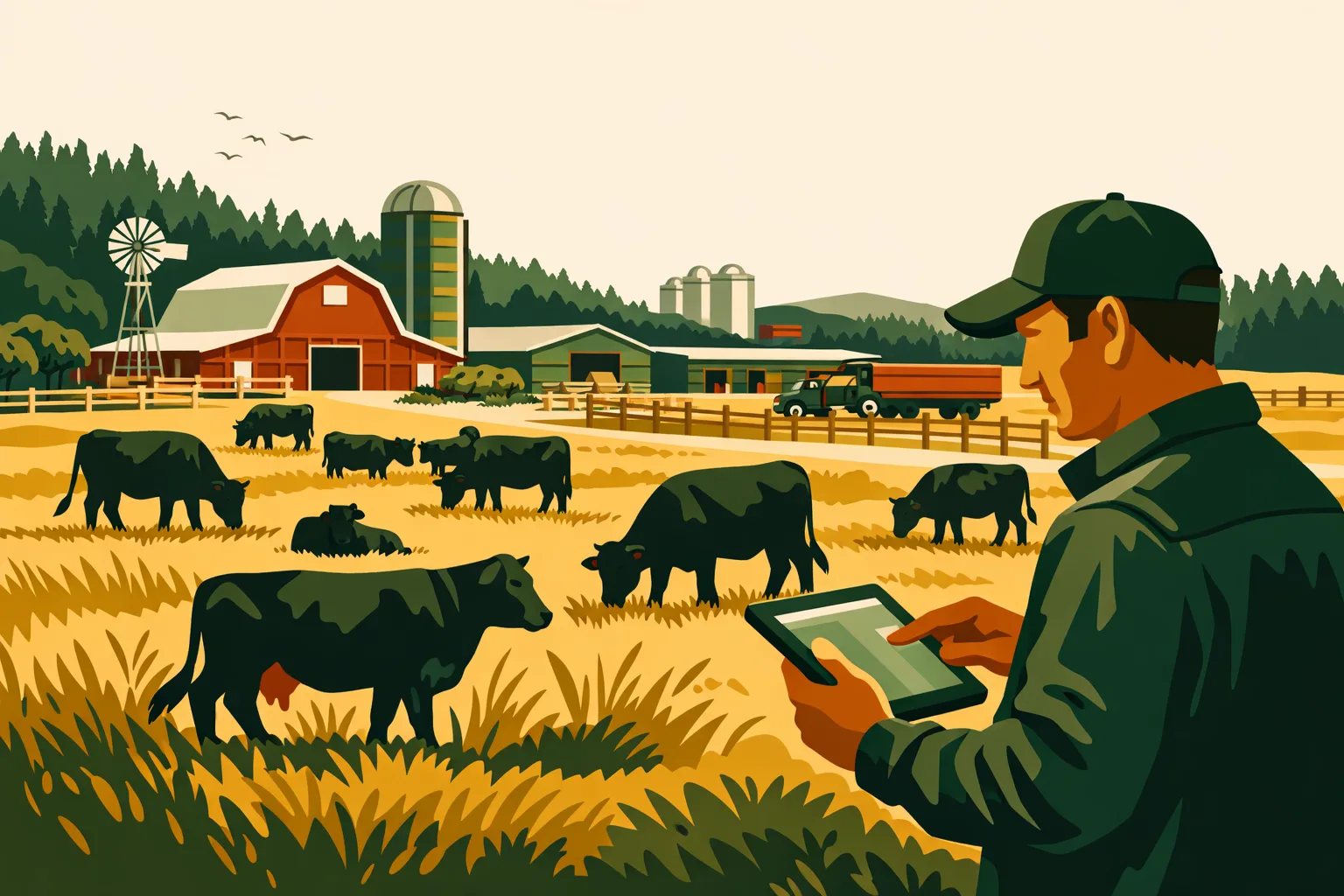
Margins in cattle operations are won or lost in the details: missed heats, late treatments, weak grazing records, untracked labor, poor feed visibility, and decisions made from memory instead of field data. The right cattle app will not run the ranch for you, but it can turn scattered notes, whiteboards, text messages, and paper binders into usable information your crew can act on every day.
For commercial ranches, the goal is not “going digital” for its own sake. The goal is tighter herd records, faster decisions, cleaner compliance, better grazing execution, and less time chasing information. This guide breaks down seven cattle apps worth evaluating in 2026, what each one is best at, where each one may fall short, and how to choose the right fit for a 50- to 5,000+ acre cattle operation.
What Commercial Ranches Should Expect From Cattle Apps in 2026
A useful cattle app should do more than store animal names and birth dates. For a commercial operation, the app needs to support day-to-day execution across herd management, pasture use, labor, treatments, inventory, and reporting.
At minimum, serious cattle apps should help with:
- Individual animal or group records
- Breeding, calving, and pregnancy tracking
- Health treatments and withdrawal records
- Pasture and grazing movements
- Weight records and performance history
- Task assignments for ranch staff
- Offline mobile access for areas with poor service
- Reports for management, lenders, buyers, auditors, or veterinarians
- Integrations or exports for accounting, EID readers, scales, and spreadsheets
The best choice depends on the type of operation. A cow-calf ranch has different software needs than a backgrounding yard, seedstock operation, dairy enterprise, or grass-finishing program.
If you are still defining your broader digital setup, read FarmsFlo’s guide to farm management software and farm record keeping software before committing to a cattle-specific platform.
Quick Comparison: 7 Cattle Apps for Commercial Ranches
| Cattle App | Best Fit | Strongest Use Cases | Watch-Outs | Typical Setup Effort |
|---|---|---|---|---|
| CattleMax | Cow-calf, seedstock, commercial herds | Herd records, breeding, calving, health, reports | Less focused on whole-farm task management | 1–3 days for basic setup; longer for historical imports |
| AgriWebb | Ranches needing maps, tasks, livestock, grazing | Pasture records, team tasks, herd movements, compliance | May require process discipline from the crew | 2–5 days for maps, mobs, paddocks, and workflows |
| Farmbrite | Diversified farms with livestock enterprises | Livestock, inventory, sales, expenses, production records | Broad platform may require configuration | 2–7 days depending on enterprise complexity |
| Herdwatch | Compliance-heavy livestock operations | Mobile herd records, treatments, breeding, compliance | Regional fit and integrations should be verified | 1–3 days for herd setup and user training |
| MaiaGrazing | Grazing-focused ranches | Pasture planning, grazing charts, carrying capacity decisions | Less of a full herd-record system | 3–10 days for paddock mapping and grazing planning |
| Performance Beef | Feedlots, stocker, backgrounding, finishing | Feed, performance, closeouts, cost tracking | More specialized for feeding operations | 3–14 days depending on feed and scale systems |
| Breedr | Data-driven beef producers and livestock marketers | Performance records, trading, weights, animal history | Availability and regional market fit vary | 2–7 days for animal and performance data |
Pricing changes often, and many agricultural software vendors use subscription tiers or quote-based pricing. For budgeting, commercial operations should plan for:
- Small commercial herd: Low monthly subscription to several hundred dollars per month
- Mid-size ranch: Several hundred dollars per month, depending on users and modules
- Large or multi-site operation: Quote-based pricing, onboarding, integrations, and support
The bigger cost is usually not the subscription. It is the time required to clean up existing records, train the team, and maintain data discipline.
1. CattleMax: Strong Herd Records for Cow-Calf and Seedstock Operations
CattleMax is one of the better-known cattle apps for producers who want detailed animal records without building a system from scratch. It is especially relevant for cow-calf ranches, seedstock producers, and commercial herds that need clean records on breeding, calving, health, weights, pedigrees, and sales.
Where CattleMax Fits Best
CattleMax works well when your main pain point is herd data. If you are trying to replace paper calving books, spreadsheets, or scattered notebooks, this is the type of app to evaluate.
Common use cases include:
- Cow and calf records
- Bull assignments
- Breeding exposure dates
- Pregnancy checks
- Calving history
- Weaning weights
- Medical treatments
- Culling decisions
- Sale records
- EID and tag management
For seedstock operations, detailed pedigree and performance information can be especially valuable. For commercial cow-calf ranches, the biggest benefit is having one place to see reproductive performance, health events, and lifetime production history.
Practical Outcome
The practical outcome is faster decision-making during high-pressure windows. During calving, preg-checking, weaning, or culling, managers can pull up an animal’s history instead of relying on memory.
For example, when deciding whether to keep or cull an open cow, a manager can look at:
- Age
- Calving interval
- Previous calf performance
- Treatment history
- Breeding exposure
- Notes from the crew
- Past culling flags
That helps make culling more consistent and less emotional.
Watch-Outs
CattleMax is strong for herd records, but it may not replace a broader operations system. If you also need to manage equipment maintenance, field tasks, chemical records, irrigation, labor scheduling, or purchasing workflows, you may need a second platform or a broader farm operating system.
See FarmsFlo’s guide on farm task management software if your ranch needs stronger crew coordination beyond herd records.
Setup Time and Cost Considerations
For a clean herd list, a basic setup can often be completed in a few days. If you have years of historical data in spreadsheets or paper files, plan on a longer transition.
Estimated internal setup time:
- Small herd: 4–8 hours
- Mid-size herd: 1–3 days
- Large herd with history: 1–3 weeks, depending on data quality
The biggest job is deciding how much history to import. For many ranches, it is better to import current active animals first, then add historical records as needed.
2. AgriWebb: Practical Ranch Mapping, Tasks, and Livestock Management
AgriWebb is built around the realities of ranch work: maps, paddocks, herds or mobs, movements, tasks, and records. It is useful for cattle operations that need better visibility across land, animals, and people.
Where AgriWebb Fits Best
AgriWebb is a good fit for operations where grazing, pasture management, and daily task execution are central. It can be especially helpful when multiple employees or family members are moving cattle, checking water, recording treatments, or managing grazing rotations.
Useful features include:
- Ranch mapping
- Paddock and pasture records
- Livestock movements
- Grazing history
- Treatment records
- Task assignment
- Notes and observations
- Mobile access in the field
- Reporting for management and compliance
The map-based workflow is helpful because ranch work is location-based. A manager can assign a water check, fence repair, pasture move, or mineral delivery to a specific place instead of describing it in a text message.
Practical Outcome
The biggest operational gain is fewer dropped balls. If a crew member notices a broken float, sick calf, low mineral feeder, or damaged gate, that issue can become a task instead of a verbal reminder.
For multi-pasture operations, this matters. The more acres and people involved, the more likely small issues get lost unless they are recorded and assigned.
A practical workflow might look like this:
- Crew member spots a water leak in Pasture 14.
- They create a task with a photo and location.
- Manager assigns it to the maintenance lead.
- Repair is completed and marked done.
- The issue remains in the ranch history for future review.
That kind of operational trail is difficult to maintain with texts and notebooks.
Watch-Outs
AgriWebb works best when your team consistently uses the app. If only one manager enters records and the rest of the crew keeps using paper or memory, the system will not deliver full value.
Before rollout, define:
- Who records cattle moves
- Who enters treatments
- Who creates and closes tasks
- Who manages pasture maps
- Who reviews reports
- How often records are checked
For more on crew adoption, read FarmsFlo’s article on farm operations management.
Setup Time and Cost Considerations
The most time-consuming step is setting up the ranch map correctly. Plan to map property boundaries, paddocks, water points, lanes, handling facilities, and major infrastructure.
Estimated setup time:
- Simple property: 1–2 days
- Multiple pastures or ranch units: 3–5 days
- Large multi-location operation: 1–2 weeks
Do not rush the map. If the map is wrong, task assignments and grazing records become less reliable.
3. Farmbrite: Broad Livestock and Farm Business Records
Farmbrite is a wider farm management platform that includes livestock tools alongside crop, inventory, sales, expenses, and production records. For cattle operations that also run hay, crops, direct sales, custom grazing, or diversified enterprises, a broader platform can be useful.
Where Farmbrite Fits Best
Farmbrite fits operations that want livestock records connected to other farm business data. It may appeal to ranches that do not want separate systems for cattle, inventory, expenses, production, and customer records.
Relevant functions can include:
- Livestock records
- Breeding and birth tracking
- Health records
- Feed and inventory
- Expense tracking
- Product sales
- Task management
- Production reporting
- Basic financial visibility
For a ranch that sells freezer beef, breeding stock, hay, or multiple farm products, having animal records tied to customers and sales can help reduce duplicate data entry.
Practical Outcome
The practical benefit is business visibility. Instead of managing herd records in one tool, sales in another, and expenses in spreadsheets, Farmbrite can centralize more of the operational picture.
For example, a diversified cattle operation could track:
- Calves born
- Animals finished
- Processing dates
- Inventory available
- Customer orders
- Feed expenses
- Veterinary costs
- Sales revenue
That does not replace formal accounting software for every ranch, but it can help managers see operational performance without building complicated spreadsheets.
Watch-Outs
Broad platforms require configuration. Because Farmbrite covers multiple farm types and enterprises, managers should spend time setting up categories, naming conventions, products, animals, and workflows.
The risk with any broad system is that users enter inconsistent data. One employee might enter “mineral,” another “minerals,” and another “salt/min.” Over time, reports become messy.
Before launching, create standard names for:
- Animal groups
- Pastures
- Treatment products
- Feed types
- Equipment
- Expense categories
- Customers
- Products
For more structure, see FarmsFlo’s farm record keeping checklist.
Setup Time and Cost Considerations
Farmbrite may take longer to configure than a narrower cattle-only tool, especially if you use it for inventory, sales, and expenses.
Estimated setup time:
- Livestock records only: 1–3 days
- Livestock plus inventory and expenses: 3–7 days
- Diversified operation with sales workflows: 1–3 weeks
The payoff is strongest when the ranch commits to using the platform consistently across enterprises.
4. Herdwatch: Mobile Herd Records With a Compliance Focus
Herdwatch is a livestock management app designed for easy mobile recording. It is known for herd records, breeding, health, treatments, and compliance-friendly workflows. It may be especially relevant for operations that need cleaner treatment and regulatory records.
Where Herdwatch Fits Best
Herdwatch is worth evaluating if your ranch needs simple mobile entry for core livestock events. It can work for cattle operations where employees need to record events quickly from the yard, pasture, chute, or barn.
Common features include:
- Animal records
- Breeding events
- Calving records
- Health treatments
- Medicine usage
- Withdrawal records
- Weights
- Movements
- Reports
The mobile-first design can help teams record information when the work happens, rather than waiting until the end of the day.
Practical Outcome
The most useful outcome is better treatment discipline. Health records are one area where missing data can create real risk. If a treated animal is sold before withdrawal is complete, the consequences can be serious.
A cattle app can help managers track:
- Product used
- Dose
- Date administered
- Animal or group treated
- Person responsible
- Withdrawal period
- Follow-up date
- Veterinarian notes
This is valuable for internal management, buyer assurance, and veterinarian relationships.
Watch-Outs
Before choosing Herdwatch, check regional availability, integrations, and local compliance fit. Some livestock software tools are stronger in certain countries or production systems than others.
Ask the vendor:
- Does it support your country’s animal identification requirements?
- Does it integrate with your EID equipment?
- Can records be exported in usable formats?
- Does it handle your herd size?
- Does it support offline use?
- Can multiple employees use it with permission levels?
Setup Time and Cost Considerations
Herdwatch can be quick to start if your animal list is clean. The biggest time requirement is training employees to record treatments and events immediately.
Estimated setup time:
- Basic herd setup: 4–8 hours
- Full health protocol setup: 1–2 days
- Multi-user training: 2–4 hours per employee group
If compliance is the main driver, involve your veterinarian or quality assurance lead when setting up treatment categories.
5. MaiaGrazing: Grazing Planning for Pasture-Driven Ranches
MaiaGrazing is designed for grazing management rather than general herd records. It helps producers plan, monitor, and improve grazing decisions across paddocks and seasons.
For ranches where forage is the main profit lever, a specialized grazing tool can be more valuable than a generic livestock database.
Where MaiaGrazing Fits Best
MaiaGrazing fits pasture-based cattle operations that want stronger grazing planning and pasture utilization records. It is especially useful for ranches practicing rotational grazing, adaptive grazing, regenerative grazing, or intensive pasture management.
Useful capabilities may include:
- Grazing plans
- Paddock records
- Stocking calculations
- Pasture rest periods
- Grazing charts
- Forage budgeting
- Animal group movements
- Seasonal planning
- Carrying capacity analysis
This type of app is less about individual cow history and more about land-animal balance.
Practical Outcome
The practical outcome is better grazing decisions. Instead of guessing how long a pasture has rested or where the next move should be, managers can review paddock history and available forage.
For example, before moving a group of pairs, a manager can consider:
- Last graze date
- Days rested
- Estimated forage availability
- Stocking rate
- Weather conditions
- Recovery goals
- Planned moves for the next few weeks
That helps avoid overgrazing, underusing forage, or making moves based only on habit.
Watch-Outs
MaiaGrazing is not a full replacement for a herd record system. If you need individual animal breeding, health, or pedigree records, you may still need another cattle app.
This is a good example of why many commercial operations use more than one system:
- A cattle records app for animals
- A grazing app for pasture planning
- An operations platform for tasks, equipment, purchases, and labor
If you manage hay ground, grazing, machinery, and livestock together, read FarmsFlo’s guide to farm maintenance management for the equipment side of the operation.
Setup Time and Cost Considerations
Grazing software takes time to set up because the paddock map and grazing assumptions matter. You need accurate pasture boundaries, water access, stock classes, and realistic forage estimates.
Estimated setup time:
- Basic paddock map: 1–3 days
- Detailed grazing plan: 3–10 days
- Ongoing updates: 15–30 minutes per grazing move, depending on detail
The value increases as you build multiple seasons of grazing history.
6. Performance Beef: Feed, Performance, and Closeout Visibility
Performance Beef is built for cattle feeding operations that need better visibility into feed, performance, costs, and closeouts. It is especially relevant for feedlots, backgrounders, stocker operators, and finishing programs where feed efficiency and weight gain drive profitability.
Where Performance Beef Fits Best
Performance Beef fits operations where cattle are managed in groups and performance is tied closely to feed delivery, ration changes, weights, and costs.
Common use cases include:
- Feed management
- Ration tracking
- Pen-level performance
- Weight gain records
- Cost of gain
- Closeout reports
- Inventory tracking
- Scale and feed system integration
- Yard management
For cattle feeding operations, the ability to connect feed delivered with animal performance is central. A generic cattle app may track animal records, but it may not provide the level of feed and closeout detail a finishing or backgrounding business needs.
Practical Outcome
The practical outcome is tighter feed and performance control. Managers can review whether cattle are performing as expected, whether ration changes are producing results, and how costs are moving through the yard.
Useful questions include:
- Are cattle consuming the planned ration?
- Are feed deliveries accurate?
- Which pens are underperforming?
- What is the cost of gain?
- Are closeouts matching expectations?
- Are feed inventories being reconciled?
- Are labor and equipment bottlenecks affecting delivery?
When margins are tight, faster visibility can help managers act earlier.
Watch-Outs
This is a specialized tool. A cow-calf ranch that only needs calving, breeding, and health records may not need this level of feed management. On the other hand, a feedyard using a basic herd app may lack the detail needed for operational control.
Before implementation, confirm:
- Compatibility with feed trucks and scales
- Data flow from your current systems
- Reporting formats
- User permissions
- Support for your yard structure
- Closeout reporting needs
- Integration with accounting or inventory systems
Setup Time and Cost Considerations
Feeding operations should plan for a more structured rollout. Feed ingredients, rations, pens, cattle groups, equipment, and scale connections all need to be accurate.
Estimated setup time:
- Small backgrounding setup: 3–5 days
- Feedlot with multiple pens and rations: 1–2 weeks
- Integrated scale/feed systems: Additional time for testing and support
Training should include both managers and feed truck operators. If feed delivery records are inconsistent, reports will not be reliable.
7. Breedr: Performance Data and Livestock Marketing Workflows
Breedr focuses on using livestock data to improve performance tracking and marketing decisions. It is particularly relevant for beef producers who want to connect animal history, weights, growth, and market opportunities.
Where Breedr Fits Best
Breedr may be a fit for producers who want more data-driven livestock marketing and performance visibility. Depending on region and availability, it can support animal records, weight tracking, performance insights, and trading workflows.
Potential uses include:
- Animal identity and history
- Weight records
- Growth tracking
- Group performance
- Health and production records
- Sale readiness
- Buyer communication
- Market-linked decisions
For ranches selling calves, stores, finished cattle, or breeding animals, better data can support more confident marketing.
Practical Outcome
The practical outcome is being better prepared when cattle are ready to move. Instead of gathering weights, treatments, and history at the last minute, the information is already organized.
That can help with:
- Sorting sale groups
- Identifying underperformers
- Communicating animal history
- Planning marketing windows
- Reviewing past buyer outcomes
- Supporting claims about production practices
For operations trying to build repeat buyer relationships, clean data is part of the value proposition.
Watch-Outs
Breedr’s fit can depend heavily on region, buyer network, and integration options. Before committing, confirm whether the platform supports your local market and whether your buyers, processors, or trading partners recognize or use its data.
Ask:
- Is the app available and supported in your region?
- Does it fit your production model?
- Can you export data if you change systems?
- Does it integrate with EID readers and scales?
- Are market features useful for your buyer channels?
- Can your crew use it easily in the field?
Setup Time and Cost Considerations
The setup burden depends on whether your animal weights and IDs are already clean. If you have EID systems and regular weighing protocols, implementation is easier.
Estimated setup time:
- Animal list and basic records: 1–2 days
- Weight history import: 2–5 days
- Marketing workflow setup: 1–2 weeks, depending on buyer channels
If performance data is poor or inconsistent, start by building better weighing and recording habits rather than importing years of unreliable information.
How to Choose the Right Cattle App for Your Operation
The best cattle app is not the one with the longest feature list. It is the one your team will actually use during busy seasons.
Use these criteria before buying.
Match the App to Your Production System
Start with your business model:
- Cow-calf: Breeding, calving, preg-checking, health, culling
- Seedstock: Pedigree, performance, EPD-related records, sale catalogs
- Stocker/backgrounding: Weights, health, groups, movements, performance
- Feedlot/finishing: Feed, ration, cost of gain, closeouts
- Grass-fed/grass-finished: Grazing, traceability, inventory, processing
- Diversified farm: Livestock plus crops, hay, inventory, sales, expenses
A feedlot app may be too much for a cow-calf ranch. A calving-focused app may be too limited for a grazing-intensive operation.
Prioritize Field Usability
If the app is hard to use from a pickup, chute, side-by-side, or pasture gate, records will fall behind.
Evaluate:
- Offline access
- Mobile speed
- Simple data entry
- Photo notes
- Voice-to-text usability
- Search by tag or EID
- Bulk entry for groups
- Chute-side workflow
- Crew permission levels
Ask vendors to demonstrate real tasks, not polished dashboards. Have them show how to record a treatment, move a group, enter a calf, or assign a water repair.
Check Data Ownership and Export Options
You need to be able to get your data out. Before signing up, confirm export formats and cancellation terms.
Ask:
- Can I export animal records?
- Can I export treatments and health history?
- Can I export weights?
- Can I export pasture and grazing records?
- Are exports in CSV, PDF, or another usable format?
- What happens to data after cancellation?
- Are backups included?
Do not lock years of herd history into a system you cannot leave.
Think Beyond Herd Records
Most ranches need more than cattle records. They also need to manage:
- Equipment maintenance
- Fuel and parts
- Fence repairs
- Water systems
- Hay production
- Labor
- Purchasing
- Compliance documents
- Safety tasks
- Vendor communication
That is where many cattle apps stop short. You may need a broader operations platform to coordinate the full ranch business.
For more on tying daily work to management visibility, read FarmsFlo’s guide on farm work order software.
Practical Checklist: Before You Buy a Cattle App
Use this checklist with your ranch manager, herd manager, office lead, and key crew members.
1. Define the Business Problem
- What are we trying to fix first?
- Missed breeding records?
- Poor treatment records?
- Weak grazing history?
- Slow sale preparation?
- Feed cost visibility?
- Crew communication?
- Compliance reporting?
Do not buy software until the main problem is clear.
2. List Required Features
Mark each feature as required, useful, or unnecessary:
- Individual animal records
- Group or mob records
- Breeding records
- Calving records
- Health treatments
- Withdrawal tracking
- Weight records
- EID support
- Scale integration
- Grazing records
- Pasture maps
- Task assignments
- Offline mobile use
- Inventory tracking
- Feed management
- Sales records
- Financial reporting
- Exportable reports
3. Audit Current Records
Before importing anything, review:
- Existing spreadsheets
- Paper calving books
- Treatment logs
- Sale records
- EID lists
- Weight sheets
- Pasture maps
- Feed records
- Accounting categories
Clean up duplicate IDs, missing tags, old animals, and inconsistent names.
4. Test With Real Ranch Scenarios
During a demo or trial, test actual workflows:
- Record a calf at birth
- Treat a sick animal
- Move cattle to a new pasture
- Enter weights at processing
- Assign a fence repair
- Pull a cull list
- Review withdrawal status
- Export a report for a buyer or vet
If the app struggles with your daily work, it will struggle even more during busy season.
5. Estimate Implementation Time
Build a realistic rollout plan:
- Data cleanup: 1–10 days
- App setup: 1–5 days
- Crew training: 2–6 hours
- First live test: 1 working cycle
- Full adoption: 30–90 days
Large operations should appoint one internal owner responsible for data quality and user adoption.
6. Decide Who Enters What
Assign responsibility:
- Calving records
- Treatments
- Weights
- Pasture moves
- Death losses
- Sales
- Feed deliveries
- Task completion
- Inventory updates
Unassigned data entry becomes missing data.
7. Review After One Production Cycle
After calving, weaning, preg-checking, grazing season, or closeout, review:
- Did the app save time?
- Were records more complete?
- Did the crew use it?
- Which reports were useful?
- What data was missing?
- Should workflows change?
- Is the subscription justified?
Software should earn its place in the operation.
Common Mistakes When Implementing Cattle Apps
Trying to Digitize Every Historical Record
Many ranches stall because they try to enter 10 years of history before using the app. Start with active animals and current workflows. Add history only where it improves decisions.
Letting Everyone Use Different Naming Conventions
If one person enters “North 40,” another “N 40,” and another “North Pasture,” reporting becomes unreliable. Standardize names before launch.
Skipping Crew Training
A 30-minute office demo is not enough. Train people where the work happens: chute, pasture, feed truck, calving barn, or shop.
Choosing Features Over Adoption
The most advanced app is not useful if employees avoid it. Prioritize simple field entry and reliable workflows.
Ignoring the Rest of the Ranch Operation
Cattle records matter, but so do equipment, repairs, labor, inventory, and purchasing. If your cattle app does not cover those areas, plan how the systems will work together.
Estimated ROI Areas From Better Cattle Apps
Do not expect software to create profit by itself. The return comes from better execution.
Potential value areas include:
- Faster culling decisions
- Fewer missed treatments
- Cleaner withdrawal compliance
- Better calving records
- Improved breeding visibility
- More organized sale groups
- Stronger grazing utilization
- Reduced duplicate data entry
- Less time searching for records
- Better communication between field and office
- More consistent feed and performance tracking
A ranch with disciplined processes will get more from software than a ranch that treats the app as a digital filing cabinet.
How FarmsFlo Helps
Cattle apps are valuable, but many ranches still need a broader operating layer for the whole business. FarmsFlo helps farm and ranch teams coordinate daily work, organize records, manage tasks, and keep operations moving without relying on scattered texts, notebooks, and spreadsheets.
Use FarmsFlo alongside your cattle app to manage:
- Ranch tasks and work orders
- Crew assignments
- Equipment maintenance
- Field and pasture work
- Inventory follow-ups
- Compliance documents
- Operational records
- Multi-location visibility
- Manager accountability
For example, your cattle app may track a treatment event, while FarmsFlo helps assign the follow-up task, schedule the crew, document the work, and connect it to the broader ranch plan. That separation keeps cattle records clean while making sure the operational work gets done.
If your ranch is evaluating cattle apps in 2026, also evaluate how daily work will be assigned, tracked, and completed across the entire operation.
Start a FarmsFlo trial at farmsflo.com and see how your team can bring ranch tasks, records, and operational workflows into one practical system.