5 Tested Ways Herd Management Software Actually Transforms Ranches by 2026
Evaluate herd management software features that help cattle ranches track animals, plan health tasks, and improve daily decisions before 2026.
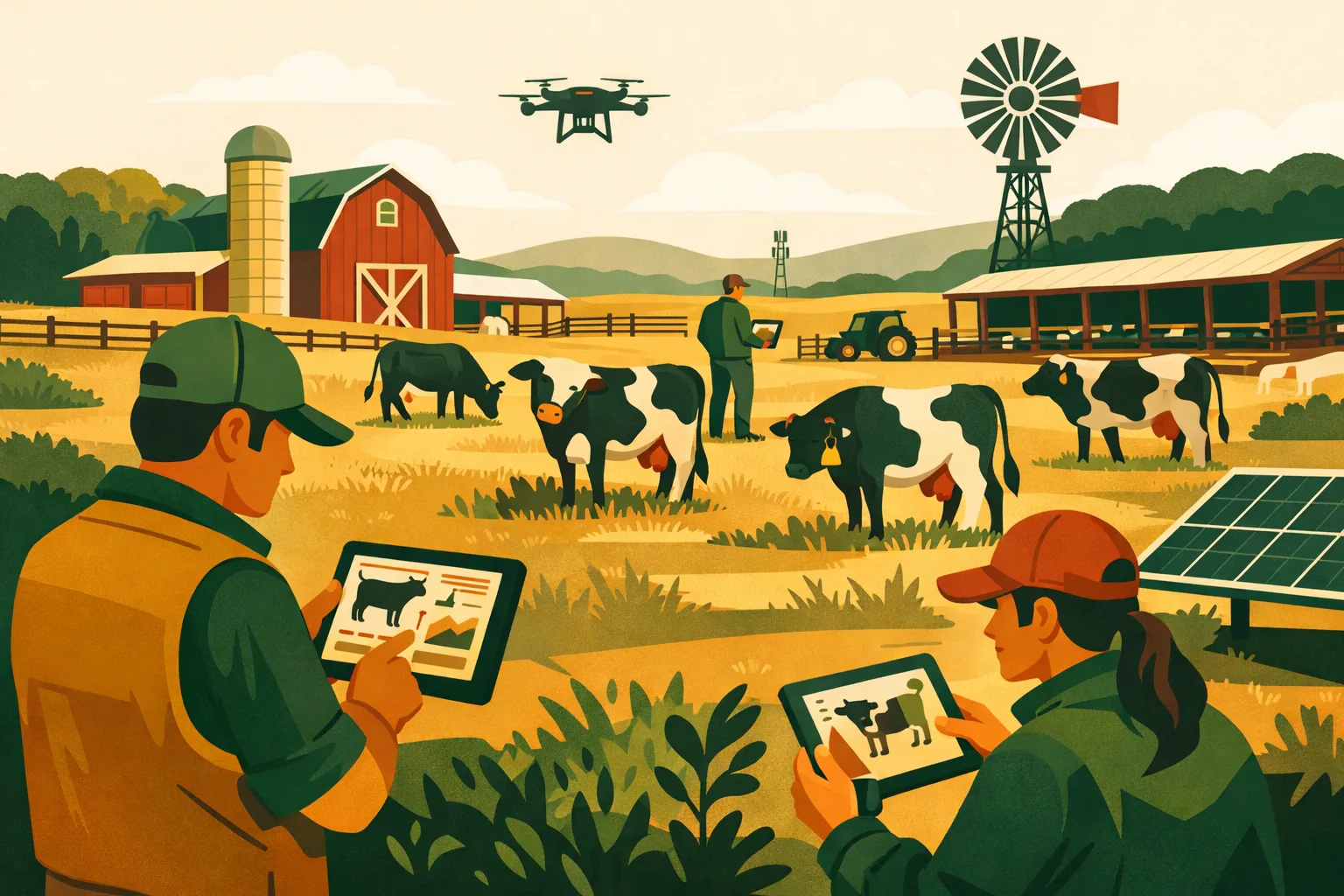
Margins in cattle operations are being shaped less by who works the longest days and more by who can make faster, cleaner decisions with the information they already have. Calving notes, treatment records, breeding groups, pasture moves, weights, death loss, feed costs, withdrawal dates, and crew tasks all affect profit. When that information sits in notebooks, spreadsheets, text messages, and memory, the ranch pays for it through missed heats, delayed treatments, poor culling decisions, and preventable labor waste.
Herd management software gives commercial cattle operations a central operating system for managing animals, people, land, and records. For ranches running 50 head or 5,000 head, the value is not “going digital” for its own sake. The value is turning everyday records into better breeding, health, grazing, labor, and financial decisions.
Below are five practical ways herd management software is changing ranch operations now, and what commercial ranch managers should expect by 2026.
What Herd Management Software Does on a Commercial Ranch
Herd management software is a digital platform used to track, manage, and analyze cattle records across the full production cycle. That includes cow-calf, stocker, backgrounding, seedstock, and mixed livestock operations.
At a farm-scale or ranch-scale level, the software typically supports:
- Individual animal records
- Group and pasture records
- Breeding and pregnancy status
- Calving records
- Health treatments and withdrawal tracking
- Weaning and weight data
- Inventory and sale records
- Task assignments for crews
- Feed, mineral, and grazing notes
- Compliance and audit documentation
- Financial and performance reporting
The strongest systems help operators move beyond simple recordkeeping. They create workflows that help managers act sooner: pull a cow for treatment, confirm a breeding group, identify open cows, plan pasture rotations, flag low performers, or prepare shipment documentation.
For broader farm operations management, see FarmsFlo’s related guide: farm management software for commercial operations.
1. Herd Management Software Turns Scattered Records Into Decisions You Can Use
Most ranches already collect a large amount of information. The problem is that it often lives in too many places.
A typical commercial cattle operation may have:
- Calving notes in a pocket notebook
- Treatment records on a whiteboard
- Breeding dates in a spreadsheet
- Weights stored in a scale indicator
- Pasture moves sent by text
- Sale data in accounting software
- Death loss records in a binder
- Vet records in invoices
- Employee tasks handled verbally
That system works until the ranch grows, employees change, weather compresses work windows, or a buyer asks for records quickly. Herd management software reduces the gap between “we recorded it somewhere” and “we can use it today.”
Centralized Animal Records Reduce Guesswork
With the right setup, every cow, bull, calf, or group has a searchable record. Managers can quickly answer questions like:
- Which cows calved late two years in a row?
- Which calves were treated more than once before weaning?
- Which bull was exposed to which pasture group?
- Which cows are open, late-bred, or missing pregnancy status?
- Which animals are still inside a withdrawal period?
- Which replacement heifers came from high-performing dams?
- Which pasture group had the lowest average daily gain?
When decisions are backed by records, the ranch can move faster during high-pressure windows such as calving, branding, breeding, weaning, preg-check, and shipping.
Better Records Improve Crew Accountability
On larger ranches, one person rarely sees every animal event. Different employees may handle treatments, feeding, pasture checks, calving checks, trucking, and sorting.
Herd management software creates a shared operating record so managers know:
- Who completed a task
- When it was completed
- Which animal or group was involved
- What product, dose, or action was used
- Whether follow-up is required
This matters because cattle management is full of small tasks that become expensive when missed. A second treatment, a follow-up vaccine, a bull movement, or a pasture gate check can all affect animal performance.
For more on managing field teams and recurring work, read: farm task management software for busy operations.
What This Looks Like by 2026
By 2026, commercial ranches should expect herd management software to become less of a digital filing cabinet and more of a daily decision tool. The practical shift will be toward:
- Mobile-first record entry from the chute, pasture, or truck
- Faster search by tag, group, pasture, sire, dam, or status
- Automated reminders for breeding, treatments, preg-checks, and withdrawals
- Stronger integration with EID readers, scales, and accounting tools
- Cleaner reporting for buyers, lenders, veterinarians, and auditors
The outcome is not more paperwork. The goal is fewer missed details and faster decisions.
2. Breeding and Calving Performance Become Easier to Manage
Breeding and calving records are where herd management software can quickly pay for itself. Reproductive performance drives the cow-calf business. Late-bred cows, open cows, poor mothers, calving difficulty, weak calves, and inconsistent bull performance all affect pounds weaned and replacement quality.
A paper notebook may capture the event. Software helps connect the event to the animal’s long-term performance.
Track Breeding Exposure With Less Confusion
Commercial ranches often manage multiple breeding groups across different pastures. Without software, it can be difficult to confirm which bulls were exposed to which cows and for how long.
A practical herd management software setup should track:
- Bull ID
- Cow or heifer group
- Pasture location
- Exposure start date
- Exposure end date
- Bull removal date
- Pregnancy status
- Estimated calving window
This gives managers better visibility into breeding windows and helps identify problems. If one pasture has a higher open rate, the software record can help narrow down whether the issue was bull fertility, body condition, weather stress, mineral program, disease, pasture quality, or management timing.
Improve Calving Records Without Slowing the Crew
Calving season is not the time for complicated data entry. Software only works if it is fast enough for real ranch conditions.
At a minimum, calving records should capture:
- Dam ID
- Calf ID
- Birth date
- Sex
- Birth weight, if collected
- Calving ease score
- Stillbirth or death loss
- Assistance required
- Mothering issue
- Notes on vigor, colostrum, or treatment
- Pasture or calving group
A mobile-friendly system allows the crew to enter the record from the calving pasture or barn. That record can then support branding sheets, weaning reports, replacement selection, and culling decisions.
Use Records to Tighten the Calving Window
A tighter calving window can simplify labor, health protocols, branding, nutrition, weaning, and marketing. Herd management software helps identify cows that consistently fall outside the desired production window.
For example, managers can sort cows by:
- First cycle vs. late cycle calving
- Days from exposure to calving
- Calving interval
- Open status after preg-check
- Age and production history
- Weaning weight of calf
- Assisted births or calf loss
This makes culling decisions less emotional and more consistent. A cow that raises a good-looking calf but breeds late every year may still be costing the ranch by stretching labor and lowering group uniformity.
Expected Outcomes by 2026
By 2026, the most useful herd management software will help cattle operations see reproductive performance at both the animal and group level. Expect more ranches to use dashboards for:
- Pregnancy rate by breeding group
- Open cow lists
- Late-calving cow lists
- Bull performance by exposure group
- Calving distribution by 21-day period
- Replacement heifer performance
- Cow lifetime productivity
This gives managers a cleaner basis for bull purchases, replacement selection, culling, and breeding season planning.
3. Health Treatment Records Become Faster, Safer, and More Defensible
Health records are a major reason commercial operators look at herd management software. Accurate treatment documentation protects the ranch, supports animal welfare, reduces residue risk, and gives managers better visibility into recurring health issues.
This is especially valuable in operations that buy, background, or develop cattle from multiple sources, where health history and treatment timing can change quickly.
Treatment Records Must Be Complete and Easy to Enter
A good health record should include:
- Animal ID or group ID
- Date treated
- Diagnosis or reason for treatment
- Product used
- Dose
- Route of administration
- Lot number, if tracked
- Person who administered treatment
- Withdrawal period
- Follow-up date
- Outcome
- Veterinarian or protocol reference
If treatment records are hard to enter, they will be incomplete. The software needs to match how the ranch works. In a chute-side environment, speed matters.
Withdrawal Tracking Reduces Marketing Risk
Selling an animal before a withdrawal period has cleared can create major business risk. Herd management software can flag animals that are not eligible for shipment due to treatment timing.
That capability is especially useful before:
- Weaning sales
- Feeder cattle shipments
- Cull cow sales
- Finished cattle delivery
- Replacement female sales
- Direct-to-buyer programs
Instead of manually checking a notebook or calling the person who treated the animal, the manager can pull a withdrawal report before loading.
Health Patterns Become Visible Earlier
Individual treatment records also help identify patterns that might otherwise be missed.
For example:
- A pasture group has recurring foot rot after a wet period
- Purchased calves from one source require more respiratory treatments
- A certain age group has higher treatment rates
- A vaccine protocol is not producing expected results
- One pen or pasture shows higher morbidity than others
- Repeat pulls are concentrated in certain groups
These patterns can lead to better conversations with veterinarians, nutritionists, and suppliers. They also help managers decide whether to adjust receiving protocols, mineral programs, pasture access, handling methods, or vaccination timing.
Comparison: Paper Records vs. Herd Management Software for Health Tracking
| Health Management Task | Paper or Spreadsheet System | Herd Management Software |
|---|---|---|
| Recording treatments | Fast if notes are simple, but easy to lose detail | Structured records tied to animal or group ID |
| Withdrawal tracking | Manual calculation and checking | Automated reminders and eligibility reports |
| Follow-up treatments | Depends on memory, notes, or whiteboard | Task alerts and scheduled follow-ups |
| Treatment history | Hard to search across years or groups | Searchable by animal, group, product, date, or diagnosis |
| Crew accountability | Often unclear who treated what | User-stamped records show who entered or completed work |
| Vet review | Requires pulling notebooks or files | Reports can be exported or shared |
| Audit readiness | Time-consuming to compile | Records already organized by event and date |
What Ranches Should Expect by 2026
By 2026, commercial cattle operators should expect health modules to become more practical and connected. The useful improvements will be:
- Faster mobile treatment entry
- Product inventory links
- Automatic withdrawal calculations
- Vet protocol templates
- Follow-up reminders
- Animal welfare documentation
- Better reporting by group, supplier, pasture, or period
The commercial benefit is risk reduction and better health decision-making. Better health records do not replace a veterinarian. They help the ranch and veterinarian work from cleaner facts.
4. Grazing, Feed, and Inventory Decisions Get More Precise
Herd management software is often viewed as an animal record system, but its value increases when it connects animals to land, feed, and inventory. Ranch profit depends on matching forage supply, cattle demand, weather, and labor.
A herd record without pasture context is incomplete. A pasture record without cattle performance is also incomplete.
Track Cattle by Pasture, Group, and Date
At the ranch level, managers need to know where animals are and how long they have been there. That sounds simple until cattle are split across multiple leases, owned pastures, rented grass, hay fields, drylots, and backgrounding pens.
Software can help track:
- Current pasture or pen
- Move-in date
- Move-out date
- Head count
- Class of cattle
- Bull exposure
- Grazing days
- Notes on forage condition
- Water issues
- Mineral delivery
- Weather or drought observations
This history helps managers compare grazing seasons and make better stocking decisions.
Improve Feed and Mineral Planning
Feed and mineral costs can move quickly. Even when prices are stable, waste and poor timing can drain margin.
Herd management software can support better planning by tracking:
- Feed deliveries by group
- Hay feeding start and stop dates
- Bale counts or tonnage
- Supplement schedules
- Mineral placement and consumption notes
- Weather-driven feeding changes
- Inventory on hand
- Supplier and delivery notes
For a 500-head cow-calf operation, even small improvements in winter feed planning can make a meaningful difference. The software does not make the feed cheaper, but it helps managers see where feed is going and whether actual use matches the plan.
For related planning workflows, see: farm inventory management software for commercial farms.
Connect Weights to Pasture and Feed Decisions
Weights become more valuable when connected to management history. If a group gains poorly, the manager needs context.
Questions to ask:
- Which pasture were they on?
- What dates were they there?
- What was the forage condition?
- Did mineral consumption change?
- Were they recently weaned, processed, or treated?
- Was water access limited?
- Did weather affect intake?
- Were there health pulls in the same period?
When weights, treatments, pasture moves, and feed notes sit in one system, the ranch can analyze performance instead of guessing.
Use Software for Drought Response Planning
Drought response is one of the most demanding management challenges in ranching. Herd management software can help by giving managers a clearer view of animal classes, stocking pressure, and priority decisions.
A drought planning workflow may include:
- Sort cattle by class: cows, pairs, replacement heifers, bulls, stockers, culls.
- Identify non-productive animals: open cows, late cows, chronic health cases, poor udders, poor feet.
- Review pasture inventory and current stocking.
- Estimate available hay, feed, and leased forage.
- Build early cull lists before markets are flooded.
- Track sales, movements, and retained groups.
- Review post-drought rebuilding options.
The software does not remove the hard decisions. It helps managers make them earlier and with better information.
What Changes by 2026
By 2026, expect stronger links between herd records, grazing records, maps, and operational planning. Operators should look for systems that make it easier to:
- Move groups between pastures on mobile
- Track head counts by location
- Attach notes and photos to pasture records
- Tie weights and health data to groups
- Maintain inventory of feed, mineral, and supplies
- Generate reports for grazing history and stocking decisions
For diversified operations with crops and livestock, a unified farm management system can be more valuable than a livestock-only tool because it connects labor, land, equipment, inventory, and livestock work in one place.
5. Labor, Compliance, and Financial Visibility Improve Across the Operation
Herd management software is not only about animals. On commercial ranches, the largest gains often come from reducing management friction across crews, records, and reporting.
When work is assigned verbally, tasks get missed. When records are incomplete, compliance becomes stressful. When costs are not tied to cattle groups, managers struggle to see which enterprises are performing.
Reduce Labor Waste During Peak Work Periods
Ranch crews are busiest when accuracy matters most. Calving, branding, synchronization, AI breeding, turnout, preg-check, weaning, shipping, and winter feeding all require tight coordination.
Software can improve labor management by turning work into assigned tasks:
- Check heifer calving pasture every two hours overnight
- Pull cow 814 for treatment follow-up
- Move pairs from North Creek to East Flat
- Put mineral in Sections 4 and 5
- Sort open cows after preg-check
- Verify withdrawal status before shipping
- Record weights after processing
- Check water tanks on leased pasture
This reduces reliance on memory and scattered text threads. It also helps managers see what was completed without calling every employee.
Save Administrative Time Before Sales and Audits
Commercial buyers increasingly expect clean records, especially for value-added programs, source and age verification, natural or no-antibiotic programs, animal welfare documentation, or direct marketing relationships.
Even when a ranch is not enrolled in a formal program, organized records support stronger buyer confidence.
Herd management software can help prepare:
- Animal inventory reports
- Treatment history
- Withdrawal clearance reports
- Birth date or age records
- Source records
- Movement history
- Vaccination records
- Breeding and pregnancy status
- Sale group records
- Death loss records
Instead of rebuilding records at the last minute, the ranch can maintain them throughout the year.
Improve Culling and Marketing Decisions
Culling is one of the most financially significant decisions in a cow-calf operation. Software helps managers identify animals that should not stay in the herd.
Common culling filters include:
- Open status
- Late calving
- Poor calf performance
- Bad feet or legs
- Udder problems
- Age
- Temperament
- Repeated treatments
- Calving difficulty
- Poor mothering
- Missing records
- Low weaning value relative to herd average
When records are consistent, cull lists can be built before preg-check or shipping day. That makes marketing more deliberate.
Track Enterprise Performance More Clearly
A commercial ranch may have multiple enterprises:
- Cow-calf herd
- Replacement heifer development
- Stockers
- Backgrounding
- Custom grazing
- Hay production
- Direct beef sales
- Seedstock sales
Herd management software can support better enterprise visibility when paired with farm financial tools. Managers can compare groups based on:
- Purchase cost
- Feed and supplement cost
- Health cost
- Pasture or lease cost
- Labor allocation
- Weight gain
- Sale revenue
- Death loss
- Retained replacements
- Cull revenue
Even if the software does not replace accounting software, it should produce operational records that make financial analysis cleaner.
For more on connecting daily operations to business decisions, read: farm operations management software for commercial farms.
Practical Checklist: How to Implement Herd Management Software Without Disrupting the Ranch
Buying software is easy. Getting the crew to use it correctly is the real work. The best rollout is practical, phased, and built around the ranch’s busiest workflows.
Use this checklist to evaluate and implement herd management software.
Phase 1: Define the Ranch’s Main Use Cases
Before comparing platforms, list the top problems you want to solve.
Common priorities:
- Replace paper calving books
- Track breeding groups and pregnancy status
- Improve treatment and withdrawal records
- Manage pasture moves
- Build cull lists faster
- Prepare buyer or audit documentation
- Assign crew tasks
- Track feed and mineral inventory
- Improve replacement heifer selection
- Connect livestock records with broader farm operations
Pick the first three priorities. Do not try to digitize everything at once.
Estimated time: 2–4 hours with the owner, ranch manager, and one or two key employees.
Phase 2: Clean Up Core Data
Start with the records that matter most:
- Current cow inventory
- Bulls
- Replacement heifers
- Calves or current groups
- Pasture list
- Employee users
- Common health products
- Breeding groups
- Existing pregnancy status, if available
Data does not need to be perfect before launch, but it must be usable. Focus on current inventory first. Historical records can be added later if they support decisions.
Estimated time:
- 50–200 head: 3–8 hours
- 200–1,000 head: 1–3 days
- 1,000+ head: 3–10 days depending on record quality and import options
Phase 3: Standardize Tags, Groups, and Naming
Poor naming creates confusion fast. Decide how the ranch will label:
- Pastures
- Breeding groups
- Calving groups
- Sale groups
- Replacement groups
- Treatment protocols
- Employee roles
- Cattle classes
For example, avoid having one employee use “North Pasture,” another use “N Past,” and another use “Section 12.” Standard names make reports useful.
Estimated time: 2–6 hours.
Phase 4: Train the Crew on Only What They Need
Do not overload employees with every feature. Train by job.
Examples:
- Calving crew: enter calf, dam, date, sex, issue notes
- Processing crew: scan tags, enter weights, vaccines, treatments
- Pasture crew: record moves, head counts, water or fence notes
- Manager: review reports, assign tasks, build cull lists
- Office staff: export reports, reconcile inventory, support records
Short training in real working conditions is better than a long meeting in the office.
Estimated time: 1–2 hours per crew group, plus field coaching during the first major use.
Phase 5: Start With One High-Value Workflow
Choose one workflow and run it fully in the software.
Good starting points:
- Calving season
- Preg-check and culling
- Weaning records
- Treatment and withdrawal tracking
- Pasture movement records
- Replacement heifer selection
Once the crew trusts the system for one job, expand into the next workflow.
Estimated time: One production cycle or 2–6 weeks, depending on the workflow.
Phase 6: Review Reports Monthly
Set a monthly review meeting to look at:
- Missing records
- Open tasks
- Treatment follow-ups
- Inventory mismatches
- Pasture movements
- Death loss
- Breeding or calving progress
- Upcoming management deadlines
This prevents the software from becoming another place where incomplete records collect dust.
Estimated time: 30–60 minutes per month.
Cost and Time Expectations for Commercial Ranches
Pricing for herd management software varies by platform, number of animals, number of users, features, support level, and integrations. Some tools price per head, some per user, some by module, and some by operation size.
When budgeting, consider both software cost and implementation cost.
Direct Costs to Expect
Potential direct costs include:
- Monthly or annual software subscription
- Additional user seats
- Data import or setup services
- EID readers or tag scanning equipment
- Scale indicator integrations
- Mobile devices or rugged tablets
- Training time
- Support or onboarding package
- Custom reports or integrations
For smaller commercial ranches, the software subscription may be the main cost. For larger operations, hardware, data cleanup, training, and process change can be just as significant.
Internal Time Costs
The largest hidden cost is usually staff time.
Plan for:
- Owner or manager selection time
- Data cleanup
- Crew training
- Initial record entry
- Workflow changes
- Monthly review and correction
- Ongoing record discipline
A realistic implementation timeline:
- Small commercial herd, 50–200 head: 1–3 weeks for basic setup and first workflow
- Mid-size ranch, 200–1,000 head: 3–8 weeks for clean rollout across key workflows
- Large operation, 1,000+ head: 2–6 months for phased implementation, crew training, and integrations
The timeline depends heavily on record quality and whether the ranch is moving from paper, spreadsheets, an older livestock system, or a broader farm platform.
Where ROI Usually Comes From
Herd management software should be evaluated based on operational return, not just subscription price.
Common value areas include:
- Fewer missed treatments or follow-ups
- Lower residue and compliance risk
- Better culling accuracy
- Faster sale documentation
- Improved breeding visibility
- Reduced administrative time
- Better replacement selection
- Less confusion across crews
- Cleaner inventory and head counts
- Better feed and pasture planning
Not every benefit will apply equally to every ranch. A seedstock operation may prioritize pedigrees, breeding data, and buyer records. A cow-calf operation may focus on calving, preg-check, culling, and weaning. A stocker operation may care most about receiving records, health events, weights, and shipping eligibility.
What to Look for When Choosing Herd Management Software
The right herd management software depends on the operation’s size, business model, labor structure, and record requirements. A simple app may work for a small herd but fail when multiple crews, locations, or enterprises are involved.
Must-Have Features for Commercial Ranches
Look for software that supports:
- Mobile access from the field
- Individual and group animal records
- Breeding and calving records
- Treatment records with withdrawal tracking
- Pasture and location tracking
- Weight records
- Task assignment and completion tracking
- Searchable history
- User permissions
- Exportable reports
- Offline or low-connectivity functionality, if needed
- Data import and export
- Support for EID or scale integrations if used
- Inventory records for feed, mineral, or treatments
- Multi-location management
If your ranch also farms crops, produces hay, manages equipment, or runs multiple enterprises, consider whether the platform can support the whole operation instead of only cattle records.
Questions to Ask Vendors
Before signing up, ask:
- Can we import existing animal records?
- How does the system handle EID tags and visual tags?
- Can crews enter records offline?
- How fast is treatment entry at the chute?
- Does withdrawal tracking happen automatically?
- Can we track cattle by pasture and group?
- Can we assign tasks to employees?
- Can reports be exported for buyers, vets, or auditors?
- Does the system support multiple ranches, leases, or locations?
- What support is included during onboarding?
- Who owns the data?
- Can we export our records if we leave?
- Does the platform connect livestock records with broader farm operations?
- How does pricing change as the herd grows?
- Can managers control user permissions?
The answers will reveal whether the tool fits commercial operations or was built mainly for small herds.
Red Flags to Avoid
Be cautious if a platform:
- Requires too many clicks for common ranch tasks
- Works only in perfect cell service
- Has weak export options
- Makes group management difficult
- Cannot handle multiple users well
- Lacks treatment and withdrawal reporting
- Has no practical onboarding support
- Does not let you correct mistakes cleanly
- Focuses on hobby herd features rather than commercial workflows
- Cannot scale with more cattle, land, or employees
The software should reduce management load, not create another administrative burden.
Real-World Applications by Ranch Type
Different cattle businesses use herd management software in different ways. The core value is the same: better records, faster decisions, and tighter execution.
Cow-Calf Operations
Cow-calf ranches often see value in:
- Calving records
- Breeding exposure records
- Pregnancy status
- Cull list creation
- Replacement heifer selection
- Weaning weights
- Health treatments
- Pasture movement
- Bull performance tracking
A practical use case: after preg-check, the manager filters for open cows, late-calving cows, old cows, and cows with calves below target weaning performance. The cull list is built before shipping day, reducing sorting stress and improving decision consistency.
Stocker and Backgrounding Operations
Stocker and backgrounding operators need fast group-level visibility.
Useful workflows include:
- Receiving records
- Source tracking
- Processing protocols
- Treatment history
- Pull rates
- Weight gain
- Pen or pasture movement
- Death loss
- Shipping groups
- Withdrawal clearance
A practical use case: the manager compares treatment rates and weight gain by purchase group. If one source repeatedly underperforms, future buying decisions can be adjusted.
Seedstock Operations
Seedstock operations typically need more detailed individual records.
Key workflows include:
- Pedigree and parentage records
- Breeding records
- Calving ease
- Birth weights
- Weaning and yearling weights
- Sale catalog preparation
- Buyer records
- Health and vaccination documentation
- Replacement selection
A practical use case: the operation identifies females that consistently produce calves meeting sale criteria and uses that record to make mating and retention decisions.
Mixed Crop-Livestock Farms
Many commercial operations run cattle alongside crops, hay, or custom work. A livestock-only system may create another silo.
Useful workflows include:
- Hay production tied to feed inventory
- Equipment tasks connected to livestock work
- Employee schedules across crop and cattle enterprises
- Pasture, field, and grazing records
- Shared inventory for fuel, supplies, feed, and treatments
- Enterprise reporting
A practical use case: the manager sees winter feed inventory, cow groups, pasture moves, equipment tasks, and labor assignments in the same management system.
The 2026 Outlook: What Will Separate Strong Ranches From Average Ones
By 2026, the difference will not be whether a ranch owns software. Many will. The difference will be whether the ranch uses accurate operational data to improve execution.
Strong operators will use herd management software to:
- Keep records current in real time
- Connect animal performance to management history
- Build cull lists earlier
- Reduce missed follow-ups
- Improve crew accountability
- Make health records defensible
- Track cattle by location
- Prepare sale documentation faster
- Review performance by group, not just by memory
- Coordinate cattle, land, equipment, and labor
Average operators may buy software but continue using it like a digital notebook. That leaves much of the value untapped.
The best results come when software becomes part of the ranch’s operating rhythm: enter records at the point of work, review reports on a schedule, and use the information to make decisions before the next production window.
How FarmsFlo Helps
FarmsFlo helps commercial farm and ranch operators bring daily work, records, inventory, tasks, and team coordination into one practical platform. For cattle operations, that means herd-related work does not have to sit apart from the rest of the business.
With FarmsFlo, ranch managers can organize operational workflows such as:
- Livestock tasks and follow-ups
- Pasture and field work
- Crew assignments
- Inventory tracking
- Treatment and supply records
- Equipment-related work
- Recurring jobs and seasonal checklists
- Multi-enterprise farm operations
For ranches that also manage hay ground, crop acres, equipment fleets, employees, inputs, and livestock, FarmsFlo gives the operation a central place to plan and execute work instead of relying on notebooks, spreadsheets, and scattered messages.
If you are evaluating herd management software for 2026, start by identifying the workflows costing you the most time or risk: calving records, health treatments, pasture moves, inventory, crew tasks, or sale documentation. Then test whether your software can handle those jobs under real ranch conditions.
Start a FarmsFlo trial at farmsflo.com and see how a unified farm operations platform can help your team run cleaner records, tighter workflows, and more accountable ranch operations.