5 Tested Dairy Management Software Options for 2026: What Actually Works
Compare tested dairy management software options for 2026 to choose tools that fit herd records, milk tracking, compliance, and farm workflows.
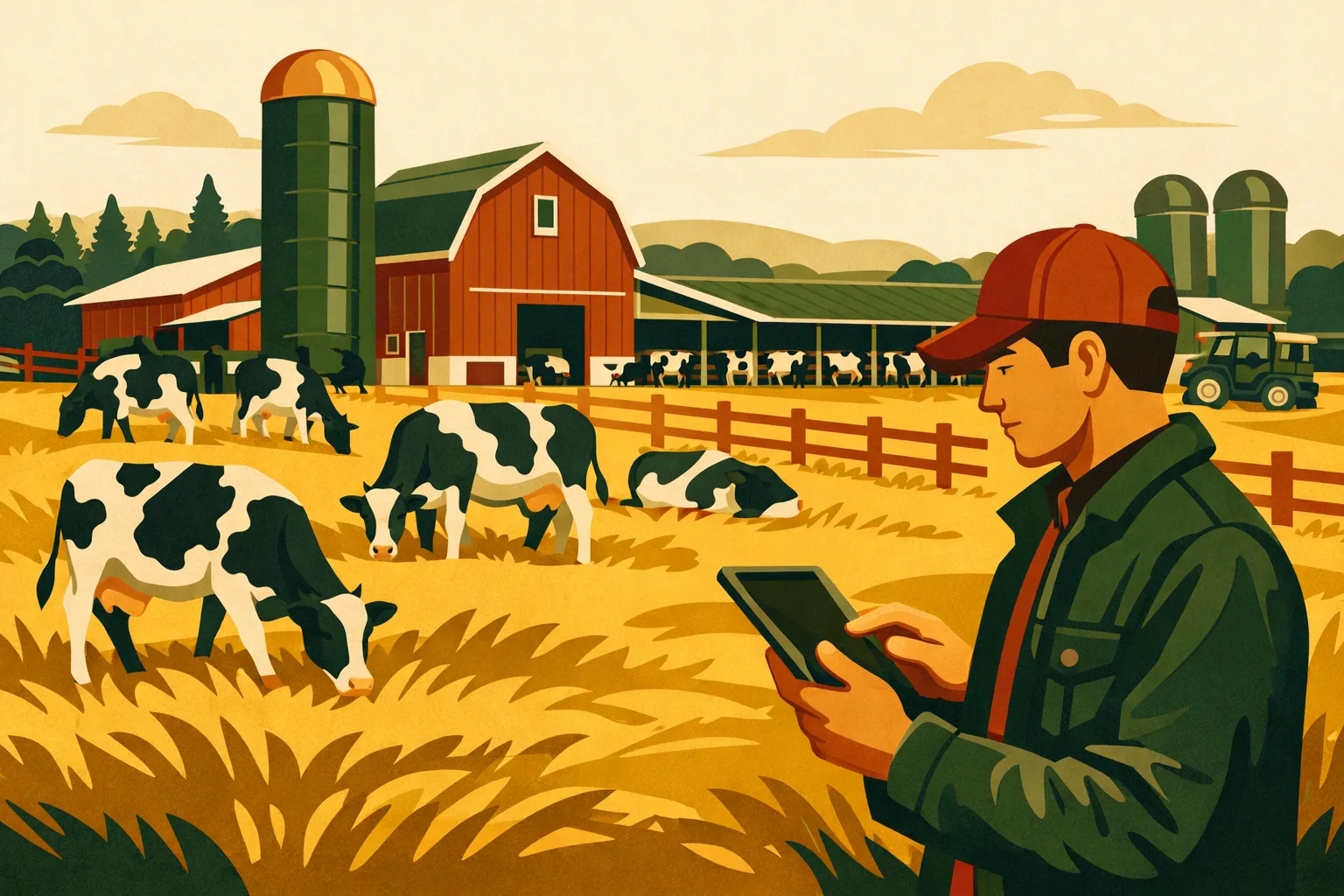
Margins on commercial dairies are won or lost in the daily handoffs: fresh cow checks, breeding decisions, treatment protocols, feed changes, milk quality alerts, parlor performance, inventory movement, labor scheduling, and compliance records. If that information lives in notebooks, spreadsheets, text threads, parlor printouts, and one person’s memory, the operation is exposed. The right dairy management software should reduce that exposure by turning cow, crew, and facility data into repeatable decisions your team can act on every day.
For 2026, the dairy software market is not short on options. The challenge is choosing a system that fits the way your dairy actually runs. A 400-cow family dairy with one site does not need the same setup as a 6,000-cow multi-site operation with separate maternity, hospital, calf, feed, maintenance, and compliance teams.
This guide breaks down five reliable dairy management software options for commercial operators, where each one tends to fit, what to verify before buying, and how to make the software work beyond the sales demo.
What Dairy Management Software Needs to Do in 2026
Dairy management software is no longer just a digital herd list. A workable platform for commercial dairies should support daily decision-making across animal health, reproduction, production, labor, inventory, and records.
At minimum, evaluate software against these core workflows:
- Cow identification and lifetime history
- Breeding, pregnancy, dry-off, calving, and fresh cow workflows
- Health events, treatments, protocols, and withdrawal records
- Milk production and component data
- Parlor, activity, or sensor integrations
- Feed and ration-related records
- Group and pen movements
- Task lists for herdspeople, breeders, feeders, and managers
- Mobile access in the barn or office
- Reporting for owners, consultants, lenders, processors, and regulators
- Multi-user permissions and audit history
- Data export and backup controls
The best system for your dairy is not always the one with the longest feature list. It is the one your team can use consistently, with clean data, clear responsibility, and reports that drive better management decisions.
If you are also evaluating broader farm operations tools, see the FarmsFlo guide to farm management software and the guide to farm record keeping software.
How We Evaluated These Dairy Management Software Options
“Tested” in this guide means evaluated against real commercial dairy operating requirements, not a vendor feature checklist alone. Each option below is assessed for practical fit in day-to-day dairy management.
The key evaluation areas were:
-
Commercial herd suitability
Can the system support a working dairy with multiple users, recurring tasks, and high-volume records? -
Herd health and reproduction workflows
Does it handle the events that drive daily dairy decisions? -
Ease of use for crews
Can herdspeople, breeders, feeders, and managers use it without constant office support? -
Reporting and decision support
Does it help managers identify problems, prioritize work, and track outcomes? -
Integration capability
Can it connect with milk meters, parlors, activity systems, RFID, feed systems, accounting, or other operational software? -
Scalability
Can it work for a 200-cow dairy, a 2,000-cow dairy, or a multi-site operation? -
Implementation burden
How much planning, training, cleanup, and process change is required before the system produces reliable value?
Quick Comparison: Dairy Management Software Options for 2026
| Software | Strong Fit | Main Strengths | Watchouts | Typical Implementation Effort |
|---|---|---|---|---|
| DairyComp | Mid-size to large dairies with strong herd management focus | Mature herd records, reproduction, health events, reporting, advisor familiarity | Can require training and setup discipline; interface depth may overwhelm casual users | Medium to high |
| PCDART | Dairies that want proven herd records and DHIA-linked workflows | Long-standing herd management tools, records, reports, industry familiarity | May feel less modern depending on user expectations; confirm mobile and integration needs | Medium |
| BoviSync | Dairies prioritizing mobile workflows and team execution | Cloud-based access, task lists, protocols, health and repro workflows, strong field usability | Requires disciplined data entry and role setup; confirm integrations before rollout | Medium |
| Uniform-Agri | Multi-site or internationally operated dairies wanting broad herd management | Herd records, production, reproduction, health, analytics, multi-farm capability | Setup complexity can increase with scale; reporting must be configured carefully | Medium to high |
| smaXtec | Dairies focused on sensor-driven health, reproduction, and early alerts | Rumen bolus data, health monitoring, activity, temperature insights | More sensor platform than full farm management system; hardware and integration planning required | Medium to high |
1. DairyComp
DairyComp is one of the most recognized names in commercial dairy management software. It is commonly used by dairies that need a deep herd records system for reproduction, health, production, and event tracking.
Where DairyComp Works Well
DairyComp is a strong fit for operations that want a comprehensive cow database and are prepared to manage records carefully. It is especially useful when veterinarians, nutritionists, reproduction consultants, and managers all rely on the same herd data.
It can support:
- Reproductive management
- Pregnancy diagnosis records
- Fresh cow monitoring
- Treatment records
- Milk production tracking
- Cull and death records
- Pen movements
- Protocol-driven worklists
- Custom reports
- Consultant reporting
For larger dairies, DairyComp’s strength is depth. Managers can create lists, sort cows by condition or event, and monitor herd-level performance. That matters when decisions are being made across hundreds or thousands of animals.
Practical Advantages
The biggest advantage is industry familiarity. Many dairy consultants already know how to work with DairyComp data. That reduces friction when your veterinarian or reproductive specialist needs access to records or reports.
DairyComp also supports detailed herd analysis. If your operation depends heavily on reproduction metrics, transition cow performance, and health-event tracking, it can provide a strong foundation.
Limitations to Consider
DairyComp can be powerful, but power comes with setup and training requirements. If the team does not understand how events are entered, how codes work, or how reports are generated, data quality can suffer.
Before selecting DairyComp, verify:
- How mobile workflows will function in the barn
- Which parlor, activity, RFID, and milk testing systems integrate
- How user permissions are managed
- What reports your team needs daily, weekly, and monthly
- Who will own database cleanup and report maintenance
Buyer Fit
DairyComp is often a good choice for:
- Commercial dairies with dedicated herd managers
- Operations using outside consultants heavily
- Dairies that need detailed reproduction and health analysis
- Larger herds where cow-level decision lists are essential
It may be less ideal for teams that want a simpler, mobile-first interface with minimal configuration.
2. PCDART
PCDART is another established dairy herd management option, particularly known in connection with DHIA records and traditional herd management reporting.
Where PCDART Works Well
PCDART fits dairies that want a proven herd record system and value structured production and event data. It is often used by operations that have built management habits around herd testing, DHIA-style records, and standardized reporting.
PCDART can support:
- Cow and heifer records
- Production data
- Reproduction events
- Health events
- Test day information
- Herd summaries
- Management lists
- Advisor reports
For dairies with established recordkeeping routines, PCDART can be a reliable system for organizing herd performance and operational decisions.
Practical Advantages
PCDART’s strength is consistency. It gives managers a structured approach to maintaining herd records and reviewing performance. For many dairies, that stability matters more than having the newest interface.
It can also be a practical choice for operations that already have processes built around DHIA data. If your dairy relies on production testing and standardized reporting, PCDART may fit naturally into your existing workflow.
Limitations to Consider
Depending on your expectations, PCDART may feel more traditional than newer cloud-first platforms. That is not automatically a problem. A familiar, stable system can outperform a modern interface if the team uses it correctly.
Before buying or renewing, confirm:
- Current mobile capabilities
- Cloud or remote-access options
- Integration with your parlor or milk recording system
- Ease of exporting data
- Support availability and training resources
- Fit for multi-site management if applicable
Buyer Fit
PCDART is a practical fit for:
- Dairies with DHIA-centered record systems
- Operations that want established herd reporting
- Managers who prefer structured herd records
- Farms that value continuity over constant software change
It may be less suitable for operations that want highly customizable mobile task execution across multiple crews.
3. BoviSync
BoviSync is a cloud-based dairy management software platform built around modern herd workflows, mobile use, and team task execution. It is often considered by dairies that want records and daily worklists accessible from phones, tablets, and office computers.
Where BoviSync Works Well
BoviSync is strong when the dairy needs to connect management decisions to crew execution. A protocol is only valuable if it becomes a task, reaches the right person, and gets completed correctly. BoviSync’s cloud and mobile approach can support that type of daily workflow.
It can help manage:
- Breeding lists
- Pregnancy checks
- Fresh cow protocols
- Treatments
- Hospital pen workflows
- Vaccinations
- Dry-off tasks
- Calving records
- Cow movements
- User-specific tasks
- Protocol compliance
For dairies with multiple people entering data, a mobile-first setup can reduce delays between an event occurring and the record being updated.
Practical Advantages
BoviSync’s value is strongest in operational execution. Instead of relying only on office-generated lists, teams can work from live task lists and update records in the field.
This is useful for:
- Herdspeople completing health checks
- Breeders working daily lists
- Fresh cow teams following protocols
- Managers reviewing completion
- Owners monitoring activity remotely
The cloud-based structure can also make access easier for consultants and managers who are not always on site.
Limitations to Consider
Mobile access does not automatically fix poor workflows. BoviSync still requires careful setup of protocols, permissions, events, and user responsibilities. If employees are allowed to enter events inconsistently, the reports will not be dependable.
Before implementing BoviSync, define:
- Which employees can enter which events
- Required fields for treatments and protocols
- How tasks are assigned and verified
- How mobile devices will be managed
- What happens when internet connectivity is weak
- Which reports managers will review each week
Buyer Fit
BoviSync is a strong fit for:
- Dairies wanting cloud-based access
- Operations with multiple crew members entering data
- Managers prioritizing task completion and protocol consistency
- Herds with active fresh cow, hospital, and reproduction programs
It may not be the lowest-effort option for a dairy that only wants basic cow records and occasional reports.
4. Uniform-Agri
Uniform-Agri is a herd management platform used by dairies in many regions, including operations that need broad herd records, analytics, and multi-farm capability.
Where Uniform-Agri Works Well
Uniform-Agri is suited for dairies that want a comprehensive herd management system with strong recordkeeping, analysis, and scalability. It can be relevant for both single-site and multi-site operations, especially when managers need to standardize records across farms.
It can support:
- Herd inventory
- Reproduction records
- Health events
- Milk production
- Treatments
- Calving data
- Youngstock tracking
- Group movement
- Reports and dashboards
- Multi-farm oversight
For dairies managing multiple units, consistent data structure becomes critical. Uniform-Agri can help create that structure when properly configured.
Practical Advantages
Uniform-Agri’s advantage is breadth. It is not limited to one narrow workflow. Managers can use it for a wide range of herd records and performance analysis.
This can work well for farms that want:
- Standard herd management across locations
- Cow-level and group-level reporting
- Integration with dairy equipment or third-party systems
- Clear visibility into reproduction, production, and health trends
If your dairy has grown through expansion or acquisition, a platform like Uniform-Agri can help bring fragmented records into one structure.
Limitations to Consider
The more complex the operation, the more implementation discipline is required. Multi-site setup, historical data import, user permissions, report configuration, and integration mapping all need attention.
Before choosing Uniform-Agri, verify:
- Local support availability
- Integration with your specific parlor, robot, sensor, or milk recording systems
- Multi-site reporting structure
- Data migration plan
- Training plan for each role
- How dashboards are customized
Buyer Fit
Uniform-Agri is a good fit for:
- Multi-site dairies
- Operations wanting broad herd management capability
- Farms with international or standardized management requirements
- Dairies that want structured analytics across production, health, and reproduction
It may be more system than a smaller dairy needs if the goal is simple recordkeeping.
5. smaXtec
smaXtec is different from the other options in this guide because it is primarily a sensor-driven dairy monitoring platform, not a general herd management system in the same category as DairyComp, PCDART, BoviSync, or Uniform-Agri.
It is included because many commercial dairies evaluating dairy management software in 2026 are also evaluating cow monitoring systems that feed critical health and reproduction data into management decisions.
Where smaXtec Works Well
smaXtec uses rumen bolus technology to monitor cows and provide insights related to health, temperature, drinking behavior, rumination, and reproduction signals. For dairies looking to detect problems earlier and manage cows more proactively, sensor data can be valuable.
It can support:
- Health alerts
- Heat detection support
- Rumination monitoring
- Temperature tracking
- Drinking behavior insights
- Early intervention workflows
- Cow-level monitoring
- Group trend analysis
This type of system can be especially useful where labor is tight and managers need another layer of monitoring for high-value animals, fresh cows, or groups with elevated risk.
Practical Advantages
The main advantage is automated cow-level monitoring. Manual observation is still necessary, but sensor alerts can help prioritize which cows need attention first.
For large dairies, that prioritization matters. A fresh cow team may not have time to physically evaluate every cow with equal depth every day. Sensor-driven alerts can help focus labor where risk appears highest.
Limitations to Consider
smaXtec should not be treated as a full replacement for herd management software. It is better viewed as a specialized monitoring layer that may integrate with or support your broader management system.
Before investing, evaluate:
- Hardware cost and installation plan
- Which animal groups will receive boluses
- Expected replacement and maintenance process
- Integration with your herd management software
- Alert workflow for staff
- Who reviews alerts outside normal hours
- How false positives and missed alerts will be handled operationally
Buyer Fit
smaXtec is a strong fit for:
- Dairies seeking sensor-based health and reproduction alerts
- Operations with labor constraints
- Herds wanting more fresh cow or transition cow visibility
- Managers willing to build alert response protocols
It may not be the right first purchase if your dairy lacks a clean herd database or reliable treatment records.
Dairy Management Software Cost and Time Planning
Most commercial dairy management software is priced through vendor quotes, and actual cost depends on herd size, number of users, modules, integrations, hardware, support, and implementation requirements. Sensor systems may also include hardware, installation, and ongoing service costs.
For budgeting, plan around these cost categories:
Software Subscription or License
Many platforms use subscription pricing, while some may use license, module, or support-based pricing. Ask vendors to quote based on your actual herd size, number of facilities, and required modules.
Questions to ask:
- Is pricing per cow, per site, per user, or module-based?
- Are youngstock included?
- Are consultants or external users extra?
- Are mobile users included?
- Are support and updates included?
- Is data export included if you leave?
Implementation and Data Migration
Implementation can take from a few weeks to several months depending on complexity. A single-site dairy with clean records may roll out faster. A multi-site operation with inconsistent historical data, multiple parlors, and custom reports will need more time.
Plan for:
- Historical data cleanup
- Cow ID validation
- Event code standardization
- User role setup
- Protocol buildout
- Integration testing
- Report configuration
- Staff training
Hardware and Devices
Some systems require or benefit from:
- Tablets
- Rugged phones
- RFID readers
- Workstation upgrades
- Barn Wi-Fi improvements
- Sensor hardware
- Mounting equipment
- Data gateways
Do not evaluate software cost without checking whether your barn environment can support the workflow. A mobile-first platform is only useful if employees have reliable devices and connectivity.
Training Time
Training is often underestimated. For a commercial dairy, software training is not just an office task. It affects breeders, hospital crew, maternity staff, calf managers, feeders, and owners.
A practical training estimate:
- Managers: 4–12 hours initial training, plus report review time
- Herd staff: 2–6 hours role-specific training
- Office/admin users: 4–10 hours for data entry, reports, and cleanup
- Follow-up: 30–60 days of weekly issue review after launch
The goal is not to train every employee on every feature. Train each role on the exact workflows they own.
For more on improving adoption, read the FarmsFlo guide to farm operations management software.
What Actually Works on Commercial Dairies
The software that works is the software that becomes part of the daily management routine. Features alone do not create results. Good implementation does.
Clean Cow IDs Come First
Every dairy software project depends on accurate animal identification. If RFID numbers, visual tag numbers, registration IDs, and parlor IDs are inconsistent, reports become unreliable.
Before rollout, clean up:
- Duplicate IDs
- Missing RFID numbers
- Incorrect birthdates
- Wrong lactation numbers
- Incorrect pen or group assignments
- Dead or sold animals still listed as active
- Heifers not linked properly to herd records
Protocols Need to Be Built Into Tasks
A treatment or breeding protocol written in a binder is not enough. The software should convert protocols into assigned work.
For example:
- Fresh cow check due on day 3
- Recheck cow after treatment
- Pregnancy diagnosis due after breeding window
- Dry-off list generated by days carried calf
- Vaccination list created by group or date
- Mastitis follow-up scheduled after treatment
If the software only stores events after they happen, it is a recordkeeping tool. If it creates the next action, it becomes a management tool.
Reports Must Be Limited and Used
Many dairies create too many reports and review too few. Start with a short list of reports that managers will actually use.
Useful weekly reports may include:
- Fresh cow health events
- Pregnancy rate and service lists
- Open cows beyond target days in milk
- Treatment compliance and withdrawals
- Mastitis cases and recurrence
- Cull and death reasons
- Calving issues
- Milk deviation by group
- Inventory exceptions
- Overdue tasks by employee or area
Assign each report to one owner. A report without an owner becomes background noise.
Mobile Workflows Need Guardrails
Mobile access is helpful, but it can also create inconsistent entries if every employee enters events differently.
Create rules for:
- Approved event names
- Required treatment fields
- Who can edit records
- Who can delete entries
- How mistakes are corrected
- When records must be entered
- Which language settings are needed
- Device check-in and charging
For a deeper look at digital task execution, see FarmsFlo’s guide to farm task management software.
Practical Checklist: How to Choose Dairy Management Software
Use this checklist before signing a software agreement.
Step 1: Define the Business Problem
Do not start with demos. Start with the management problem.
Choose your top three priorities:
- Reduce missed breedings
- Improve fresh cow follow-up
- Standardize treatment records
- Reduce paper records
- Improve withdrawal compliance
- Connect parlor and herd data
- Support multi-site reporting
- Improve employee accountability
- Create better owner and consultant reports
- Add sensor-based monitoring
If a vendor cannot show how their system solves your top priorities, keep looking.
Step 2: Map Current Workflows
Document how work happens today:
- Who finds cows?
- Who makes lists?
- Who treats cows?
- Who records events?
- Who reviews reports?
- Who contacts the veterinarian?
- Who manages breeding?
- Who confirms withdrawals?
- Who updates inventory?
- Who corrects mistakes?
This exposes where software can help and where the operation needs process changes.
Step 3: Confirm Integrations
Ask for integration confirmation in writing.
Verify compatibility with:
- Parlor system
- Milk meters
- Robotic milking system
- RFID readers
- Activity monitors
- Feed management software
- Lab or DHIA data
- Accounting software
- Compliance or processor reporting tools
- Existing spreadsheets or databases
Do not assume integration because two vendors are well known. Confirm your specific version, hardware, and data flow.
Step 4: Run a Real Demo
Do not accept a generic sales demo. Give the vendor real scenarios.
Ask them to demonstrate:
- Creating a breeding list
- Recording a mastitis treatment
- Checking withdrawal status
- Moving cows between pens
- Finding overdue pregnancy checks
- Creating a fresh cow task list
- Entering a calving event
- Reviewing employee task completion
- Exporting data
- Building a weekly manager report
If the demo cannot follow your workflow, implementation will likely be harder than expected.
Step 5: Estimate Total Cost
Include:
- Subscription or license
- Implementation
- Data migration
- Training
- Hardware
- Connectivity upgrades
- Integrations
- Support
- Internal staff time
The cheapest subscription can become expensive if it requires excessive manual work or fails to integrate with critical systems.
Step 6: Assign an Internal Owner
Every dairy software system needs an owner. This person is responsible for:
- Data standards
- User permissions
- Report setup
- Vendor coordination
- Training
- Issue tracking
- Workflow updates
- Monthly data quality review
Without an owner, software adoption usually drifts.
Step 7: Pilot Before Full Rollout
For larger operations, pilot the system with one area first:
- Fresh cows
- Hospital pen
- Breeding team
- Calf operation
- One facility
- One shift
Use the pilot to fix event names, task timing, permissions, and reporting before expanding.
Common Dairy Software Buying Mistakes
Buying for the Owner, Not the Crew
Owners and managers need reports, but crews need usable workflows. If the system is difficult in the barn, records will lag or be skipped.
Evaluate software where it will be used: in the office, parlor, maternity area, hospital pen, and on mobile devices.
Ignoring Spanish or Multilingual Needs
Many dairy teams need bilingual workflows. Confirm whether the software supports the language needs of your employees, especially for task lists, protocols, and treatment entry.
Keeping Bad Paper Processes
Digitizing a bad process does not fix it. Before implementation, remove duplicate forms, outdated reports, and unnecessary approval steps.
Not Testing Offline or Low-Connectivity Areas
Barns, hospital pens, calf areas, and remote facilities often have weak connectivity. Test the software in those locations before full rollout.
Failing to Protect Data Access
Set user permissions by role. Not every employee needs access to edit historical records, change protocols, or delete events.
Treating Software as a One-Time Project
Dairy software needs ongoing management. Review reports, permissions, event codes, and integrations at least quarterly.
Which Dairy Management Software Should You Choose?
The right choice depends on your operating model.
Choose DairyComp If…
You need a deep, established herd management system and your team or consultants are comfortable working with detailed herd records and reports.
Best fit:
- Large herd management
- Reproduction and health analysis
- Consultant-driven decision-making
- Complex cow-level lists
Choose PCDART If…
You want a proven herd records system with strong ties to traditional production testing and structured reporting.
Best fit:
- DHIA-centered workflows
- Stable herd records
- Production and event reporting
- Dairies wanting continuity
Choose BoviSync If…
You want cloud-based herd management with strong mobile task execution for daily work.
Best fit:
- Multi-user teams
- Fresh cow and hospital workflows
- Mobile data entry
- Protocol accountability
Choose Uniform-Agri If…
You need broad herd management capability across one or multiple sites with structured analytics.
Best fit:
- Multi-site dairies
- Standardized herd records
- Broad management reporting
- Scalable oversight
Choose smaXtec If…
You want sensor-driven monitoring to support health, reproduction, and early intervention decisions.
Best fit:
- Fresh cow monitoring
- Labor-constrained herds
- Sensor-based alerts
- Operations adding precision dairy tools
Dairy Software Implementation Plan for a 90-Day Rollout
A structured rollout prevents confusion and protects data quality.
Days 1–15: Discovery and Cleanup
Tasks:
- Confirm goals
- Assign internal owner
- Export current records
- Clean cow IDs
- Review event codes
- Map current workflows
- Identify integrations
- Build rollout calendar
Deliverable: approved implementation plan.
Days 16–30: System Setup
Tasks:
- Import herd data
- Configure users
- Set permissions
- Build protocols
- Create core reports
- Set up integrations
- Test mobile devices
- Define support process
Deliverable: working test environment or configured live environment.
Days 31–45: Pilot
Tasks:
- Train pilot users
- Run one workflow in software
- Compare records against old process
- Fix naming and entry issues
- Adjust reports
- Test exception handling
- Review with vendor weekly
Deliverable: pilot workflow approved for expansion.
Days 46–75: Full Workflow Rollout
Tasks:
- Train remaining users
- Launch daily task lists
- Retire duplicate paper forms where safe
- Monitor completion rates
- Check data errors daily
- Review reports with managers
- Resolve integration issues
Deliverable: software becomes system of record for selected workflows.
Days 76–90: Stabilization
Tasks:
- Audit records
- Remove unused reports
- Tighten permissions
- Review protocol compliance
- Collect crew feedback
- Document standard procedures
- Plan next workflow rollout
Deliverable: stable operating process and clear ownership.
For related implementation planning, read FarmsFlo’s guide to farm management system implementation.
What to Ask Vendors Before You Buy
Use these questions in every vendor conversation:
- Which dairy sizes and operating models do you serve best?
- How do you price the system?
- What modules are included?
- What integrations are supported for our exact equipment?
- Can we export all data if we leave?
- How are permissions managed?
- Does the system support mobile use in barns?
- What happens with weak internet?
- How long does implementation usually take for a herd like ours?
- Who handles data migration?
- What training is included?
- Is support phone-based, email-based, chat-based, or local?
- Can consultants access reports?
- How are treatment records and withdrawal times handled?
- Can we build custom reports?
- How are updates released?
- Can we test the system with our own workflows?
- What references can you provide from similar dairies?
Do not rely only on polished demos. Ask to speak with operations similar in herd size, labor structure, and technology stack.
How FarmsFlo Helps
Dairy management software handles the cow-level side of the operation, but commercial dairies also need control over the broader farm business: tasks, people, equipment, inventory, maintenance, compliance, field operations, and management visibility.
FarmsFlo helps farm operators bring those operational workflows into one place so the team can run the business with fewer gaps between planning and execution.
With FarmsFlo, dairy operators can manage:
- Daily and recurring farm tasks
- Employee assignments
- Equipment maintenance
- Inventory and supplies
- SOPs and checklists
- Field and facility work
- Compliance documentation
- Operational notes and records
- Manager visibility across teams and locations
That makes FarmsFlo a practical fit alongside specialized dairy management software. Your herd system can manage cow records, while FarmsFlo helps manage the work around the dairy: who is doing what, what needs attention, what supplies are available, and what tasks are overdue.
If your dairy is trying to reduce paper, improve accountability, and standardize daily operations, start a FarmsFlo trial at farmsflo.com.