5 Tested Cow Management Apps That Actually Simplify Your Ranch Operations by 2026
Compare tested cow management app options for 2026 to choose software that helps track herds, tasks, health records, and daily ranch workflows.
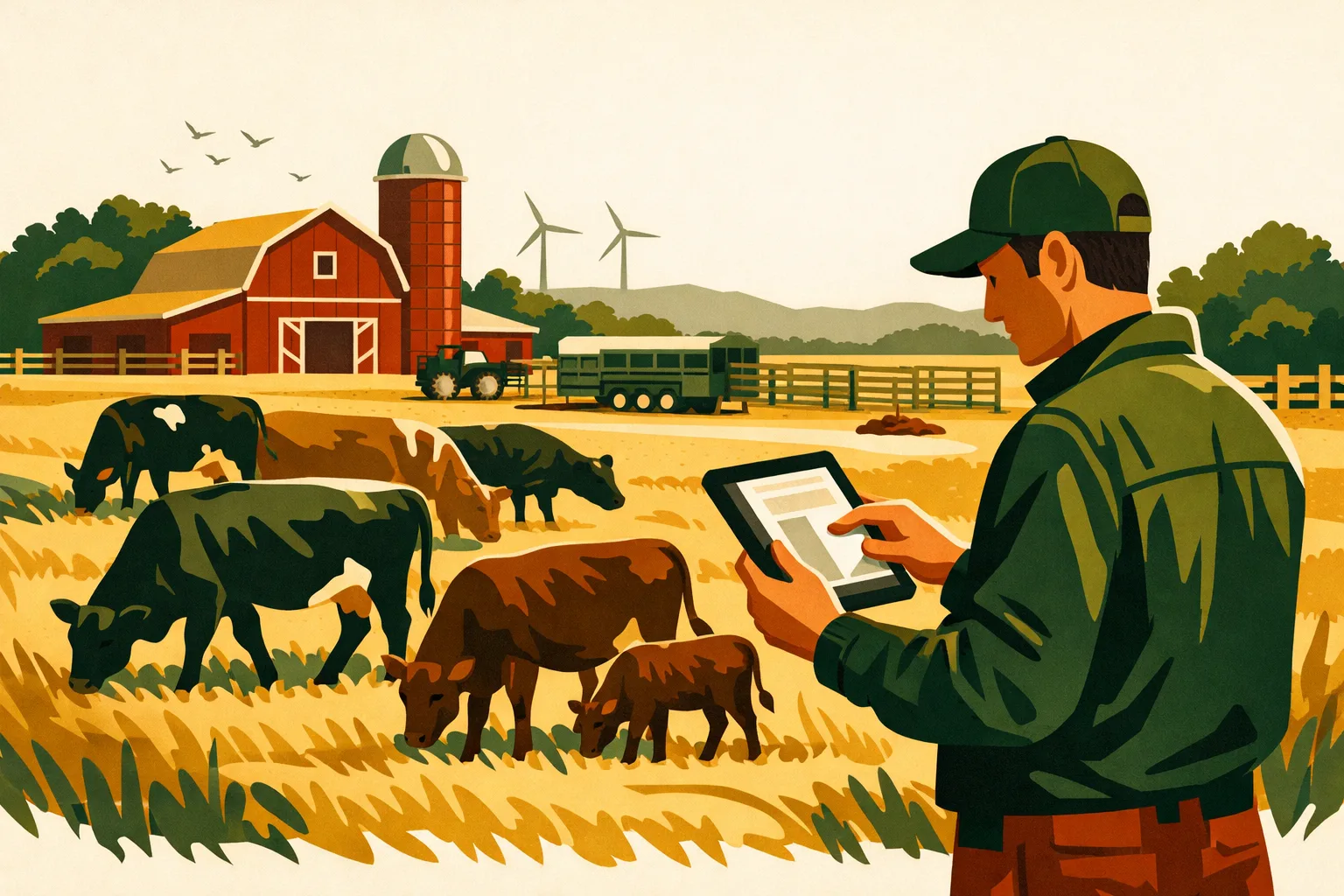
A ranch can lose hours every week to scattered notebooks, missed treatment records, delayed breeding updates, and “who has the spreadsheet?” conversations. For a 50-head seedstock herd or a 5,000-head commercial cow-calf operation, the right software should make the daily work easier at the chute, in the truck, and in the office — not create another administrative burden.
A good cow management app helps your team capture animal records once, use them across the operation, and make faster decisions on health, breeding, culling, inventory, and compliance. The wrong one becomes shelfware.
Below is a practical buyer’s guide to five cow management apps worth evaluating for 2026, including where each fits, what outcomes to expect, setup considerations, and what to check before you commit.
What a Cow Management App Should Do for a Commercial Ranch
A cow management app is not just a digital notebook. For a working cattle operation, it should help manage individual animals, groups, tasks, people, pasture moves, treatments, breeding events, sales, and reporting.
At commercial scale, the value comes from making sure records are:
- Captured in the field or at the chute
- Tied to the correct animal, group, pasture, or location
- Available to managers without waiting for paperwork
- Searchable when you need treatment history, pregnancy status, weights, withdrawal dates, or sale information
- Exportable for buyers, vets, lenders, auditors, or internal analysis
If you are still comparing broader platforms, see FarmsFlo’s guide to farm management software and our practical breakdown of farm record keeping software.
2026 Buying Criteria: What Matters Before You Choose
Before looking at specific apps, decide what the system must support across your operation.
1. Field Usability
If the app only works well in the office, it will not hold up in a cow-calf, backgrounding, or stocker environment.
Look for:
- Mobile access from phone or tablet
- Offline capability for low-service areas
- Fast animal lookup
- Simple data entry during processing
- Bulk updates for groups
- Photos and notes when needed
- Team access with clear permissions
A cow management app should work when the crew is pregnancy checking, treating sick calves, weaning, moving pairs, or loading sale cattle.
2. Animal-Level and Group-Level Records
Commercial ranches need both.
Animal-level records help with:
- Cow ID
- Calving history
- Pregnancy status
- Treatment records
- EID/RFID
- Weight history
- Culling decisions
- Breeding and AI records
- Ownership and sale history
Group-level records help with:
- Pasture moves
- Lot management
- Feed events
- Vaccination groups
- Weaning groups
- Backgrounding performance
- Marketing lots
The best fit depends on how detailed your records are today and how detailed they need to become.
3. Chute-Side Workflow
For many ranches, the biggest test is whether the software makes processing day better or worse.
Evaluate:
- RFID/EID compatibility
- Bluetooth scale-head support
- Printable or exportable processing lists
- Quick treatment entry
- Automatic date and withdrawal calculations
- Bulk vaccine entry
- Pregnancy status updates
- Notes for cull flags, feet, udder, disposition, or structure
If your crew has to stop the chute to fight the app, it is not the right choice.
4. Reporting That Supports Decisions
The software should help you answer operational questions:
- Which cows missed conception?
- Which sires produced the best weaning weights?
- Which treatments were used by pasture, group, or diagnosis?
- Which calves are ready for market?
- Which animals are inside withdrawal windows?
- Which cows should be culled before winter feed costs rise?
- Which pastures are carrying which groups?
For broader operational reporting, you may also want to connect cattle data with labor, equipment, purchasing, inventory, and field activity. FarmsFlo covers that wider management layer in our guide to farm operations management software.
5. Data Ownership and Export
Before signing up, confirm:
- Can you export all animal data?
- Are exports in usable formats such as CSV or Excel?
- Can you import existing spreadsheets?
- Can you take data with you if you cancel?
- Are backups automatic?
- Can multiple users access the account?
- Can permissions be controlled by role?
Your herd records are business assets. Treat them that way.
Quick Comparison: 5 Cow Management Apps to Evaluate
| App | Strong Fit | Core Strengths | Watch Before Buying | Typical Setup Time |
|---|---|---|---|---|
| CattleMax | Cow-calf and seedstock ranches needing detailed animal records | Individual animal records, breeding, calving, health, reporting | Confirm workflow fit for large crews and integrations needed | 1–4 weeks depending on data cleanup |
| AgriWebb | Commercial livestock operations needing field team coordination | Livestock, grazing, tasks, maps, team workflows | Validate cattle-specific depth against your herd recording needs | 2–6 weeks for mapped operations |
| Herdwatch | Livestock farms needing simple compliance and herd records | Mobile records, treatments, breeding, compliance-style workflows | Availability and feature fit may vary by region and operation type | 1–3 weeks |
| Ranch Manager | Ranches wanting traditional herd record detail and desktop-style control | Animal history, reports, breeding, inventory-style records | Check mobile/cloud workflow expectations before committing | 2–6 weeks |
| Farmbrite | Diversified farms and ranches wanting livestock plus farm business records | Livestock, inventory, tasks, sales, accounting-adjacent records | Confirm cattle workflow depth for high-volume processing | 2–5 weeks |
Cost varies by herd size, users, features, and billing model. For a commercial ranch, budget for subscription fees, data migration time, staff training, device setup, RFID/scale integration work if needed, and manager time during rollout.
App 1: CattleMax
CattleMax is one of the better-known cattle record systems for cow-calf, seedstock, and ranch operations that want detailed animal-level information.
Where It Fits
CattleMax is a strong option if your ranch needs structured records for individual cows, calves, bulls, breeding events, health treatments, calving, and performance history.
It is especially relevant for:
- Cow-calf operations
- Registered cattle operations
- Seedstock producers
- Ranches managing detailed breeding and calving data
- Operators moving from spreadsheets to animal-specific software
For a manager trying to improve culling decisions, CattleMax can help organize the data that often gets scattered across calving books, vet sheets, spreadsheets, and memory.
Practical Outcomes You Can Expect
Used correctly, CattleMax can help your operation:
- Find individual animal history faster
- Keep calving, breeding, and health records in one place
- Track cow productivity over time
- Identify open cows, late calvers, and repeat problems
- Prepare reports for buyers or internal review
- Reduce duplicate entry from paper to spreadsheet to final records
The most useful outcome is cleaner individual animal visibility. Instead of asking who treated a cow, whether she raised a calf, or what her pregnancy status was last fall, managers can search the record.
Buyer Considerations
Before choosing CattleMax, test the workflows that matter to your crew:
- Can data be entered quickly at the chute?
- Does it handle your tag system, EID system, and animal naming rules?
- Can you import historical spreadsheets cleanly?
- Are reports flexible enough for your management decisions?
- Do mobile workflows match how your team works in the field?
- Can multiple users update records without confusion?
If you process hundreds of head in a day, do not evaluate software only from the office. Run a small mock processing event and time how long common tasks take.
Estimated Setup Effort
For a commercial ranch, expect:
- Small clean herd file: 1–2 weeks
- Messy spreadsheet history: 2–4 weeks
- Multiple herds, locations, and tag systems: 4+ weeks
Plan staff training around actual ranch events: preg check, calving, weaning, processing, and culling.
Best Use Case
CattleMax is a strong fit when animal-level record quality is the main priority and you want a cattle-specific cow management app rather than a general farm platform.
App 2: AgriWebb
AgriWebb is built around livestock operations, mapping, grazing, records, and field team coordination. For ranches where animal groups, pastures, maps, and work execution matter as much as individual records, it deserves a close look.
Where It Fits
AgriWebb is often attractive for operations that need visibility across:
- Pastures
- Livestock groups
- Grazing moves
- Tasks
- Observations
- Team activity
- Property maps
- Field records
It can be especially useful when a ranch manager is coordinating employees across multiple locations and wants a shared operational picture.
Practical Outcomes You Can Expect
A ranch using AgriWebb well can gain:
- Better visibility into where cattle are located
- Cleaner pasture and grazing movement records
- More consistent task assignment and completion tracking
- Easier communication between managers and field staff
- Location-based observations tied to maps
- Stronger operational oversight across larger acreage
For operations spread over several ranches, leases, or grazing blocks, map-based livestock management can reduce confusion and improve accountability.
Buyer Considerations
Because AgriWebb covers more than individual cow records, verify the depth of cattle-specific functionality you need.
Ask:
- Does it support your required level of individual animal history?
- How does it handle cow-calf pairs, breeding groups, and weaning groups?
- Can it support RFID workflows if you use EID?
- Are reports detailed enough for culling, health, and reproduction decisions?
- Does the mobile app work well in offline pastures?
- Can field employees use it without slowing down daily work?
If your operation’s priority is individual animal genetics, calving, breeding, and production history, compare AgriWebb directly with more cattle-focused systems. If your priority is whole-ranch execution, grazing, maps, and crews, it may fit well.
Estimated Setup Effort
Expect setup to include more property-level work than a simple herd app.
Budget:
- Mapping ranch boundaries and pastures: Several hours to several days
- Adding livestock groups: 1–3 days
- Training crew workflows: 1–2 weeks
- Refining task templates and recurring work: 2–4 weeks
The setup effort is worthwhile if you want the app to become part of daily field operations, not just animal record storage.
Best Use Case
AgriWebb fits operations that want livestock management connected to land, grazing, staff activity, and property visibility.
For more on managing ranch work across teams, see FarmsFlo’s guide to farm task management software.
App 3: Herdwatch
Herdwatch is a livestock management app designed to simplify herd records, treatments, breeding events, and compliance-style information. It is often positioned around mobile-first record keeping.
Where It Fits
Herdwatch can work for cattle operations that want straightforward livestock records without building a complex system from scratch.
It may suit ranches that need:
- Easy mobile data entry
- Treatment records
- Breeding and calving data
- Animal events
- Compliance records
- Herd visibility for managers and staff
For operations that are currently paper-heavy, a simpler app can be more successful than a feature-heavy platform that the crew does not use.
Practical Outcomes You Can Expect
Herdwatch can help ranch teams:
- Record events closer to when they happen
- Reduce missing treatment records
- Keep breeding and calving updates accessible
- Improve traceability and compliance documentation
- Replace handwritten notes that never reach the office
- Keep animal information available on mobile devices
The main operational benefit is record discipline. When software is easy enough for daily use, records improve.
Buyer Considerations
Feature availability, compliance features, and market focus may vary by region, so confirm fit for your location and enterprise type.
Evaluate:
- Supported countries and compliance systems
- Cattle-specific workflows for your herd type
- Offline mobile performance
- User permissions for employees
- Reporting flexibility
- Import and export options
- Ability to handle your herd size and structure
If your ranch has multiple enterprises or complex ownership arrangements, test how the app handles groups, locations, and financial records before committing.
Estimated Setup Effort
For many operations, setup can be relatively fast:
- Basic herd import: A few days to 1 week
- Historical health and breeding records: 1–3 weeks
- Crew training: 1–2 practical sessions
- Process adoption: 2–4 weeks through normal work cycles
A realistic rollout is to start with the most critical records first: treatments, breeding status, calving, and animal inventory.
Best Use Case
Herdwatch is a good candidate for ranches that want a mobile cow management app with a practical learning curve and strong daily record habits.
App 4: Ranch Manager
Ranch Manager is a cattle and ranch record system that has been used by many operators looking for detailed herd records, reporting, and traditional management features.
Where It Fits
Ranch Manager may appeal to operations that want a structured, cattle-oriented system for:
- Individual animal records
- Breeding and calving history
- Health events
- Production records
- Herd inventory
- Reports
- Sale and ownership information
It can be a fit for managers who want strong record control and are comfortable with a more traditional software environment.
Practical Outcomes You Can Expect
When implemented properly, Ranch Manager can help:
- Centralize long-term herd history
- Improve animal lookup and reporting
- Support breeding and calving decisions
- Track health treatments and herd events
- Organize sale and inventory records
- Build a more permanent digital history than spreadsheets allow
For ranches with years of paper and spreadsheet history, a structured system can create continuity as employees change.
Buyer Considerations
Before choosing Ranch Manager, be clear about your expectations for cloud access, mobile use, and multi-user workflows.
Ask:
- Is the version you are considering cloud-based, desktop-based, or hybrid?
- How will field staff enter data?
- Can it work at the chute with your devices?
- How are backups handled?
- Can multiple ranch locations access the same records?
- What support is available during migration?
- Can you export your data in common formats?
If your operation needs live field collaboration from multiple phones, validate that workflow early. If your priority is detailed record structure and office-level reporting, it may be a strong fit.
Estimated Setup Effort
Setup time depends heavily on the quality of your existing records.
Plan for:
- Clean animal list import: 1–2 weeks
- Historical record migration: 3–6 weeks
- Report setup: Several days
- Staff training: 2–4 sessions
- Backup and device process: 1 day to establish, then recurring checks
Do not migrate every old note just because it exists. Prioritize active animals, health history, breeding history, and records needed for future decisions.
Best Use Case
Ranch Manager fits ranches that want detailed cattle records and are willing to invest time in structured setup, reporting, and data discipline.
App 5: Farmbrite
Farmbrite is a broader farm management platform with livestock features, inventory, tasks, sales, expenses, and operational records. It can make sense for diversified farm and ranch businesses that want more than a cattle-only system.
Where It Fits
Farmbrite may suit operations managing cattle alongside other enterprises, such as:
- Hay production
- Crops
- Direct beef sales
- Sheep, goats, poultry, or other livestock
- Farm inventory
- Equipment and tasks
- Customer records
- Basic business records
For a ranch that sells freezer beef, manages hay inventory, and tracks farm tasks in addition to cattle, a broader platform can reduce the number of separate systems.
Practical Outcomes You Can Expect
Farmbrite can help teams:
- Track livestock records alongside farm business records
- Manage inventory such as hay, feed, supplies, and products
- Record tasks and work activity
- Coordinate sales records for direct marketing
- Keep farm information organized in one system
- Reduce reliance on disconnected spreadsheets
The key benefit is consolidation. Instead of using one app for cows, another for inventory, another for tasks, and another for sales notes, a broader tool can centralize day-to-day management.
Buyer Considerations
Because Farmbrite covers many areas, evaluate whether its cattle-specific tools are deep enough for your operation.
Test:
- High-volume animal processing workflows
- Breeding and calving records
- Treatment records and withdrawal tracking
- Group management
- Reporting by herd, pasture, and animal
- RFID or scale-related workflows if needed
- Employee permissions and mobile access
A diversified platform is useful only if it performs well on the work that matters most. For a cattle-heavy operation, do a cattle workflow test before judging the rest of the platform.
Estimated Setup Effort
For a diversified ranch, setup may include more categories than a cattle-only app.
Expect:
- Livestock record setup: 1–3 weeks
- Inventory setup: Several days to 2 weeks
- Task templates: 1–3 days
- Sales/customer setup: Several days if applicable
- Team training: 2–4 weeks for full adoption
For help thinking through supply and inventory records, see FarmsFlo’s guide to farm inventory management software.
Best Use Case
Farmbrite is a practical option for diversified operators who want livestock records connected with farm business management, inventory, tasks, and sales.
How to Choose the Right Cow Management App for Your Operation
The best cow management app for your ranch depends less on feature lists and more on workflow fit.
Match the App to Your Primary Pain Point
Start with the problem costing you the most time or risk.
If your biggest issue is poor individual cow history, look hard at cattle-specific record systems like CattleMax or Ranch Manager.
If your biggest issue is field coordination across acres and staff, evaluate AgriWebb.
If your biggest issue is simple mobile records and compliance, consider Herdwatch.
If your biggest issue is too many separate tools across livestock, inventory, and business records, evaluate Farmbrite or a broader farm operations system.
Decide How Much Detail You Will Actually Maintain
Detailed records are only valuable if your team will keep them updated.
Ask yourself:
- Will we record every individual treatment?
- Will we enter every breeding exposure and AI event?
- Will we weigh calves and connect weights to dams and sires?
- Will we update pasture moves in real time?
- Will employees use mobile devices in the field?
- Who is responsible for checking record quality?
A sophisticated system will not fix inconsistent processes. Software should match the level of discipline your team is prepared to maintain.
Test With Real Ranch Scenarios
Do not buy based on a demo alone. Build a test using your own records and workflows.
Use scenarios such as:
- Add a new calf at birth
- Treat a sick calf and record withdrawal
- Enter preg check results for a group
- Move pairs to a new pasture
- Record weaning weights
- Flag cull cows
- Create a sale group
- Pull health history for a buyer or vet
- Export active cow inventory
- Add a new employee with limited permissions
Time each workflow. If the app feels slow during testing, it will feel slower during a long processing day.
Practical Checklist: Cow Management App Evaluation
Use this checklist before committing to a subscription or annual contract.
Operations Fit
- Supports your herd size and expected growth
- Handles individual animal records and group records
- Works for cow-calf, stocker, backgrounding, seedstock, or your specific model
- Supports multiple ranches, pastures, or business entities if needed
- Works offline or in low-service areas
- Allows fast mobile data entry
Animal Records
- Cow, calf, bull, steer, and heifer records
- EID/RFID support if required
- Breeding, exposure, AI, and preg check records
- Calving records and cow-calf pairing
- Treatment records and withdrawal tracking
- Weight and performance history
- Cull flags and disposition notes
- Sale and ownership history
Team Workflow
- Multiple user accounts
- Role-based permissions
- Task assignment or work notes
- Audit trail or activity history
- Easy employee onboarding
- Clear process for correcting mistakes
Reporting and Data
- Exports to CSV or Excel
- Custom reports or useful built-in reports
- Animal inventory report
- Open cow and preg status report
- Treatment and withdrawal report
- Weaning, weight, and performance report
- Sale group report
- Reliable backup process
Cost and Implementation
- Subscription pricing is clear
- User limits are understood
- Herd size limits are understood
- Support and onboarding costs are clear
- Data migration effort is realistic
- Devices, RFID readers, or scale integrations are budgeted
- Staff training time is scheduled
- Trial period includes real ranch workflows
Cost and Time Estimates for Implementation
Software cost is only part of the investment. The bigger expense is manager time, cleanup, and adoption.
Typical Budget Categories
Plan for:
- Monthly or annual software subscription
- Additional users or modules
- Data migration support if needed
- Mobile devices or tablets
- Protective cases and mounts
- RFID readers if applicable
- Bluetooth scale-head integration if applicable
- Staff training time
- Process documentation
- Manager review time after rollout
Subscription pricing can range from modest monthly plans to larger commercial packages, depending on herd size and features. Always price the system based on your actual head count, users, locations, and required integrations.
Practical Rollout Timeline
A realistic rollout for a commercial ranch often looks like this:
Week 1: Process Review
- Identify record problems
- Decide required workflows
- Assign an internal owner
- Select trial apps
- Prepare sample animal data
Weeks 2–3: Trial and Testing
- Import a sample herd
- Run chute-side test scenarios
- Evaluate mobile use
- Test reports
- Check exports
- Get crew feedback
Weeks 4–6: Data Cleanup and Setup
- Clean active animal list
- Standardize tag formats
- Add pastures and groups
- Configure health products
- Set up users and permissions
- Build basic reports
Weeks 7–8: Field Rollout
- Train employees
- Use the app during one real event
- Review errors immediately
- Adjust processes
- Lock in who records what
After 60–90 Days: Review
- Check record completeness
- Compare expected versus actual usage
- Remove unused fields
- Add reporting routines
- Decide whether to renew, expand, or switch
Do not wait for a perfect database before starting. Begin with active animals and high-value events, then improve from there.
Common Mistakes When Buying a Cow Management App
Buying for Features Instead of Workflows
A long feature list does not guarantee a usable system. If the app cannot quickly record preg check results, treatments, calving events, or pasture moves, the rest does not matter.
Ignoring Offline Conditions
Many ranches have weak service in the places where data needs to be recorded. Test offline mode before rollout.
Migrating Bad Data Without Cleaning It
Old spreadsheets often contain duplicate IDs, inconsistent tag formats, missing birth years, and inactive animals. Clean before import or you will carry the problem into a new system.
Not Assigning Record Ownership
Every process needs an owner.
Examples:
- Herd manager verifies animal inventory
- Processing lead enters health events
- Office manager checks sale records
- Ranch manager reviews cull lists
- Owner reviews reports monthly
If everyone owns the records, no one owns them.
Skipping Crew Training
A 30-minute office demo is not enough. Train staff on real tasks using real animals, real tag numbers, and real ranch conditions.
Forgetting the Broader Operation
Cow records are only one part of ranch management. You may also need software for:
- Labor scheduling
- Equipment maintenance
- Input purchasing
- Feed and inventory
- Field tasks
- Expense tracking
- Compliance documentation
- Reporting across enterprises
For broader planning, see FarmsFlo’s guides on farm workflow management and farm equipment maintenance software.
What Makes a Cow Management App 2026-Ready?
By 2026, commercial operators should expect more than basic data storage. A serious ranch platform should support modern, connected operations.
Mobile-First Field Records
The app should be usable from a phone or tablet without requiring office re-entry.
Offline Capability
Low-service ranch conditions are normal. Offline workflows should be part of the evaluation.
RFID and Scale Compatibility
If your operation uses EID tags, readers, and scales, software should reduce manual entry rather than force duplicate work.
Team Access and Permissions
Commercial operations need multiple users with controlled access.
Strong Exports
You should be able to export your records for analysis, backup, lender reporting, sale preparation, or system changes.
Integrated Operations
The strongest systems will increasingly connect livestock records with work orders, inventory, purchases, equipment, and financial visibility.
Practical Reporting
Dashboards are useful only if they answer ranch decisions. Focus on reports that help you manage cows, labor, feed, health, reproduction, and sales.
How FarmsFlo Helps
A cow management app can organize herd records, but most commercial ranches also need a wider operating system for the work around the cattle: tasks, teams, inventory, equipment, purchasing, field activity, and management visibility.
FarmsFlo helps farm and ranch operators centralize day-to-day operations so managers can see what needs to be done, who is responsible, what inputs are being used, and where records are stored.
With FarmsFlo, ranch teams can:
- Plan and assign operational tasks
- Track work across crews and locations
- Manage supplies, inputs, and inventory
- Keep records organized for better decision-making
- Reduce scattered spreadsheets and paper notes
- Improve accountability across the operation
- Connect livestock-related work with broader farm workflows
If you are evaluating a cow management app, use the trial period to test your cattle workflows — then consider how those records fit into your whole operation. FarmsFlo is built to help commercial farms and ranches run cleaner, more organized operations beyond a single record category.
Start a FarmsFlo trial at farmsflo.com and see how your team can simplify daily ranch management before the next busy season.