5 Surprising Ways Cow Management Software Actually Transforms Ranching in 2026
Cow management software does more than store records. Discover 5 ways it transforms ranch operations in 2026 with real-time tracking and smart breeding tools.
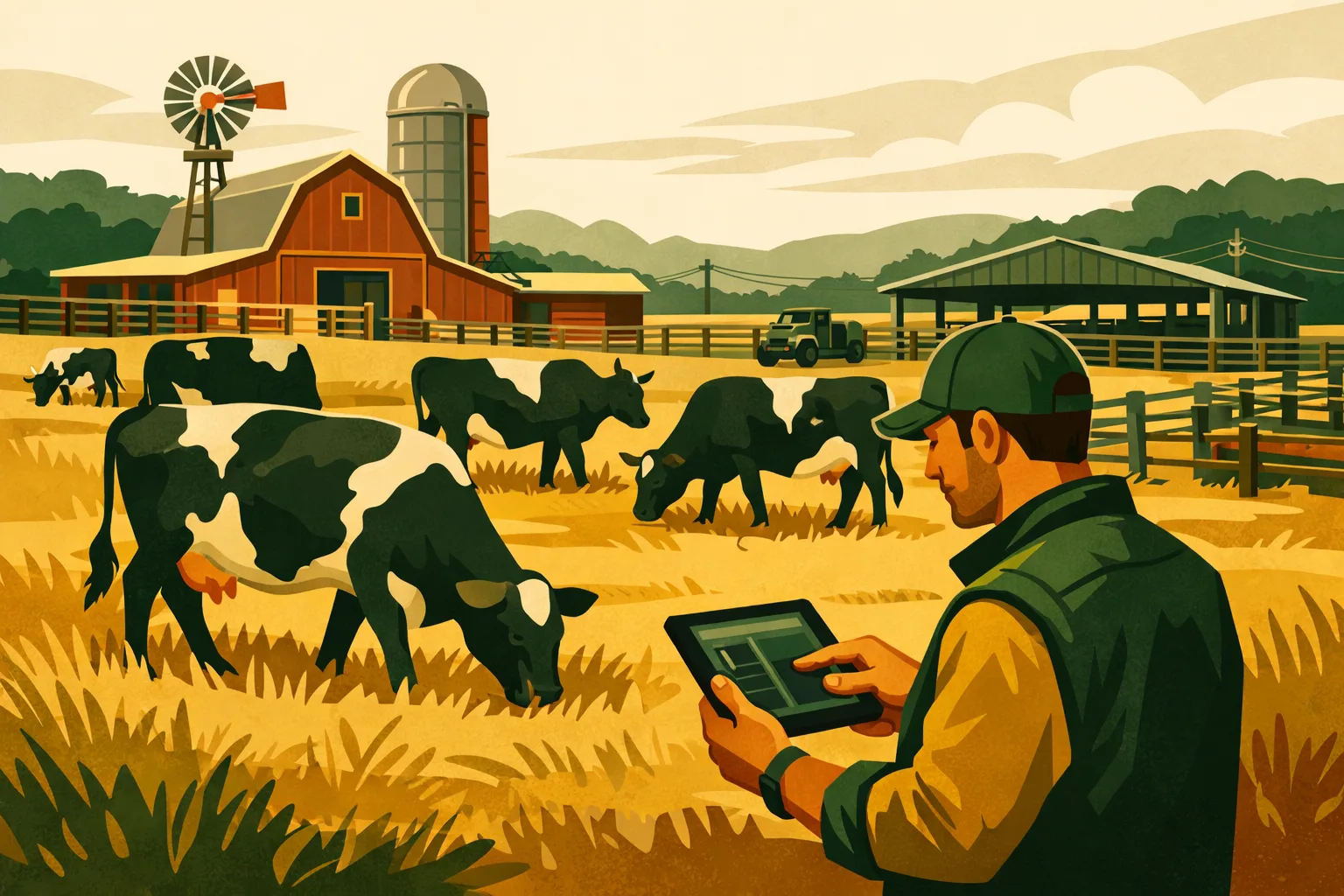
A ranch can look organized from the road and still be leaking time, margin, and decision quality behind the scenes. The problem usually is not a lack of effort. It is that breeding records live in one notebook, treatments in another, pasture moves in someone’s head, inventory in a spreadsheet, and financial decisions wait until the end of the month. Modern cow management software brings those pieces into one operating system so managers can make faster, cleaner decisions while the work is still happening.
For commercial ranches, the value is not just “going paperless.” The real shift is operational control: fewer missed tasks, cleaner herd data, stronger culling decisions, better labor coordination, and earlier visibility into problems that cost money.
This guide breaks down five less-obvious ways cow management software changes day-to-day ranching, what to look for when buying, and how to roll it out without overwhelming the crew.
What Cow Management Software Should Do on a Commercial Ranch
Cow management software is a digital system for managing cattle records, ranch tasks, herd performance, animal health, breeding, inventory, pasture moves, and reporting. For commercial operations, it should support real ranch workflows rather than acting like a generic spreadsheet with livestock labels.
At minimum, a practical system should help manage:
- Cow, calf, bull, replacement heifer, and stocker records
- Individual animal IDs, groups, tags, EIDs, and visual IDs
- Breeding dates, exposure groups, pregnancy checks, calving records, and weaning data
- Health treatments, vaccinations, withdrawal periods, and veterinary history
- Pasture, paddock, lot, or field locations
- Feed, mineral, medicine, and equipment inventory
- Work orders, team assignments, and recurring ranch tasks
- Reports for culling, sales, compliance, and management review
The software does not replace ranch judgment. It gives that judgment better inputs.
If you are comparing broader farm technology platforms, see this related guide on farm management software for commercial operations. For ranches that also run crops, hay, or mixed enterprises, integrated software becomes even more valuable because livestock decisions often depend on forage, labor, equipment, and seasonal fieldwork.
1. It Turns Culling From a Gut Decision Into a Margin Decision
Most experienced ranchers know which cows they do not like. The problem is proving which animals are actually dragging down profitability.
A cow may be easy to handle but consistently wean a light calf. Another may look rough but raise one of the top calves every year. Without clean records, culling often becomes a mix of memory, attitude, age, and convenience.
Cow management software changes that by tying each cow to production history.
What You Can Track That Changes Culling Decisions
Commercial ranches should use software to connect each breeding female to:
- Calving interval
- Pregnancy status by season
- Calf birth date
- Calf birth weight, where recorded
- Calf sex
- Calving ease score
- Mothering notes
- Weaning weight
- Treatment history
- Disposition notes
- Pasture group history
- Bull exposure group
- Rebreeding performance
- Sale or death loss outcome
This creates a better picture than one year’s observation.
For example, a cow that misses once may not be an automatic cull if she has a strong history and the issue is explainable. A cow that calves late, weans light, and requires extra handling becomes easier to identify before she consumes another season of grass and labor.
How This Affects Commercial Ranch Economics
The software is not “making” the cull decision. It is showing which animals are converting ranch resources into saleable pounds and which are not.
That matters because every cow carried through the year consumes:
- Grazing or feed
- Mineral
- Labor
- Bull capacity
- Veterinary and vaccine costs
- Opportunity cost on land and capital
A weak culling process lets low-performing animals hide inside the herd average. Better records expose them.
Practical Culling Workflow
A useful seasonal workflow looks like this:
- Before preg check: Pull a list of open cows, late calvers, repeat treatment cases, poor disposition animals, and older cows.
- At preg check: Confirm status and update records immediately.
- After weaning: Rank cows by calf performance, calving timing, and treatment history.
- Before sale decisions: Build a cull group based on data plus manager judgment.
- After sale: Record sale reason and price, so future analysis improves.
Cost and Time Estimate
For a 200- to 500-cow operation, expect the initial herd record cleanup to take roughly 8 to 25 labor hours, depending on how clean your existing records are. Ongoing data entry can often be kept to a few minutes per event if the crew enters records during processing, preg checking, calving, and weaning rather than reconstructing them later.
The bigger time savings typically come during decision windows. Instead of spending half a day sorting notebooks and spreadsheets, managers can pull reports before the cattle are in the chute.
2. It Makes Labor Coordination Less Dependent on One Person’s Memory
Many ranches run on tribal knowledge. One person knows which gate needs repair, which heifers need watched, which calves were treated, which mineral feeder is almost empty, and which pasture should be moved next.
That works until the key person is gone for a day, a new employee joins, or calving overlaps with planting, hay, repairs, and cattle shipping.
Cow management software creates a shared operating picture.
The Hidden Cost of Memory-Based Management
When work depends on verbal updates, several problems show up:
- Jobs get done twice or not at all
- Treatment follow-ups are missed
- Withdrawal dates are not visible to everyone
- Pasture moves happen late
- Equipment and supplies are not where the crew expects
- New employees need constant supervision
- Managers spend too much time answering routine questions
None of those issues feels dramatic on its own. Together, they create friction every day.
Task Management for Ranch Crews
A good cow management software system should allow managers to assign work by person, location, herd group, and due date. Examples include:
- Check first-calf heifers twice daily during peak calving
- Move pairs from Pasture 4 to Pasture 7 on Friday
- Pull and recheck calf 284 after antibiotic treatment
- Repair west fence before next rotation
- Deliver mineral to north lease
- Confirm water tank float in Lot 3
- Schedule bull soundness exam
- Prepare sale calves for loading
When tasks are linked to animals, groups, or locations, the work becomes easier to verify.
For a broader look at organizing farm crews, see farm task management software for commercial teams.
Why This Matters More in 2026
Labor availability remains a major operating challenge for many farms and ranches. Even when a ranch has good people, experienced labor is hard to replace. Software helps by reducing the amount of information that must be carried in one person’s head.
It also helps owners and managers standardize work across multiple sites, hired crews, family members, seasonal help, and outside service providers.
Example: Calving Season Without the Text Message Trail
A memory-based calving system often looks like this:
- Notes in a truck notebook
- Photos of tags sent by text
- Calving difficulty discussed verbally
- Treatments written on a whiteboard
- Pair movements remembered by whoever moved them
A software-supported system looks different:
- Calf record created at birth
- Dam linked immediately
- Calving ease recorded
- Treatment or colostrum note added if needed
- Pair location updated
- Follow-up task assigned if the calf is weak, pulled, or treated
The difference is not only cleaner records. It allows the next person checking cattle to see what happened without calling three people.
Time Estimate
For a commercial crew, setting up recurring ranch tasks usually takes 2 to 6 hours at rollout. After that, managers may spend 10 to 20 minutes at the start or end of each day reviewing the work board, adjusting priorities, and assigning tasks.
That time often replaces scattered calls, texts, and end-of-day confusion.
3. It Connects Herd Health Records to Risk Management
Health records are often kept because they are required, recommended, or useful after something goes wrong. Cow management software makes them useful before problems spread.
The most valuable health data is not just what was treated. It is when, where, by whom, with what product, at what dose, and what happened next.
What Strong Health Records Should Include
For commercial ranch operations, every treatment record should capture:
- Animal ID or group ID
- Date treated
- Diagnosis or reason
- Product used
- Dose
- Route of administration
- Lot or serial number, where needed
- Person administering treatment
- Withdrawal period
- Follow-up date
- Outcome
- Veterinarian or protocol reference
For vaccines and processing work, records should also track group size, product inventory, and processing date.
This protects the ranch operationally and commercially. Buyers, veterinarians, feedyards, and auditors may all require reliable documentation depending on the market channel.
Reducing Missed Withdrawals and Follow-Ups
One of the strongest practical benefits of cow management software is automatic visibility around withdrawal periods and retreatment dates.
Without software, a treated animal may be marked with paint, written in a notebook, or remembered by a crew member. That system is fragile.
With software, managers can quickly see:
- Animals currently under withdrawal
- Withdrawal release dates
- Animals due for retreatment or recheck
- Treatment failures
- Recurring health issues by group or pasture
- Product use by month or season
This helps prevent costly marketing mistakes and supports better communication with buyers.
Finding Patterns Earlier
Health events become more valuable when they are connected to location, group, source, weather period, feed changes, or processing date.
For example, a ranch may notice:
- A higher rate of foot issues in a specific pasture
- More respiratory cases after a certain shipping window
- Treatment failures with a specific protocol
- Calf scours concentrated in one calving area
- Pinkeye pressure rising in a particular group
The software does not diagnose the problem. It makes the pattern visible earlier so managers can involve the veterinarian, adjust protocols, or change handling and pasture decisions.
For more on record systems and compliance-ready documentation, read livestock record keeping for commercial farms.
Inventory Connection: Medicine, Vaccine, and Supplies
Health records become even more useful when connected to inventory. Each treatment or processing event should reduce product inventory and alert managers when supplies are running low.
That reduces emergency trips, expired product waste, and inconsistent protocols caused by missing supplies.
Typical inventory items to track include:
- Vaccines
- Antibiotics
- Dewormers
- Implants, where used
- Needles and syringes
- Tags and EID supplies
- Mineral
- Salt
- Feed additives
- Calving supplies
- First-aid supplies
If your ranch struggles with supply visibility, this related guide on farm inventory management may help.
Cost Estimate
Software costs vary by platform, herd size, feature set, support, and whether the system includes broader farm management tools. Commercial ranches should budget for:
- Subscription or license fees
- Setup and onboarding time
- Possible hardware, such as tablets, EID readers, label printers, or rugged phones
- Training time for managers and crew
- Data migration from notebooks, spreadsheets, or older systems
For many operations, the larger cost is not the subscription. It is poor adoption. A cheaper system that the crew avoids is more expensive than a practical system that becomes part of daily work.
4. It Changes Pasture and Forage Decisions From Reactive to Planned
Cow management software is often thought of as an animal record tool. On a real ranch, cattle performance is tied directly to pasture, forage, water, fences, weather, and timing.
The surprising benefit is that software can help managers connect herd records to land use.
Why Herd Data and Pasture Data Belong Together
If cattle records and pasture records are separate, managers miss the connection between:
- Which group grazed which pasture
- How long they stayed
- Stocking pressure
- Calving or breeding performance by location
- Health issues by pasture
- Mineral delivery history
- Water or fence problems
- Hay feeding start and stop dates
- Residual forage observations
For cow-calf operations, small differences in timing can affect calf growth, rebreeding, pasture recovery, and winter feed needs.
Better Rotation Planning
Cow management software can support pasture planning by showing:
- Current herd group location
- Planned move dates
- Previous grazing history
- Rest periods
- Stocking by group
- Fence or water tasks tied to pasture
- Mineral and supplement placement
- Notes from previous seasons
This helps avoid the common problem of planning rotations on a calendar while ignoring what actually happened on the ground.
For example, if a pasture was grazed harder than planned during a drought period, the software should preserve that note for next season’s planning. If a pasture consistently produces lighter calves or more health issues, managers can investigate.
Winter Feed Planning
Commercial ranches can also use software to improve winter feeding decisions. Useful records include:
- Hay inventory by stack, field, or lot
- Bale count and estimated weight
- Feed quality test results
- Feeding location
- Daily or weekly feed use
- Herd group fed
- Weather-related feeding changes
- Purchased feed costs
- Mineral use
These records let managers track whether winter feeding is following plan or drifting. When hay disappears faster than expected, software helps identify whether the issue is cow numbers, bale weights, weather, waste, or feeding rate.
Table: Paper/Spreadsheet System vs. Cow Management Software
| Ranch Workflow | Paper or Spreadsheet Approach | Cow Management Software Approach |
|---|---|---|
| Cow production history | Scattered by year, often hard to compare | Full lifetime record by animal |
| Treatment records | Notebook, chute sheet, or vet folder | Searchable records with withdrawal tracking |
| Calving notes | Written manually or sent by text | Linked dam-calf records with location and follow-up tasks |
| Crew assignments | Verbal instructions, texts, whiteboards | Assigned tasks with due dates, locations, and status |
| Pasture moves | Calendar notes or manager memory | Group location history and planned moves |
| Inventory | Manual counts and purchase receipts | Usage tied to treatments, feeding, and supplies |
| Culling decisions | Based on memory and visible condition | Based on pregnancy, calf performance, age, health, and disposition |
| Reporting | Built manually before meetings or sales | Generated from current operational data |
Time Estimate for Pasture Setup
Setting up pastures, leases, lots, and working facilities in the software can usually be done in 2 to 10 hours, depending on the number of locations and whether maps, water points, and infrastructure notes are included.
Once locations are built, recording moves can take less than a minute per group when done as part of the daily workflow.
5. It Makes Ranch Meetings Shorter and Decisions Faster
Many ranch management meetings start with a basic problem: no one is looking at the same information.
The owner has financial concerns. The cow boss has herd observations. The office has invoices. The veterinarian has health notes. The crew has task knowledge. The banker or advisor wants performance numbers. Everyone may be right, but the data is fragmented.
Cow management software gives the ranch a shared fact base.
Reports That Actually Help Operators
Commercial ranches should avoid software that creates impressive dashboards but does not support action. Useful reports answer practical management questions:
- Which cows are open?
- Which cows calved late?
- Which calves are missing weights?
- Which animals are under withdrawal?
- Which bulls were exposed to which groups?
- Which pastures are currently occupied?
- Which tasks are overdue?
- Which medicine inventory is low?
- Which replacement heifers meet selection criteria?
- Which groups are ready for sale or shipment?
- Which animals have repeated health issues?
These reports are valuable because they lead directly to work.
Better Communication With Buyers and Service Providers
Clean records can support stronger communication with:
- Veterinarians
- Nutritionists
- Lenders
- Insurance providers
- Sale barns
- Direct buyers
- Feedlots
- Auditors
- Employees and family partners
For example, when selling calves, the ranch can more easily provide processing dates, vaccine history, weaning information, and source records where relevant. When working with a vet, health reports can show treatment outcomes rather than vague impressions.
Faster Seasonal Planning
The right software improves major seasonal decisions:
Breeding Season
Managers can review bull groups, cow age, previous conception performance, pasture assignments, and breeding windows.
Calving Season
The ranch can track calving distribution, problem births, mothering issues, and follow-up needs.
Branding or Processing
Crews can prepare product inventory, chute sheets, tag supplies, and task assignments before cattle arrive.
Weaning
Managers can sort calves, record weights, link performance to dams, and prepare sale groups.
Preg Check
Open and late-bred cows can be identified quickly and compared against past performance.
Winter Feeding
Feed inventory, cow numbers, weather pressure, and feeding rates can be monitored before shortages become urgent.
The Unexpected Benefit: Less End-of-Season Reconstruction
A lot of ranch data gets created weeks or months after the event, often from memory. That is where errors multiply.
Software encourages recording work as it happens. That reduces the painful reconstruction process at the end of calving, weaning, tax season, audit preparation, or lender review.
For mixed farms that need to connect livestock with equipment, labor, and crop work, see agriculture software for farm operations.
What to Look for When Buying Cow Management Software
The right cow management software should fit the way a commercial ranch actually operates. A long feature list matters less than whether the system will be used consistently during busy seasons.
1. Simple Animal and Group Management
The system should handle both individual animals and groups. Cow-calf operations often need individual cow records, while stocker or backgrounding operations may manage groups more heavily. Many ranches need both.
Look for:
- Easy animal creation
- Bulk imports
- Tag and EID support
- Group movements
- Dam-calf linking
- Bull exposure records
- Sale and death loss records
- Custom fields for ranch-specific needs
2. Mobile-Friendly Field Use
If the software only works well from an office computer, adoption will suffer. Ranch records are created in the pasture, at the chute, in the calving lot, and from the pickup.
Prioritize:
- Mobile access
- Fast data entry
- Offline or low-connectivity workflow where available
- Simple task completion
- Photo or document attachments
- Role-based access for employees
3. Strong Task and Workflow Management
The software should support day-to-day execution, not only record storage.
Useful features include:
- Recurring tasks
- Assigned responsibilities
- Due dates
- Location-based work
- Animal-linked follow-ups
- Overdue task visibility
- Notes and status updates
4. Health and Compliance Records
For any commercial cattle operation, health records need to be reliable and easy to retrieve.
Look for:
- Treatment protocols
- Withdrawal tracking
- Product inventory connection
- Vaccine history
- Vet notes
- Searchable records
- Exportable reports
5. Inventory and Cost Visibility
Inventory features help connect cattle work with financial control. Even basic tracking can reduce waste and emergency purchasing.
Useful categories include:
- Feed
- Hay
- Mineral
- Medicine
- Tags
- Fuel
- Supplies
- Equipment parts
For a deeper look at controlling inputs, read farm expense tracking software.
6. Reporting Without Spreadsheet Gymnastics
Reports should be easy for managers to run without exporting everything into spreadsheets first.
At minimum, the system should report by:
- Animal
- Group
- Pasture
- Date range
- Health event
- Breeding status
- Calving season
- Weaning performance
- Inventory item
- Task status
7. Support and Onboarding
Commercial ranch software is only valuable if the team gets it running. Ask vendors about:
- Data import support
- Training resources
- Live support availability
- Setup guidance
- Permission settings
- Multi-location management
- Ongoing updates
A system that looks good in a demo but leaves you alone during rollout can stall before it becomes useful.
Practical Rollout Checklist for a Commercial Ranch
Use this checklist to implement cow management software without disrupting the operation.
Phase 1: Define the Operating Goal
Before entering data, decide what the software must improve first.
Choose one to three priorities:
- Better cow culling decisions
- Cleaner calving records
- Stronger health and withdrawal tracking
- Better crew task coordination
- Pasture movement tracking
- Inventory control
- Sale preparation
- Multi-site visibility
Do not try to perfect everything in week one.
Phase 2: Clean Up Core Records
Prepare the minimum data needed to operate:
- Active cow list
- Bulls
- Replacement heifers
- Calves or current calf crop
- Stocker groups, if applicable
- Pastures, lots, leases, and working facilities
- Employee users
- Key inventory items
- Current health protocols
- Current breeding or calving groups
If old data is messy, start with current active animals and add history later where useful.
Phase 3: Standardize IDs and Naming
Agree on consistent formats for:
- Cow IDs
- Calf IDs
- EIDs
- Pasture names
- Herd groups
- Treatment names
- Task categories
- Sale groups
Poor naming creates long-term confusion. Keep it simple and consistent.
Phase 4: Train by Workflow, Not by Feature
Train the crew on real jobs:
- How to record a calving event
- How to record a treatment
- How to complete a task
- How to move a group
- How to check withdrawal status
- How to update inventory
- How to add a note from the field
Avoid long software tours. Teach the actions people will use daily.
Phase 5: Start During a Defined Season
Good starting points include:
- Pre-calving setup
- Branding or processing
- Weaning
- Preg check
- Winter feed planning
- New grazing season
Pick a season where the value is obvious and the workflow is repeatable.
Phase 6: Review Adoption Weekly
For the first month, review:
- Are records being entered on time?
- Are tasks being completed in the system?
- Are employees using consistent terms?
- Are reports useful?
- What is slowing people down?
- Which records are missing?
- What should be simplified?
Fix friction quickly. Software adoption is built in the first few weeks.
Common Mistakes That Limit Results
Mistake 1: Treating Software Like an Office Project
Cow records are not created in the office. They are created during work. If the system does not fit chute-side, pasture-side, and pickup workflows, it will become another after-hours burden.
Mistake 2: Entering Too Much Too Soon
Some ranches try to digitize decades of records before using the system. That delays value. Start with active animals, current groups, current tasks, and current inventory. Add old records only when they improve decisions.
Mistake 3: Failing to Assign Ownership
Someone must own data quality. That person does not have to enter every record, but they should manage standards, review reports, and correct issues.
Mistake 4: Ignoring Crew Buy-In
If employees see the software as surveillance or extra paperwork, adoption will struggle. Position it as a tool to reduce confusion, prevent missed work, and make jobs clearer.
Mistake 5: Not Using the Reports
Data entry without reporting is just digital filing. Schedule regular review times around calving, breeding, preg check, weaning, inventory ordering, and sale decisions.
How to Measure Whether Cow Management Software Is Working
After rollout, track whether the software is improving management. Useful measures include:
- Fewer missing animal records
- Faster preg check and culling decisions
- Cleaner treatment and withdrawal reports
- Better visibility into overdue tasks
- Reduced duplicate communication
- More accurate inventory counts
- Faster sale group preparation
- Better calving and weaning records
- Stronger pasture movement history
- Less end-of-season data reconstruction
You do not need invented benchmarks to see progress. Compare your own operation before and after adoption.
Ask these questions after 60 to 90 days:
- Can we find any animal’s current status quickly?
- Can we see which tasks are overdue?
- Can we identify treated animals and withdrawal dates?
- Can we produce a cull list without rebuilding records manually?
- Can multiple people understand what happened yesterday?
- Can we make better decisions before the next working day?
If the answer is yes, the software is becoming part of the ranch operating system.
How FarmsFlo Helps
FarmsFlo helps commercial farm and ranch teams bring livestock records, tasks, inventory, and operational planning into one practical platform. Instead of managing cattle work through notebooks, spreadsheets, text messages, and memory, FarmsFlo gives your team a clearer way to organize the work that drives herd performance and ranch profitability.
With FarmsFlo, ranch managers can coordinate daily tasks, track key records, manage inventory, and improve visibility across people, animals, and locations. That makes it easier to prepare for calving, processing, pasture moves, health work, weaning, and sale decisions without losing information along the way.
If your ranch is ready to move from scattered records to a more controlled operating system, start a FarmsFlo trial at farmsflo.com.