5 Reasons Ranchers Actually Prefer Livestock Management Apps in 2026
Explore why livestock management apps are gaining popularity among ranchers in 2026 and how they enhance operational efficiency and productivity.
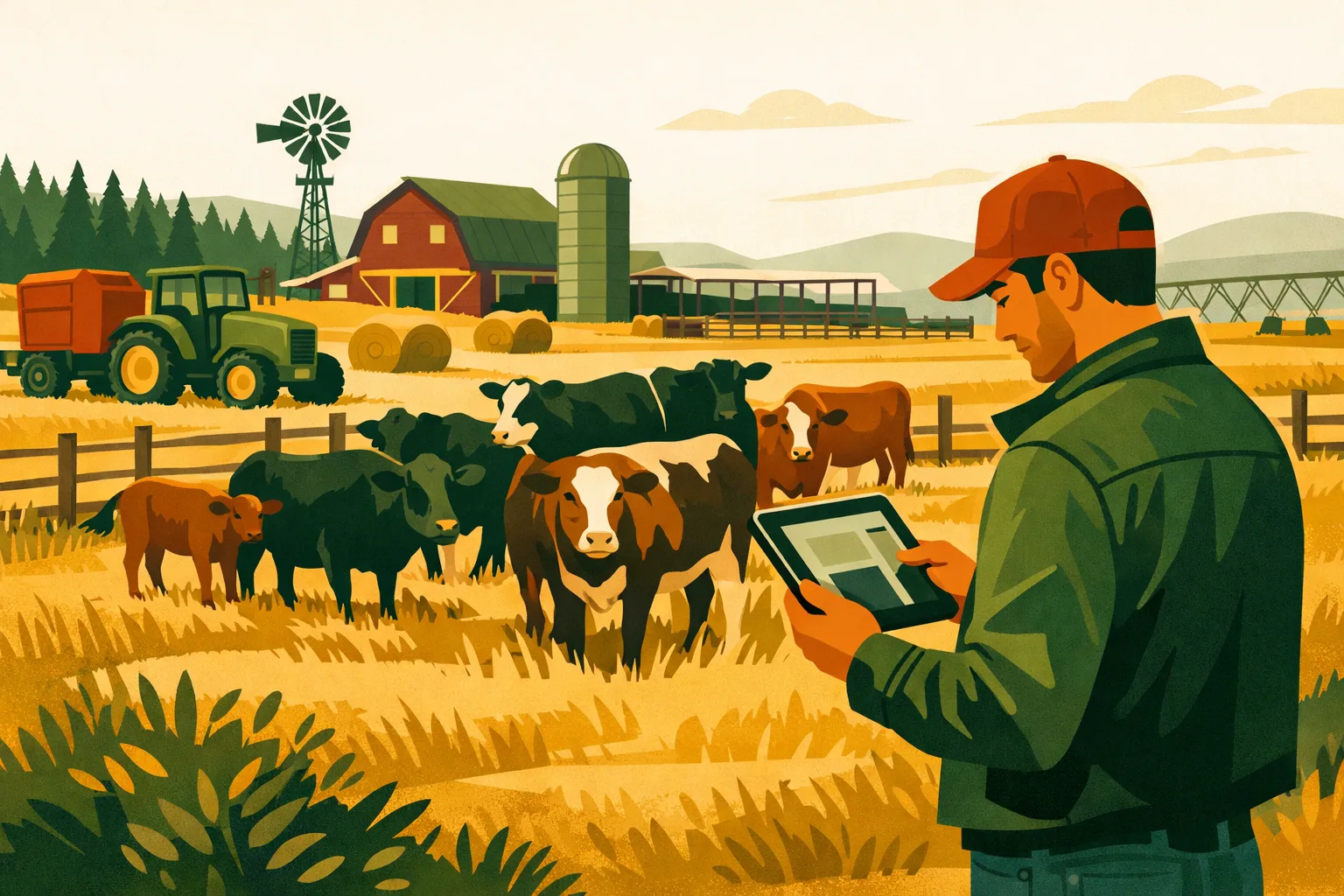
When a cow gets treated, a bull moves past his expected service window, or a pasture gets grazed harder than planned, the value of that information depends on how fast your crew can capture it and how easily you can use it later. For commercial cattle operations, the old mix of pocket notebooks, spreadsheets, text messages, and memory is getting harder to defend. Margins are too tight, labor is too stretched, and buyers are asking for cleaner records.
A livestock management app gives ranchers a faster way to record animal events, track herd performance, manage field work, and keep everyone working from the same operational picture. In 2026, the shift is not about chasing technology for its own sake. It is about reducing missed details, making better culling and breeding decisions, and saving office time when records need to be reviewed, shared, or audited.
Below are the main reasons cattle ranchers are moving to livestock management apps, what to look for before buying, and how to roll one out without disrupting daily work.
Why Livestock Records Are Moving From Paper to Mobile
Commercial ranching has always depended on records. The difference now is volume, speed, and accessibility.
A 200-head cow-calf operation may be able to limp along with paper if one person handles most decisions. A 1,500-head operation spread across leased ground, multiple crews, seasonal employees, veterinarians, and truckers has a different challenge. Records need to move with the work.
Modern ranch teams need to answer questions like:
- Which cows were treated, when, with what product, and by whom?
- Which calves are from which dam and sire group?
- Which animals are open, late-bred, problem calvers, or poor performers?
- Which pasture group was moved, when, and how long was the recovery period?
- Which lots or buyer groups require treatment history or source records?
- Which employee completed the task, and was anything missed?
- What animals need follow-up today?
A paper notebook can capture some of this. A spreadsheet can organize some of it. But neither works well when the work happens in a pasture, alley, trailer, calving barn, or remote lease.
A livestock management app solves a practical problem: it lets operators capture operational data at the point of work and use it later without retyping, decoding handwriting, or searching through messages.
For related farm data planning, see the FarmsFlo guide to farm record keeping and farm management software.
Reason 1: Apps Make Herd Records Usable in Real Time
The biggest operational advantage of a livestock management app is not that records are “digital.” It is that records become searchable, current, and usable while decisions are being made.
Paper Records Create Delay
Many ranches still collect animal data on paper, then enter it into a spreadsheet later. That creates several problems:
- Notes get lost before entry.
- Handwriting is misread.
- Treatments are entered days or weeks late.
- Follow-up dates are forgotten.
- One employee’s notebook is not visible to the rest of the crew.
- Historical records are hard to review chute-side.
Delay weakens record value. If a calf is treated today, the withdrawal period, dose, lot number, and follow-up plan matter immediately. If that data gets entered Friday afternoon after three long days of work, you are relying on memory.
Mobile Records Support Chute-Side and Pasture-Side Decisions
With a livestock management app, the crew can record events as they happen:
- Births
- Weaning
- Vaccinations
- Treatments
- Breeding exposures
- Preg checks
- Death loss
- Weights
- Group moves
- Sales
- Culling decisions
- Notes on temperament, feet, udders, body condition, or performance
The key is that records connect to individual animals, groups, or locations. When a cow comes through the chute, a manager can review her history before making a decision.
For example:
- A cow that raised a light calf two years in a row may move to the cull list.
- A heifer that needed assistance calving may be flagged for closer review.
- A treated steer can be kept out of a sale group until the withdrawal window clears.
- A pasture group can be reviewed before moving to the next paddock.
This is where software becomes operational, not administrative.
What “Good” Real-Time Records Look Like
A strong livestock management app should make these tasks fast:
- Search animal by tag, EID, name, group, or pasture.
- Add treatment details without excessive typing.
- Capture weights and dates quickly.
- Assign animals to groups.
- Add notes from a phone in the field.
- View alerts and follow-ups.
- Sync data across devices.
- Export records when needed.
If the app slows the crew down at the chute, it will not be used consistently. For commercial ranches, speed matters more than fancy dashboards.
Time Estimate: Paper vs. App-Based Record Entry
Actual time savings vary by ranch size, crew habits, and how records are currently handled. A practical way to estimate value is to compare duplicated work.
| Task | Paper/Spreadsheet Workflow | Livestock Management App Workflow |
|---|---|---|
| Treatment record | Write in notebook, re-enter later, file receipts separately | Record at animal or group level at time of treatment |
| Preg check results | Mark chute sheet, enter into spreadsheet later | Enter status directly by tag or scan |
| Pasture move | Text manager or write on calendar | Log group move with date and location |
| Follow-up treatment | Rely on notes or memory | Create task or reminder |
| Buyer records | Compile from multiple files | Export selected animal or group history |
| Crew visibility | Limited to whoever has the notebook | Shared view across authorized users |
For a medium-sized cattle operation, the major gain is usually not one dramatic time cut. It is fewer duplicate entries, fewer lost details, and faster retrieval when records matter.
Reason 2: Apps Improve Animal Health Management and Compliance
Animal health records are one of the strongest use cases for livestock software. Commercial ranches need more than a list of treatments. They need records that hold up under management review, veterinary consultation, buyer requests, and withdrawal compliance.
Treatment Records Need Detail
A usable treatment record should capture:
- Animal ID or group ID
- Date treated
- Diagnosis or reason
- Product used
- Dose
- Route of administration
- Lot number, when required
- Person administering treatment
- Withdrawal period
- Follow-up date
- Outcome
Paper systems often miss one or more of these fields, especially during busy seasons. A livestock management app can standardize entries so the crew records the same details every time.
This matters for cow-calf, stocker, backgrounding, and finishing operations. If you are treating pulls, managing respiratory disease risk, documenting foot rot treatment, or recording vaccination protocols, the structure of the record matters.
Withdrawal Tracking Reduces Sale Risk
Residue avoidance depends on accurate dates and product records. If animals are marketed before a withdrawal period is complete, the consequences can be serious.
A livestock management app helps by keeping treatment history attached to animals or groups. Before a sale or shipment, the manager can review whether any animals are restricted by withdrawal dates.
A good app should help you:
- Flag treated animals.
- Show eligible sale dates.
- Maintain treatment history.
- Group animals based on marketing readiness.
- Export records for internal review or buyer documentation.
This is especially useful for operations that market animals through multiple channels or move cattle between pastures, grow yards, and sale groups.
Veterinary Collaboration Gets Easier
When a veterinarian asks what was treated, how often, and what the response was, a complete app-based record gives better answers than scattered notes. Over time, this can support better herd health planning.
Useful reports may include:
- Treatment frequency by group
- Repeat treatments
- Death loss history
- Vaccine dates
- Calving complications
- Disease patterns by pasture, source, or class
- Animals with chronic issues
These records do not replace veterinary judgment. They make conversations with your vet more productive.
Cost Estimate: Health Record Gaps
The cost of poor health records is difficult to measure until something goes wrong. Common cost areas include:
- Extra labor searching for records
- Animals held back from sale because treatment history is unclear
- Repeat treatments caused by missed follow-up
- Poor culling decisions due to incomplete history
- Lost buyer confidence if documentation is weak
- More time preparing records for audits, programs, or lender reviews
A livestock management app is usually easiest to justify when it reduces one or more of these costs. For ranches handling large numbers of animals, even modest improvements in record accuracy can have meaningful operational value.
Reason 3: Apps Help Ranchers Make Better Breeding, Calving, and Culling Decisions
Herd profitability depends heavily on reproductive performance and replacement decisions. A livestock management app gives managers a cleaner way to connect breeding, calving, weaning, and culling data.
Breeding Records Need More Than Dates
Useful breeding records may include:
- Exposure dates
- Bull assignments
- AI dates
- Pregnancy status
- Expected calving window
- Calving date
- Calf ID
- Dam ID
- Sire or sire group
- Calving ease
- Birth weight, when used
- Weaning weight
- Cow condition notes
- Open status
- Rebreed performance
For larger ranches, these records can become complicated quickly. Multiple breeding pastures, cleanup bulls, leased bulls, heifer groups, and staggered calving seasons all create room for error.
An app helps by tying these events together in the animal record.
Better Culling Requires Historical Context
Culling decisions are often made during a short window when cattle are being worked. Without quick access to history, managers may rely on memory or only the most recent observation.
A livestock management app allows decisions based on multiple years of data. That can include:
- Open cows
- Late calvers
- Assisted calvings
- Poor udder structure
- Bad temperament
- Chronic lameness
- Poor weaning performance
- Repeat health problems
- Age and teeth condition
- Cow productivity by calf performance
This is especially valuable when more than one person works the herd. The manager who remembers every cow may not be the same person at the chute when culling decisions are made.
Replacement Heifer Selection Gets More Objective
For operations retaining heifers, good records support better selection. Instead of choosing replacements based only on appearance and convenience, managers can use performance and dam history.
Selection factors may include:
- Dam productivity
- Calving interval
- Herd health history
- Weaning performance
- Structural soundness notes
- Disposition
- Breed group or genetic plan
- Weight gain or development history
No app makes the decision alone. The value is that the right information is available when the decision is being made.
Calving Season Becomes Easier to Manage
During calving, timely records matter. A livestock management app can help the crew:
- Record births quickly.
- Match calves to dams.
- Track difficult births.
- Note colostrum, tagging, or processing status.
- Flag calves needing attention.
- Track twins, stillbirths, or abandoned calves.
- Record pasture or calving area.
For spring calving operations dealing with weather, mud, night checks, and short labor, this can reduce confusion. For fall calving operations, it can help coordinate records across pasture systems.
A good mobile workflow should let the crew enter a calving event in less than a minute once the animal is identified. If the app requires too many taps or does not work where the crew calves, adoption will suffer.
Reason 4: Apps Connect Livestock, Pasture, Labor, and Equipment Work
Cattle records are only part of the ranch operation. A commercial ranch also manages grazing, feed, equipment, fencing, labor, water systems, hay inventory, fuel, and seasonal tasks. The best livestock management app should fit into that wider operating picture.
Livestock Movement Affects Pasture Recovery
Pasture records often live separately from herd records. That makes it harder to answer basic grazing questions:
- Which group was in this pasture last?
- How long was it grazed?
- When did the pasture start recovering?
- Which pastures were overused during drought?
- Which lease has the highest management load?
- Which water points or fences need recurring repair?
When cattle moves are logged in the same system as field and task records, managers can see patterns more clearly.
Useful grazing records include:
- Pasture name or ID
- Group moved in
- Move-in date
- Move-out date
- Stocking details
- Forage condition notes
- Water status
- Fence issues
- Supplemental feed notes
- Weather-related observations
For more on coordinating field and livestock operations, see the FarmsFlo guide to farm task management and farm labor management.
Feed and Inventory Records Prevent Surprises
Feed inventory affects winter planning, backgrounding decisions, and drought response. When feed records are disconnected from cattle groups, the manager may not have a clear view of usage.
A livestock management app or integrated farm operations platform can help track:
- Hay inventory by stack, field, cutting, or location
- Feed delivered to groups
- Mineral and supplement use
- Feed purchases
- Bale counts
- Shrink and spoilage notes
- Feedlot or backgrounding ration events
- Storage locations
- Reorder needs
This is practical for ranches that run both cattle and hay ground. If the crew feeding cattle can update inventory from the field, the office has fewer surprises.
For additional operational planning, review farm inventory management.
Equipment and Facility Issues Become Trackable
Livestock work depends on working infrastructure. Chutes, scales, trailers, tractors, feed trucks, water systems, pumps, ATVs, fencing tools, and barn equipment all affect daily output.
A common ranch problem is that repairs are reported informally:
- “The north lot waterer is acting up.”
- “The chute gate needs welding.”
- “The feed truck battery is weak.”
- “The scale was reading funny.”
If those notes never become assigned tasks, small problems become bigger interruptions.
A connected app can turn field observations into trackable work:
- Assign repair task.
- Attach location.
- Add photo.
- Set priority.
- Assign employee.
- Track completion.
- Record parts used.
- Keep maintenance history.
This matters during working season, calving, haying, and shipping. Downtime at the wrong time is expensive, even if the repair itself is small.
For more on equipment workflows, see farm equipment maintenance.
Labor Coordination Improves
As ranches scale, labor coordination becomes one of the hardest management jobs. A livestock management app can reduce back-and-forth by giving crews a shared task list.
Examples:
- Move replacement heifers to east pasture.
- Recheck treated calves.
- Haul mineral to lease pasture.
- Repair water gap after rain.
- Sort steers for shipment.
- Record weights during processing.
- Pull bull from heifer group.
- Re-tag cow with missing tag.
- Check late-calving group.
A task system works best when tied to animals, groups, locations, and due dates. That lets managers see not only what needs to be done, but where and why.
Reason 5: Apps Make Ranch Data Easier to Use for Buyers, Lenders, Audits, and Planning
Commercial ranches increasingly need organized records beyond internal management. Clean data helps with marketing, financial planning, risk management, and communication.
Buyers May Want More Documentation
Depending on your marketing channel, buyers may ask for:
- Source and age information
- Vaccination history
- Treatment records
- Weaning date
- Backgrounding information
- Feeding details
- Program eligibility records
- Movement history
- Management certifications or process claims
A livestock management app can make these records easier to compile. This does not guarantee a premium. Premiums depend on market conditions, buyer requirements, cattle quality, and program rules. But organized records improve your ability to participate in markets that require documentation.
Lenders and Managers Need Better Operating Visibility
A ranch manager or owner may need to evaluate:
- Inventory by class
- Expected calf crop
- Death loss
- Open rate
- Replacement needs
- Feed requirements
- Culling plan
- Sale timing
- Labor load
- Equipment needs
- Cash flow timing
When records are clean, planning is faster. When records are scattered, the manager spends more time building the picture before making decisions.
This is especially relevant for multi-location operations, family partnerships, custom grazing businesses, and ranches with off-farm ownership.
Audit Preparation Takes Less Scrambling
Some ranches participate in programs that require documentation. Others need internal records for insurance, compliance, or customer review. App-based records can reduce the scramble before an audit or review.
Useful exports may include:
- Animal inventory
- Treatment logs
- Vaccine records
- Movement history
- Feed records
- Mortality records
- Task completion history
- Employee activity records
- Equipment service records
The main benefit is consistency. If the crew records data the same way every day, reporting becomes far easier.
2026 Planning Requires Better Information
Ranch operators are dealing with rising input costs, tight labor, weather volatility, market swings, and more complex land arrangements. Better data will not remove these pressures, but it gives managers a stronger basis for decisions.
A livestock management app can support planning around:
- Which cows are worth keeping
- Which pastures need rest or improvement
- When to purchase feed
- How many replacements to retain
- Which groups are ready to market
- Whether labor is overloaded during peak seasons
- Which equipment needs replacement
- Where management time is being lost
The app becomes more valuable as records accumulate. One season of data is useful. Multiple seasons create real management history.
Livestock Management App vs. Spreadsheet vs. Paper
Paper and spreadsheets are familiar, low-cost, and flexible. They still have a place. The question is whether they are strong enough for the work your operation needs to manage.
| Feature | Paper Notebook | Spreadsheet | Livestock Management App |
|---|---|---|---|
| Fast field entry | Good for quick notes | Poor on mobile unless simplified | Good if mobile-first |
| Searchable history | Poor | Good if maintained | Strong |
| Multi-user access | Poor | Moderate | Strong |
| Chute-side animal lookup | Poor | Moderate | Strong |
| Treatment withdrawal tracking | Manual | Manual or formula-based | App-supported |
| Task assignment | Poor | Moderate | Strong |
| Pasture and location records | Manual | Moderate | Strong if map/location features exist |
| Reports and exports | Manual | Good with setup | Strong |
| Offline use | Excellent | Limited | Depends on app |
| Data consistency | Low | Moderate | Strong with required fields |
| Setup effort | Low | Moderate | Moderate |
| Long-term scalability | Poor | Moderate | Strong |
The right answer depends on the operation. A small, single-manager herd with simple marketing may be comfortable with spreadsheets. A larger ranch with employees, multiple locations, frequent animal events, and buyer documentation needs usually reaches the limits of manual systems.
What to Look for in a Livestock Management App
Choosing software is not about the longest feature list. It is about fit. The right livestock management app should match your ranch’s actual workflow.
1. Mobile-First Field Use
Ranch work happens outside the office. The app should be easy to use on a phone or tablet.
Look for:
- Quick animal search
- Simple event entry
- Minimal typing
- Offline capability or reliable sync
- Photo attachments
- Notes by voice or short text
- Easy tag and EID handling
- Fast task updates
If cell coverage is weak, offline functionality becomes a major selection factor. Ask how the app handles data entry when service drops and how it prevents duplicate or conflicting records.
2. Animal, Group, and Location Tracking
Not every event is individual-animal specific. Many ranch tasks are group-based.
The app should handle:
- Individual animals
- Cow-calf pairs
- Lots
- Pasture groups
- Sale groups
- Treatment groups
- Replacement groups
- Breeding groups
It should also support locations, including pastures, pens, barns, traps, lease ground, water points, and working facilities.
3. Health, Breeding, and Performance Records
For cattle operations, the core record modules should include:
- Treatments
- Vaccines
- Births
- Deaths
- Weights
- Preg checks
- Breeding exposure
- Calving notes
- Weaning
- Sales
- Purchases
- Culls
- Movements
Avoid systems that only track inventory counts but do not support management events. Animal inventory is useful, but event history is where better decisions come from.
4. Task and Crew Management
A livestock management app is more valuable when it helps direct work.
Look for:
- Assignable tasks
- Due dates
- Priority levels
- Notes and photos
- Location tagging
- Recurring tasks
- Completion tracking
- User permissions
- Activity history
This keeps animal records connected to the labor required to manage them.
5. Reporting and Export Options
You should be able to get your data out when needed. Before subscribing, check whether the app can export:
- Animal lists
- Health records
- Treatment reports
- Inventory reports
- Movement logs
- Sales groups
- Breeding reports
- Calving reports
- Task history
Avoid any system that locks you into proprietary records with limited export options.
6. Integrations and Hardware Compatibility
Depending on your operation, integrations may matter.
Ask about:
- EID readers
- Scales
- Accounting software
- Mapping tools
- Weather data
- Payroll or labor systems
- Inventory tools
- Regulatory or program reporting
- CSV imports and exports
Not every ranch needs every integration. Focus on bottlenecks in your current workflow.
7. Cost That Matches the Scale of the Ranch
Livestock app pricing varies by features, number of users, herd size, and support. For a commercial operation, cost should be evaluated against labor savings, avoided errors, and management gains.
Common cost categories include:
- Monthly or annual subscription
- Per-user fees
- Per-head fees
- Setup or onboarding
- Data import assistance
- Hardware such as tablets, EID readers, or rugged cases
- Staff training time
- Support level
A lower-cost app that nobody uses is expensive. A more capable app that simplifies daily work may pay for itself faster through reduced admin time and better decision-making.
Practical Checklist: How to Roll Out a Livestock Management App Without Chaos
A poor rollout can sink good software. Treat implementation like an operational project, not just a purchase.
Step 1: Define the Records You Actually Need
Start with business decisions, not software features.
Identify the records needed for:
- Animal health
- Breeding and calving
- Weaning and weights
- Sales and buyer requirements
- Pasture moves
- Feed inventory
- Crew tasks
- Equipment repairs
- Compliance or program documentation
Do not try to digitize every possible note on day one. Focus on the records that affect money, risk, labor, or compliance.
Step 2: Clean Up Animal IDs
Before importing data, check:
- Duplicate tags
- Missing tags
- Retag history
- Cow-calf pair matching
- EID numbers
- Sold or dead animals still listed as active
- Old groups that should be archived
Bad IDs create bad records. This cleanup can take a few hours for a smaller herd or several days for larger operations with older data.
Step 3: Choose a Pilot Group
Test the app on one manageable area before rolling it out across the whole ranch.
Good pilot options:
- Replacement heifers
- Calving group
- Stocker group
- Bulls
- One pasture unit
- One processing day
- One employee crew
Run the pilot long enough to test real work: treatments, moves, tasks, notes, and reports.
Step 4: Build Standard Entry Rules
Create simple rules for the crew.
Examples:
- Every treatment gets product, dose, date, and person.
- Every pasture move gets group, location, and date.
- Every death gets animal ID, date, and reason if known.
- Every calving record gets dam ID, calf ID, sex, and calving ease.
- Every repair request gets location and photo when possible.
Consistency is more valuable than complexity.
Step 5: Train for the Chute and Field
Office training is not enough. Train where the work happens.
Plan to test:
- Phone use in sunlight
- Tablet mounting
- Dust and moisture protection
- Offline data entry
- Battery life
- Glove use
- EID scanning
- Scale integration
- Data sync after work
A realistic training session may take 1–2 hours for basic users and longer for managers who will run reports, imports, and settings.
Step 6: Assign Data Ownership
Decide who is responsible for:
- Adding new animals
- Archiving sold or dead animals
- Reviewing treatment records
- Correcting errors
- Managing users
- Exporting reports
- Updating pasture and location names
- Monitoring task completion
Without ownership, data quality declines over time.
Step 7: Review After 30 Days
After the first month, ask:
- Are crews using it consistently?
- Which fields are too slow?
- Which records are missing?
- Are reports useful?
- Are tasks being completed more reliably?
- Is data entry happening in the field or later?
- Does the app work in low-service areas?
- Do managers trust the data?
Adjust workflows before expanding further.
Common Mistakes Ranchers Make When Choosing Livestock Software
The wrong software choice usually comes from skipping workflow evaluation. Avoid these mistakes.
Buying Based on Features Instead of Daily Use
A long feature list does not matter if the app is clumsy during processing or impossible to use in the pasture. Test the tasks your crew does most often.
Ignoring Offline Conditions
Many ranches have weak service in working areas. If the app cannot handle offline entry or poor connectivity, the crew will fall back to paper.
Failing to Standardize Animal IDs
If tag numbers, EIDs, and group names are inconsistent, reports become unreliable. Clean data starts with clear ID rules.
Overcomplicating the First Rollout
Do not require every employee to enter every possible field from day one. Start with high-value records, then expand.
Not Checking Export Options
You should be able to export your records. If you cannot easily retrieve your own data, reconsider the platform.
Leaving the Crew Out of the Decision
The people entering records should help test the app. If the crew sees the system as office-driven busywork, adoption will be weak.
Cost and ROI Questions to Ask Before You Buy
A livestock management app should be evaluated like any other operational investment.
Ask these questions before choosing:
- How many users need access?
- How many animals need to be tracked?
- Are we tracking individual animals, groups, or both?
- What records are required for buyers or programs?
- How many hours per month are spent re-entering or searching for records?
- How often do missed follow-ups or unclear records create problems?
- What hardware do we need?
- Who will manage data quality?
- How long will training take?
- Can we start with a trial or pilot before committing?
Practical ROI Areas
Look for value in these areas:
- Less duplicate data entry
- Faster treatment and breeding record retrieval
- Cleaner buyer documentation
- Better culling decisions
- Reduced missed follow-up work
- Improved task accountability
- Easier pasture and feed planning
- Less time preparing reports
- Fewer communication gaps between crews
A livestock management app does not need to replace good stockmanship. It should give good managers better information with less administrative drag.
How FarmsFlo Helps
FarmsFlo is built for commercial farm and ranch teams that need practical operations software without adding office complexity. For cattle operations, FarmsFlo helps connect livestock work with the rest of the ranch: tasks, teams, fields, equipment, inventory, and day-to-day records.
With FarmsFlo, your operation can:
- Assign and track ranch tasks across crews
- Record field and livestock-related work from the field
- Organize operational records in one place
- Coordinate pasture, equipment, and labor activity
- Track inventory and supplies
- Improve visibility for managers and owners
- Reduce scattered notes, texts, and spreadsheets
- Keep teams aligned during busy seasons
If your ranch is ready to move from disconnected records to a cleaner operating system, start a FarmsFlo trial at farmsflo.com and see how it fits your 2026 livestock workflow.