5 Reasons Dairy Herd Management Software Will Actually Transform Your Farm in 2026
Unlock the potential of dairy herd management software in 2026. Discover how it can streamline operations and enhance productivity for your farm.
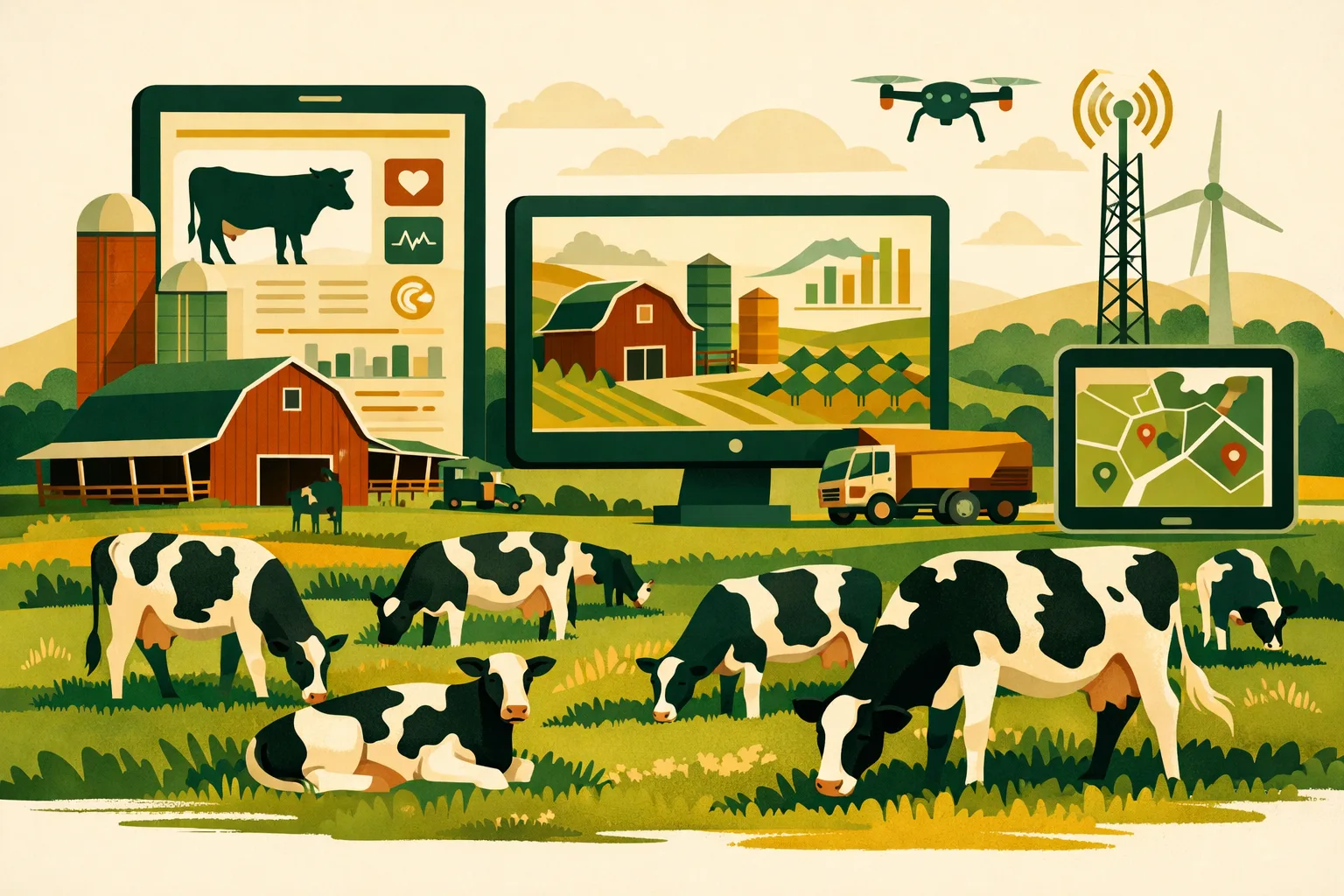
A profitable dairy farm does not fail because one record was missed. It usually slips because dozens of small gaps compound: a treatment not logged clearly, a heat observation buried in a notebook, a feed change not connected to milk response, a worker unsure which cows need attention, or a compliance file that takes hours to rebuild under pressure. At commercial scale, those gaps cost time, margins, and management control.
Dairy operations in 2026 need more than a digital notebook. They need connected farm information: cows, people, tasks, inventory, treatments, production, protocols, and financial decisions working from the same operating picture.
That is where dairy herd management software becomes a practical business tool—not just an app for storing cow records.
What Dairy Herd Management Software Does on a Commercial Farm
Dairy herd management software helps operators manage the daily and long-term performance of a dairy herd through digital records, workflows, reporting, and team coordination.
For a commercial dairy, that usually includes:
- Individual cow records
- Breeding and reproduction tracking
- Calving records
- Milk production data
- Health events and treatment logs
- Withdrawal tracking
- Feed and ration notes
- Culling and replacement decisions
- Task assignment for employees
- Inventory records for medications, semen, supplies, and feed inputs
- Compliance documentation
- Reports for managers, veterinarians, nutritionists, lenders, and auditors
The strongest systems do not simply store information. They make information usable while decisions are still timely.
For example, knowing a cow had mastitis last month is useful. Knowing that cow is due for follow-up today, is still inside a withdrawal period, has declining production, and should be reviewed before breeding is far more useful.
If you are also evaluating broader digital tools, see FarmsFlo’s related guide on farm management software for a wider look at how software supports multi-enterprise operations.
Reason 1: It Turns Cow Records Into Management Decisions
Most dairies already collect a large amount of information. The problem is that too much of it lives in separate places:
- Paper notebooks in the parlor
- Breeding sheets in the office
- Whiteboards in the barn
- Spreadsheets on one manager’s computer
- Vet notes in emails or PDFs
- Milk processor reports in a portal
- Employee instructions sent by text message
That setup may work when the same owner sees every cow and remembers every exception. It becomes fragile as herd size, labor complexity, and management layers increase.
Centralized Cow Histories Reduce Guesswork
With dairy herd management software, every cow can have a centralized history that includes:
- Identification
- Birth date or purchase date
- Sire and dam information
- Lactation number
- Calving history
- Breeding attempts
- Pregnancy status
- Milk production trends
- Health incidents
- Treatments
- Vaccinations
- Hoof care
- Dry-off date
- Withdrawal periods
- Culling notes
This creates a single source of truth for decisions.
Instead of asking, “Does anyone remember when she was treated?” the manager can review the record. Instead of guessing whether a cow should be bred again, the team can evaluate reproduction history, health events, days in milk, and production performance.
Better Records Help You Catch Expensive Patterns
A commercial dairy is full of patterns that are hard to see day by day:
- Repeat mastitis in a specific group
- Lower conception rates after a ration change
- Higher lameness in one pen
- Calving issues linked to specific sires
- Fresh cow problems tied to transition management
- Higher treatment frequency after bedding or weather changes
Software does not replace the manager’s judgment. It gives managers faster access to the evidence behind that judgment.
A practical example:
A 700-cow dairy notices fresh cow treatments increasing, but the issue is being discussed mostly from memory. After reviewing software records, the manager sees that the problem is concentrated in second-lactation cows during the first three weeks fresh. That narrows the investigation. The nutritionist, herdsperson, and veterinarian can then focus on transition ration, pen density, calving protocols, and early lactation monitoring instead of treating it as a whole-herd mystery.
Time Estimate: Record Cleanup and Setup
If your current records are scattered, plan for setup time before expecting strong reports.
Typical internal effort may include:
| Setup Task | Estimated Time Range | Who Should Own It |
|---|---|---|
| Clean up animal IDs and duplicate records | 4–16 hours | Herd manager or office lead |
| Import existing herd records | 2–8 hours | Manager plus software support |
| Standardize treatment names and protocols | 2–6 hours | Herd manager and veterinarian |
| Build breeding and calving workflows | 2–6 hours | Reproduction lead |
| Train employees on daily entries | 1–3 hours per role | Farm manager |
The larger and messier the existing record system, the more time setup takes. But the payoff is that reports become reliable enough to support management decisions.
For more on cleaning up records before digitizing, read FarmsFlo’s guide to farm record keeping.
Reason 2: It Improves Reproduction, Fresh Cow, and Health Workflows
Dairy performance depends heavily on whether the right cows receive the right attention at the right time. Reproduction, fresh cow care, and health protocols are all time-sensitive. Missed work creates downstream costs.
Dairy herd management software helps managers move from “remembering tasks” to running repeatable workflows.
Reproduction Management Becomes More Systematic
Breeding programs involve many moving parts:
- Voluntary waiting periods
- Heat observations
- Timed AI protocols
- Pregnancy checks
- Open cow lists
- Do-not-breed decisions
- Embryo transfer candidates
- Bull pen movements
- Recheck schedules
- Technician notes
When these tasks are managed manually, missed entries can create confusion. One person may know which cows need shots today, but the information may not be clear to the next shift.
Software can generate daily worklists for:
- Cows eligible for breeding
- Cows due for synchronization shots
- Cows needing pregnancy checks
- Confirmed open cows
- Cows to re-enroll
- Cows marked do-not-breed
- Heifers approaching breeding age or weight targets
This matters because reproduction is not one event. It is a sequence.
Fresh Cow Protocols Are Easier to Enforce
Fresh cows require close attention. The first days after calving can determine whether a cow enters lactation strongly or becomes a recurring health case.
Common fresh cow tasks include:
- Calving record entry
- Colostrum notes for calves
- Temperature checks
- Ketosis screening, where used
- Appetite observation
- Milk withholding status, if treated
- Metritis checks
- Displaced abomasum monitoring
- Pen movement
- Follow-up exams
Software can assign these tasks automatically based on calving date or event triggers.
For example:
- Cow calves today
- System creates fresh cow checks for days 1, 3, 5, and 10
- Employee completes each task on mobile
- Any abnormal finding triggers a manager review
- Treatment, if needed, is logged with withdrawal dates
That workflow reduces reliance on memory and helps standardize care across employees.
Health Treatment Logs Protect Milk Market Access
Treatment records are one of the most sensitive areas on a dairy. Incomplete records can create animal welfare, food safety, and compliance risks.
A strong system should allow your team to record:
- Cow ID
- Date and time of treatment
- Product used
- Dose
- Route of administration
- Reason for treatment
- Person who administered treatment
- Veterinary directive or protocol reference
- Milk withdrawal
- Meat withdrawal
- Follow-up date
- Outcome
This helps avoid preventable mistakes, especially when multiple people treat animals.
A useful software workflow is treatment-to-task linkage:
- Cow is treated.
- Withdrawal period is automatically displayed.
- Follow-up task is created.
- Milk status is visible to parlor staff.
- Cow cannot be cleared until the required date and protocol are met.
If your farm is reviewing operational compliance more broadly, FarmsFlo’s article on farm compliance management is a useful next read.
Reason 3: It Connects People, Tasks, and Accountability
Commercial dairies are labor-intensive businesses. Even highly automated farms still depend on people executing protocols consistently.
The challenge is that dairy work happens across different areas:
- Milking parlor
- Freestall barns
- Calf facilities
- Maternity area
- Feed center
- Hospital pen
- Shop
- Office
- Fields, if the dairy produces forage
When instructions are spread across texts, whiteboards, and conversations, mistakes happen.
Daily Worklists Reduce Communication Breakdowns
Dairy herd management software can help translate management decisions into daily work.
Examples of daily worklists include:
- Cows to breed
- Cows to check for heat
- Cows to dry off
- Cows due for vaccinations
- Cows to move pens
- Cows to hoof trim
- Fresh cow checks
- Hospital pen treatments
- Calves to vaccinate
- Heifers to weigh or move
- Equipment sanitation tasks
- Feed inventory checks
A worklist gives employees clarity. It also gives managers visibility into whether work was completed.
Accountability Becomes Easier Without Micromanaging
Good employees do not want vague instructions. They want clear expectations and a system that shows completed work.
Software can track:
- Assigned task
- Responsible employee or role
- Due date
- Completion time
- Notes
- Exceptions
- Photos, where useful
- Manager approval, if needed
That helps managers answer practical questions:
- Was the hospital pen checked this morning?
- Did the breeding technician complete the list?
- Which cows were skipped and why?
- Were all dry-off treatments logged?
- Did the calf team complete vaccinations?
- Are recurring tasks being missed on weekends?
This is not about creating a surveillance culture. It is about building a farm operating system where critical work is not dependent on one person’s memory.
Multi-Language and Mobile Access Matter
Many commercial dairies operate with multilingual teams and rotating shifts. In 2026, software should be easy to use on mobile devices and simple enough for barn-level adoption.
Look for:
- Mobile-friendly task entry
- Role-based permissions
- Simple screens for employees
- Custom task templates
- Ability to add notes quickly
- Offline or low-connectivity options where needed
- Clear animal lookup
- Fast treatment entry
- Manager dashboards
A complex system that only the office can use will not improve daily execution. The best implementation is usually role-specific: managers see full reports, while employees see the tasks and forms they need.
For farms improving team execution across enterprises, FarmsFlo’s guide to farm task management software covers practical ways to build accountability without slowing crews down.
Reason 4: It Makes Inventory, Feed, and Cost Control More Visible
Milk production gets the attention, but margins are often won or lost in cost control. Feed, labor, treatments, breeding supplies, bedding, fuel, repairs, and replacements all affect profitability.
Dairy herd management software can help connect herd events to resource use.
Treatment and Supply Inventory Can Be Tied to Animal Events
Medication and supply inventory is often managed separately from animal records. That creates problems:
- Treatments are recorded, but inventory is not updated.
- Inventory is purchased, but use is not tied to cases.
- Expired products remain on shelves.
- Withdrawal records are disconnected from product use.
- Managers cannot easily see treatment cost by condition or group.
A better workflow links treatment logs to product inventory.
For example:
- Employee records treatment for cow 1842.
- Software deducts the product from inventory.
- Withdrawal period is attached to the cow.
- Manager can review product use over time.
- Reorder alerts help avoid last-minute shortages.
This can improve both cost control and compliance readiness.
Feed Changes Can Be Reviewed Against Herd Performance
Feed is usually the largest cost category on a dairy. Herd management software may not replace specialized ration-balancing tools, but it can help document feed-related operational events.
Trackable feed-related records may include:
- Ration changes
- Pen changes
- Feed delivery notes
- Refusals, if measured
- Dry matter changes
- Ingredient substitutions
- Feed inventory levels
- Milk response observations
- Health events following ration changes
This matters when analyzing production changes.
A real-world style scenario:
A dairy changes silage bunkers and later sees a drop in components. Without records, the team debates from memory. With software, the manager can compare the timing of the feed change, pen-level production notes, fresh cow events, and health treatments. The software does not diagnose the issue, but it helps the nutritionist and manager investigate faster.
Cost Per Decision Becomes Clearer
Software supports better economic questions, such as:
- Which cows have repeated treatment costs?
- Which animals are candidates for culling?
- How much labor is spent on repeat health cases?
- Are certain groups driving more veterinary expense?
- Are breeding attempts increasing without enough pregnancy success?
- Are replacement animals entering the milking herd on schedule?
- Are feed changes producing the expected operational response?
These questions are difficult to answer when data is spread across paper and spreadsheets.
Budget Estimate: What to Plan For
Software pricing varies by vendor, herd size, feature set, integrations, and support level. Rather than shopping only by subscription cost, budget for total implementation.
Common cost categories include:
- Monthly or annual software subscription
- Data import or onboarding fees
- Mobile devices or tablets, if needed
- RFID readers or hardware integrations, if used
- Employee training time
- Manager setup time
- Process cleanup before launch
- Ongoing support or consulting
A practical planning approach:
| Cost Area | Low-Complexity Dairy | Higher-Complexity Dairy |
|---|---|---|
| Software subscription | Core herd records and tasks | Advanced modules, integrations, multi-site access |
| Setup effort | Basic import and templates | Data cleanup, custom workflows, integrations |
| Training | Small management team | Multiple roles, shifts, languages |
| Hardware | Existing phones/tablets | Additional tablets, readers, rugged devices |
| Ongoing administration | One manager maintains records | Dedicated office or herd admin role |
Do not select software only because it is the cheapest. The more relevant question is whether the system reduces missed work, improves decisions, and gives managers usable visibility.
For inventory-heavy operations, FarmsFlo’s guide to farm inventory management provides a broader framework for tracking supplies, parts, inputs, and usage.
Reason 5: It Creates a Better Management System for 2026 and Beyond
Dairy farms are becoming more data-driven, but data alone is not the goal. The goal is better management.
In 2026, the value of dairy herd management software is not just digital records. It is the ability to coordinate the farm around timely information.
Buyers, Lenders, and Regulators Expect Better Documentation
Commercial dairies face increasing documentation expectations from:
- Milk buyers
- Processors
- Animal welfare programs
- Food safety programs
- Veterinarians
- Lenders
- Insurance providers
- Internal ownership groups
- Environmental or nutrient management reporting, depending on location
When records are digital and organized, the farm can respond faster.
Examples include:
- Treatment logs for audits
- Employee training records
- Animal movement history
- Mortality records
- Milk withholding documentation
- Veterinary protocol compliance
- Calving and calf care records
- Inventory and product usage reports
- Task completion records
This reduces the scramble when documentation is requested.
Better Visibility Supports Better Meetings
Many dairies hold regular meetings with:
- Herd managers
- Owners
- Veterinarians
- Nutritionists
- Reproduction specialists
- Lenders or financial advisors
- Key employees
Those meetings are more productive when everyone can work from reports instead of anecdotes.
Useful management review areas include:
- Pregnancy status
- Days in milk trends
- Culling reasons
- Fresh cow health events
- Treatment frequency
- Milk production by group
- Calving interval indicators
- Replacement pipeline
- Labor task completion
- Inventory usage
- Protocol compliance
A practical monthly review rhythm might look like this:
| Review Area | Frequency | Primary Owner | Purpose |
|---|---|---|---|
| Daily health and treatment exceptions | Daily | Herd manager | Catch urgent issues |
| Breeding and pregnancy status | Weekly | Reproduction lead | Keep cows moving through program |
| Fresh cow performance | Weekly | Herd manager/vet | Identify early lactation issues |
| Inventory and treatment usage | Weekly or biweekly | Office lead/herd manager | Avoid shortages and review costs |
| Culling and replacement list | Monthly | Owner/manager | Make economic decisions |
| Protocol compliance | Monthly | Manager/vet | Improve consistency |
| Financial performance links | Monthly or quarterly | Owner/CFO | Connect herd decisions to margins |
The benefit is not the report itself. The benefit is a better management conversation.
Software Helps Standardize Across Multiple Sites
Many commercial dairies are not single-location operations. They may manage:
- Milking herd at one site
- Heifer raising at another site
- Calf facility
- Dry cow facility
- Custom forage acres
- Separate feed center
- Multiple ownership entities
Without software, each site can develop its own version of the truth.
A centralized system helps standardize:
- Animal IDs
- Protocols
- Treatment names
- Task templates
- Employee responsibilities
- Inventory categories
- Reporting format
- Management review process
This makes it easier to compare performance and move animals, people, or supplies between locations without losing control.
Dairy Herd Management Software vs. Spreadsheets, Paper, and Standalone Apps
Many dairies start with paper and spreadsheets because they are flexible and cheap. Those tools can work for small teams, but they usually become limiting as complexity increases.
| System | Strengths | Weaknesses | Best Fit |
|---|---|---|---|
| Paper notebooks and whiteboards | Fast, familiar, low cost | Easy to lose, hard to analyze, poor audit trail, limited accountability | Very small teams or temporary notes |
| Spreadsheets | Flexible, inexpensive, customizable | Error-prone, weak mobile workflow, difficult for multiple users, limited task automation | Office analysis or supplemental tracking |
| Standalone herd apps | More structured than spreadsheets | May not connect tasks, inventory, labor, and farm-wide workflows | Farms needing basic animal records |
| Full dairy herd management software | Central records, workflows, reports, task visibility, compliance support | Requires setup, training, and disciplined use | Commercial dairies needing operational control |
For a commercial farm, the key question is not whether software is more digital. The question is whether it helps your team execute better every day.
What to Look for When Buying Dairy Herd Management Software
Not every system will fit every dairy. Before comparing demos, define your operational needs.
Core Features to Evaluate
Look for features that directly support commercial dairy work:
- Individual animal records
- Group and pen management
- Breeding and pregnancy tracking
- Calving records
- Fresh cow workflows
- Treatment logs
- Withdrawal tracking
- Vaccination records
- Hoof care records
- Culling records
- Task management
- Employee assignments
- Inventory tracking
- Reporting dashboards
- Mobile access
- Role-based permissions
- Data export
- Integration options
- Support and onboarding
Questions to Ask Vendors
Use these questions during demos:
- Can we import our existing herd records?
- How are duplicate animal IDs handled?
- Can treatment protocols be customized with our veterinarian?
- Does the system track milk and meat withdrawals clearly?
- Can employees see only the tasks relevant to their role?
- Does it work well on mobile devices in barns?
- Can managers assign and verify tasks?
- Can we track inventory usage from treatments?
- What reports are available for reproduction, health, culling, and compliance?
- Can data be exported if we change systems later?
- What training is included?
- How long does implementation usually take for a farm our size?
- Are integrations available for milking systems, RFID, accounting, or other tools?
- How are permissions managed across multiple sites?
- What support is available during busy seasons?
Red Flags During Selection
Be cautious if:
- The software is difficult to use during the demo.
- Mobile workflows require too many clicks.
- Treatment records are not detailed enough.
- Reports cannot be customized.
- Data export is limited.
- Onboarding is vague.
- The vendor cannot explain how commercial dairies use the system.
- The system depends on one office user entering everything later.
- Employees will need to duplicate entries in multiple places.
- The software does not support role-based access.
- Support response times are unclear.
Software should simplify execution, not create another administrative burden.
Practical Implementation Checklist for Dairy Farms
A successful rollout is less about buying software and more about changing how the farm runs information.
Use this checklist before launch.
Pre-Implementation
- Name one internal software owner.
- Decide which records must be accurate on day one.
- Clean up animal IDs and duplicate records.
- Review current treatment protocols with your veterinarian.
- Standardize names for diseases, treatments, groups, and pens.
- Decide who can enter, edit, and approve records.
- Identify which employees need mobile access.
- List reports managers need weekly and monthly.
- Confirm internet or device needs in barns and offices.
- Plan onboarding during a manageable work period, not during a major transition.
Setup
- Import herd records.
- Build groups, pens, and locations.
- Enter breeding protocols.
- Enter fresh cow workflows.
- Enter treatment protocols and withdrawal rules.
- Set up inventory categories.
- Create recurring task templates.
- Assign role-based permissions.
- Test reports with sample data.
- Confirm data backup and export options.
Training
- Train managers first.
- Train employees by role, not all features at once.
- Use real farm examples during training.
- Create a simple written SOP for daily entries.
- Confirm who handles errors and corrections.
- Review the first week of entries daily.
- Reinforce that incomplete records are operational risks.
First 30 Days
- Focus on adoption before advanced reporting.
- Review task completion every day.
- Verify treatment entries and withdrawals.
- Check breeding lists for accuracy.
- Compare software records against barn reality.
- Fix workflow problems quickly.
- Hold a weekly implementation review.
- Remove duplicate paper processes where safe.
- Document lessons for future employees.
First 90 Days
- Review health, reproduction, and culling reports.
- Identify missing data fields.
- Adjust task templates.
- Evaluate employee usage.
- Review inventory tracking accuracy.
- Build management meeting reports.
- Decide whether integrations or added modules are needed.
- Calculate time saved in office work or daily coordination.
- Set standards for ongoing data quality.
Common Mistakes That Limit Software ROI
Buying dairy herd management software does not automatically improve the farm. The return comes from disciplined use.
Mistake 1: Digitizing Bad Processes
If your current treatment protocol is unclear, software will not fix it by itself. Clean up the workflow first.
Bad process:
- “Treat cows as needed and write it down somewhere.”
Better process:
- Specific symptoms trigger specific protocol.
- Approved products and doses are listed.
- Employee records treatment immediately.
- Withdrawal is visible.
- Follow-up task is created.
- Manager reviews exceptions.
Mistake 2: Making One Person the Bottleneck
If only one office employee can enter records, the system will lag behind reality. At minimum, key events should be entered close to where they happen.
Good candidates for mobile entry:
- Treatments
- Calvings
- Pen moves
- Breeding events
- Fresh cow checks
- Mortality records
- Task completion
Mistake 3: Tracking Everything but Reviewing Nothing
Some farms collect data but never use reports. That turns software into an expensive filing cabinet.
Set a review cadence:
- Daily: exceptions and incomplete tasks
- Weekly: reproduction, fresh cows, treatments
- Monthly: culling, replacements, inventory, protocol compliance
- Quarterly: broader financial and operational trends
Mistake 4: Skipping Employee Buy-In
Employees need to understand why the system matters.
Practical messages that work:
- “This prevents missed treatments.”
- “This protects milk quality.”
- “This makes your task list clear.”
- “This reduces repeat questions.”
- “This gives credit for completed work.”
- “This helps us fix problems faster.”
Avoid presenting software as extra office work. Present it as part of how the dairy runs.
Mistake 5: Not Maintaining Data Standards
If employees use five different names for the same condition, reports become unreliable.
Standardize:
- Disease names
- Treatment names
- Pen names
- Culling reasons
- Breeding codes
- Employee roles
- Inventory item names
- Task categories
Data quality is an operating discipline.
Real-World Examples of How Software Changes Daily Management
The following examples reflect common commercial dairy situations.
Example 1: Reducing Missed Follow-Ups
A farm treats fresh cows but relies on a notebook for follow-up checks. Some cows are checked on schedule, others are missed when shifts change.
With software:
- Treatment entry creates follow-up task.
- The task appears on the next shift’s worklist.
- Manager sees overdue items.
- Cow history shows treatment and outcome.
The result is not magic. It is a tighter loop between treatment and follow-up.
Example 2: Improving Dry-Off Consistency
Dry-off decisions are made weekly, but the list is built manually. Occasionally, cows are missed or dry treatments are not recorded consistently.
With software:
- Eligible cows appear based on days carried calf, production status, or farm-defined criteria.
- Dry-off task is assigned.
- Treatment is logged.
- Withdrawal and do-not-milk status are visible.
- Cow moves to the correct group.
The process becomes easier to audit and repeat.
Example 3: Connecting Herd Events to Inventory
A farm notices medication purchases increasing but cannot easily explain why.
With software:
- Each treatment deducts inventory.
- Product usage is tied to condition.
- Manager reviews treatment trends by month and group.
- Veterinarian reviews whether protocols need adjustment.
The farm gains visibility into where products are going and why.
Example 4: Making Management Meetings More Productive
Before software, meetings rely heavily on verbal updates. After adoption, the manager brings reports showing open cows, fresh cow cases, treatment trends, and culling candidates.
The discussion shifts from “What do we think is happening?” to “What does the data show, and what action do we take this week?”
How to Measure Whether the Software Is Working
Do not wait a full year to decide whether adoption is successful. Track practical indicators early.
Operational Metrics to Watch
- Percent of assigned tasks completed on time
- Number of overdue health follow-ups
- Accuracy of treatment records
- Number of cows with missing key data
- Time spent preparing reports
- Inventory discrepancies
- Employee login or usage consistency
- Breeding list accuracy
- Fresh cow check completion
- Audit readiness of treatment records
Business Questions to Review
After 90 days, ask:
- Are managers spending less time hunting for information?
- Are employees clearer on daily priorities?
- Are treatment and withdrawal records more reliable?
- Are breeding and pregnancy workflows easier to manage?
- Are reports being used in management meetings?
- Are inventory shortages or overstock issues easier to see?
- Are protocols being followed more consistently?
- Are owners more confident in herd-level decisions?
The right software should make the dairy easier to manage, not just more documented.
How FarmsFlo Helps
FarmsFlo helps commercial farm teams bring records, tasks, inventory, and operations into one organized system. For dairy operators, that means better visibility across the work that keeps the herd and business moving: daily tasks, treatment-related workflows, supplies, team accountability, and management reporting.
With FarmsFlo, your farm can:
- Centralize operational records
- Assign and track daily work
- Improve follow-through on recurring tasks
- Organize inventory and supplies
- Create clearer accountability across teams
- Reduce scattered spreadsheets, texts, and paper notes
- Build a more reliable operating system for managers and employees
Dairy herd management software works best when it fits the way your farm actually runs. If your dairy is ready to tighten workflows, reduce missed communication, and get better control of day-to-day operations, start a FarmsFlo trial at farmsflo.com.