5 Farm Software Pitfalls to Avoid in 2026
These 5 farm management software pitfalls reduce efficiency for commercial farms in 2026. Learn which mistakes to avoid before your next season planning cycle.
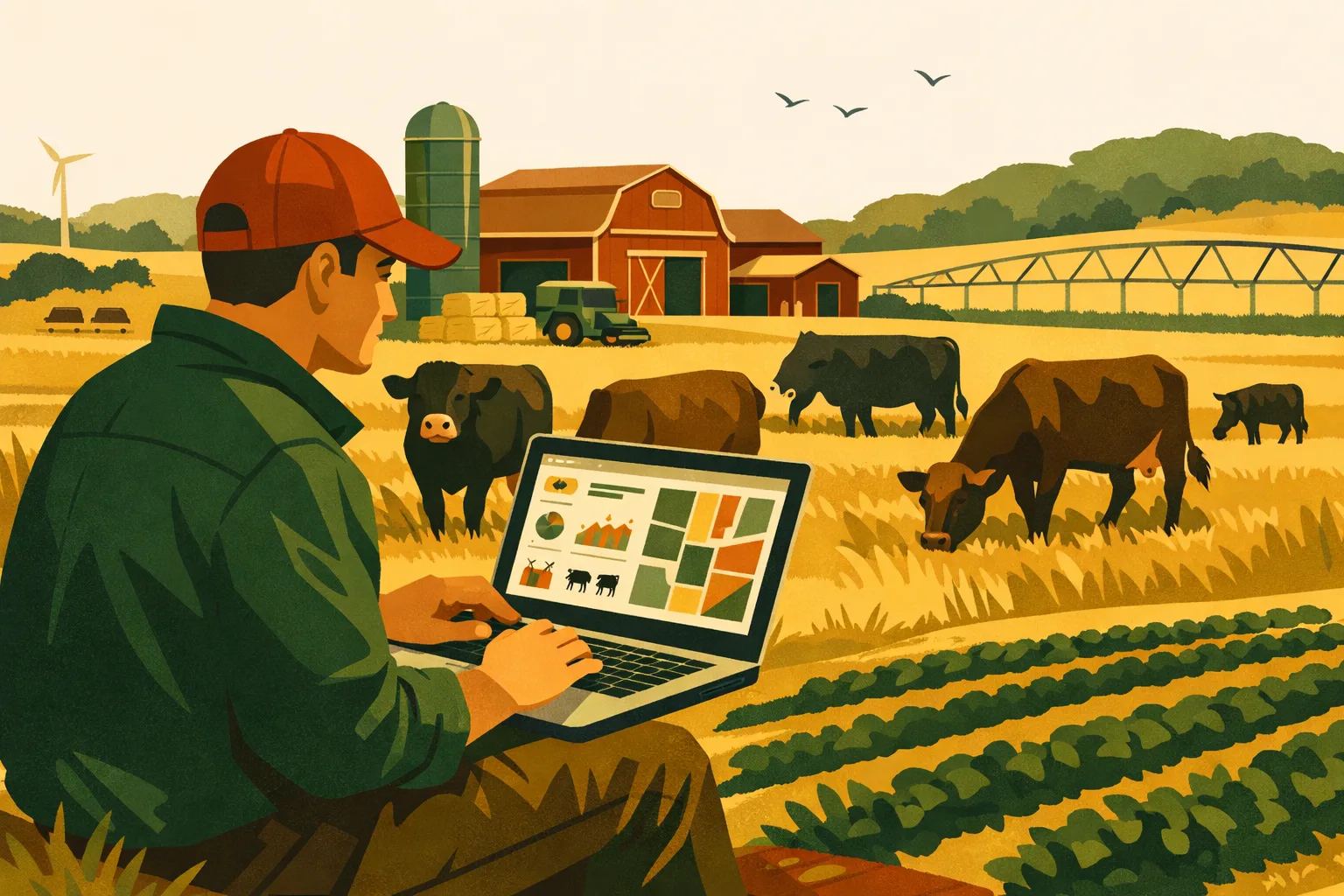
A farm operation can lose margin in small, quiet ways: a spray pass that was recorded late, a field activity that never made it to the office, a work order that depended on one person’s memory, or a season-end report built from three spreadsheets that do not match. The right software should reduce those gaps—not create a new layer of admin work.
For commercial farms, farm management software is no longer just a digital notebook. By 2026, it needs to support planning, field execution, labor coordination, input tracking, compliance documentation, cost control, and management reporting across real operating conditions.
The challenge is that many operations choose software based on feature lists, demos, or price alone. That can lead to expensive mistakes: low adoption, duplicate data entry, unreliable records, weak reporting, and workflows that still depend on spreadsheets.
This guide breaks down five common pitfalls to avoid when selecting or implementing farm management software for a commercial operation.
Why Farm Management Software Decisions Matter More in 2026
Commercial farm operators are dealing with tighter margins, more complex input decisions, labor constraints, retailer and processor documentation requirements, and pressure to make faster operational decisions. Whether you run 50 acres of specialty crops or 5,000+ acres of row crops, your software stack affects how quickly your team can answer basic management questions:
- What was done in each field, when, and by whom?
- Which inputs were applied, at what rate, and what did they cost?
- Are planned jobs on schedule?
- Which blocks or fields are driving margin?
- Are compliance records complete and easy to retrieve?
- Where are labor, fuel, equipment, and chemical costs creeping up?
A good system gives managers current, usable information. A poor system becomes another administrative burden.
For related planning guidance, see FarmsFlo’s guide on farm operations management and how to improve farm record keeping.
Quick Comparison: Common Software Pitfalls and Better Decisions
| Pitfall | What It Looks Like on the Farm | Operational Risk | Better Decision |
|---|---|---|---|
| Buying based on features instead of workflows | The system has many tools, but crews still text, call, or use paper | Low adoption, duplicate entry, incomplete records | Map your daily workflows before evaluating software |
| Ignoring data quality and ownership | Field names, crop records, and costs are inconsistent | Reports cannot be trusted | Standardize records and define who owns data entry |
| Underestimating mobile and offline use | Field teams cannot reliably use the system away from the office | Delayed updates and missing job records | Test mobile workflows under real farm conditions |
| Skipping implementation planning | Software is purchased but never fully rolled out | Wasted subscription cost and frustrated staff | Assign roles, training windows, and rollout phases |
| Choosing a tool that cannot scale | It works for one crop, one manager, or one season only | Rebuilding systems later becomes costly | Select software that supports growth, integrations, and reporting |
Pitfall 1: Buying Farm Management Software Based on Features Instead of Workflows
Feature lists can be misleading. Many farm management software platforms claim to handle planning, records, tasks, inventory, reporting, equipment, labor, and compliance. The real question is whether the software fits how your operation actually works.
A commercial farm is not a static office environment. Jobs change due to weather, labor availability, chemical windows, equipment downtime, and shifting crop priorities. Software must support that daily reality.
Why Feature-Based Buying Fails
A feature-based buying process usually starts with a checklist:
- Does it have field maps?
- Does it track spray records?
- Does it support inventory?
- Does it create reports?
- Does it have mobile access?
- Does it integrate with accounting?
Those are useful questions, but they are not enough. A platform may technically have a feature but still fail in practice if the workflow is slow, confusing, or disconnected from field operations.
For example, a spray record feature is only valuable if:
- The applicator or manager can enter the record quickly
- Products and rates are easy to select
- Weather conditions can be captured consistently
- The record links to the correct field, crop, block, and job
- The office can review or export the record without retyping it
If that process takes too long, the team will work around the system.
What to Do Instead
Start with operational workflows, not software features.
Document your core work processes before you evaluate vendors. For most commercial farms, that includes:
- Crop planning
- Field preparation
- Planting or seeding
- Irrigation scheduling
- Fertility applications
- Spray applications
- Scouting
- Harvest planning
- Labor assignment
- Equipment scheduling
- Inventory use
- Compliance record generation
- Cost tracking
- Season-end reporting
For each workflow, answer:
- Who starts the task?
- Who performs the task?
- What information do they need?
- Where are they when they need it?
- What data must be captured?
- Who reviews or approves it?
- What report or decision depends on it?
This exercise usually takes 3–8 hours for a mid-sized operation, depending on complexity. Larger operations may need 1–2 days with managers, agronomists, office staff, and crew leads.
Example: Better Workflow-Based Evaluation
Instead of asking, “Does this system have work orders?” ask:
- Can a manager create a spray job for 12 fields in under 10 minutes?
- Can the applicator see the job on a phone or tablet?
- Can the applicator update completion status from the field?
- Can the office see what is complete without calling?
- Can the completed job become a usable record without duplicate entry?
- Can the record be pulled later for compliance or cost review?
That kind of evaluation reveals whether the software will improve operations or simply digitize confusion.
Buying Signal to Watch
If a software demo spends most of its time showing dashboards but little time showing daily job execution, slow down. Dashboards are only useful if the field data feeding them is accurate, timely, and complete.
Pitfall 2: Ignoring Data Quality, Structure, and Ownership
Farm management software depends on clean data. If field names, crop names, input records, labor categories, and cost centers are inconsistent, reports become unreliable.
Many farms underestimate this problem because spreadsheets and paper systems hide inconsistencies. Once data moves into software, those gaps become visible.
Common Data Problems in Farm Operations
Commercial farms often have data issues such as:
- The same field listed under multiple names
- Crop varieties entered inconsistently
- Chemical products recorded by nickname instead of label name
- Input rates entered in different units
- Labor tracked by person in one system and by crew in another
- Equipment hours entered inconsistently
- Field boundaries that do not match current operations
- Historical records stored in separate spreadsheets
- No clear owner for updating master data
These issues do not just affect reports. They affect operational decisions.
If one manager records “North 40,” another records “N40,” and the office uses “Field 12,” your farm management software cannot reliably connect work, cost, yield, or compliance records to the same location.
Why Data Ownership Matters
Someone must own the core data structure. Without clear ownership, every user creates their own version of the truth.
Assign responsibility for:
- Field and block names
- Crop and variety lists
- Input product lists
- Equipment lists
- Employee and crew records
- Vendor records
- Cost categories
- Inventory units
- Standard job types
- Reporting periods
This does not mean one person enters every record. It means one person or small admin team controls the master data so the system stays consistent.
For a 50–500 acre operation, this may be the owner, farm manager, or office administrator. For 1,000–5,000+ acres, assign a dedicated operations admin, controller, or data lead.
Time and Cost Estimate for Data Cleanup
Before implementing farm management software, budget time for data preparation.
Typical internal time requirements:
- Small commercial operation, 50–250 acres: 4–10 hours
- Mid-sized operation, 250–1,500 acres: 10–30 hours
- Large or multi-location operation, 1,500–5,000+ acres: 30–80+ hours
The cost is mostly internal labor, but the real cost of skipping cleanup is poor reporting. If your software cannot produce trusted field-level records, managers will return to spreadsheets.
Practical Data Standards to Set Before Rollout
Create simple standards before go-live:
- Use one official field or block naming convention
- Use one crop and variety naming format
- Choose standard units for each input type
- Decide whether labor is tracked by person, crew, task, or all three
- Set required fields for completed jobs
- Define who can add or edit master records
- Decide how historical data will be handled
- Set naming rules for equipment and implements
- Define cost categories before entering expenses
A short data standards document can be created in 2–4 hours and will save time all season.
Red Flag During Software Evaluation
If a vendor cannot explain how your data will be structured, imported, cleaned, or maintained, the implementation risk is higher. Good farm management software should make it easier to standardize your operation—not create a messy database that nobody trusts.
Pitfall 3: Underestimating Mobile, Offline, and Field Crew Adoption
Farm management software often gets purchased by owners, managers, or office teams, but it succeeds or fails with field users.
If the people doing the work cannot use the system easily, records will be late, incomplete, or entered secondhand. That defeats the purpose.
Field Conditions Are Different From Office Conditions
A system may look good on a desktop demo but fail when used by:
- Applicators in machinery
- Irrigation crews moving between blocks
- Harvest supervisors managing labor
- Mechanics responding to breakdowns
- Scouts walking fields
- Managers with limited connectivity
- Seasonal employees who need simple task instructions
Field users need speed and clarity. They may be wearing gloves, working in dust, moving between jobs, or operating under time pressure. Software that requires too many clicks will not be used consistently.
Mobile Access Is Not Enough
Do not accept “we have a mobile app” as the full answer. Test whether the mobile workflow supports real farm tasks.
Ask:
- Can users access assigned jobs quickly?
- Can they update job status in the field?
- Can records be entered with limited typing?
- Does the app work with weak connectivity?
- Can photos, notes, or attachments be added?
- Can users see maps, instructions, and field details?
- Can permissions be limited by role?
- Can seasonal workers be onboarded quickly?
- Can the manager see updates without calling or texting?
For operations with poor cell coverage, offline capability or low-connectivity performance should be tested before purchase.
Adoption Costs Are Often Hidden
The subscription price is only one part of the cost. Adoption requires training, supervision, and changes to habits.
Plan for:
- 1–2 hours of training for managers
- 30–60 minutes for field crew leads
- 15–30 minutes for seasonal or limited-use workers
- 1–2 weeks of close monitoring after rollout
- Extra admin support during the first high-volume operational window
For a mid-sized farm, expect 5–20 hours of internal implementation and training time. For a multi-location operation, expect 20–60+ hours depending on staff count and workflow complexity.
How to Improve Crew Adoption
Adoption improves when software removes friction rather than adding it.
Use these rules:
- Keep field user screens simple
- Only require data that will be used
- Train by job type, not by software module
- Start with one or two workflows before expanding
- Use crew leads as champions
- Review records daily during the first rollout period
- Fix naming and data issues immediately
- Avoid asking crews to enter the same information twice
A good first rollout workflow is often spray records, irrigation tasks, scouting notes, or harvest labor tracking. Choose an area where better records will create immediate value.
For more practical field execution ideas, read FarmsFlo’s guide to farm task management.
Red Flag During Software Evaluation
If the system requires extensive office cleanup after every field update, adoption will suffer. The field-to-office workflow should be direct, simple, and reliable.
Pitfall 4: Skipping ROI, Cost Control, and Reporting Requirements
Farm management software should help improve management decisions. Yet many farms buy software without defining what success looks like.
That leads to a common problem: the software is used for recordkeeping, but managers still cannot clearly measure cost, performance, or operational efficiency.
Define the Business Case Before Buying
Before selecting software, identify the operational outcomes you expect. Examples include:
- Reduce duplicate data entry
- Improve spray and compliance documentation
- Track field-level input costs
- Improve labor planning
- Improve job completion visibility
- Standardize records across managers
- Reduce missed or late field activities
- Improve inventory visibility
- Support better crop and field margin analysis
- Reduce time spent preparing reports
Each outcome should connect to a management problem.
For example, “better reporting” is vague. “Generate field-level application reports without rebuilding spreadsheets” is specific.
What ROI Can Look Like on a Commercial Farm
Do not rely on generic software ROI claims. Build your own estimate based on current pain points.
Possible value areas include:
Administrative Time Savings
If the office currently spends several hours per week compiling field records, software may reduce manual entry and report preparation.
Estimate:
- Current hours per week spent on record entry and cleanup
- Hourly cost of admin or manager time
- Number of weeks per season
- Time that could be reduced by better workflows
Example structure:
Current weekly admin hours x labor cost x active weeks = current seasonal admin cost
Then estimate how much of that work the software can realistically reduce.
Better Input Tracking
If chemical, fertilizer, seed, or other inputs are not tracked by field, it is hard to evaluate field-level cost. Better input records can support tighter purchasing, inventory control, and cost review.
Track:
- Product used
- Rate
- Field or block
- Date
- Operator
- Equipment
- Cost category
- Related crop or variety
Labor Visibility
For labor-intensive operations, farm management software should help managers understand where labor is going.
Track:
- Crew assignments
- Job type
- Field or block
- Time spent
- Completion status
- Supervisor notes
- Productivity by task where relevant
Compliance and Audit Readiness
For operations subject to chemical application documentation, food safety records, processor requirements, or certification standards, complete digital records can reduce audit preparation stress.
The value is not only time saved. It is also the ability to retrieve accurate records quickly when needed.
Reports to Define Before Implementation
List the reports you need before you buy. Do not assume they will be easy to create later.
Common commercial farm reports include:
- Field activity history
- Crop input use by field
- Spray application records
- Fertility application records
- Irrigation activity logs
- Labor by crop, block, or task
- Equipment use by job
- Harvest activity records
- Inventory usage
- Cost by field or crop
- Compliance reports
- Season-end management summaries
For each report, identify:
- Who needs it?
- How often?
- What decisions depend on it?
- What data must be captured?
- Can the software produce it directly?
- Does it require export to another system?
Cost Estimate: Software Budgeting Beyond Subscription Fees
When budgeting for farm management software, include:
- Subscription or license cost
- Setup or onboarding fees
- Internal training time
- Data cleanup time
- Integration setup
- Mobile devices or tablets if needed
- Ongoing admin time
- Seasonal support needs
For many commercial operations, the internal time investment is the most underestimated cost. Even if the platform is easy to use, managers need time to configure workflows and train users.
A practical first-year budget should include both cash cost and staff time. If you only compare subscription prices, you may choose the cheapest option and pay more through poor adoption.
Red Flag During Software Evaluation
If the software demo cannot show how your key reports are produced from daily field activity, there may be a gap between data entry and management value.
Pitfall 5: Choosing Software That Cannot Scale With the Operation
Farm operations change. Acreage expands or contracts. Crop mix shifts. New managers join. Compliance requirements change. Equipment and labor needs evolve. A system that works for one season may not support the next stage of the business.
Scalability is not just about acreage. It is about operational complexity.
Signs Your Software May Not Scale
Watch for these limits:
- Only one person understands how to use it
- It depends heavily on spreadsheets outside the system
- It cannot handle multiple crops or locations cleanly
- It has weak user permissions
- It does not support role-based workflows
- Reporting breaks down when data volume increases
- It cannot export data in usable formats
- It does not integrate with other tools you rely on
- It lacks structured support or onboarding
- It cannot handle seasonal labor changes
A platform may work for a 100-acre single-manager operation but struggle with 1,000 acres, multiple crews, and several crop programs.
Scalability Questions to Ask Vendors
Before committing, ask:
- How does the system handle multiple farms, fields, blocks, or ranches?
- Can users have different permission levels?
- Can seasonal workers be added and removed easily?
- Can workflows be standardized across managers?
- Can data be exported if needed?
- Can reports be filtered by field, crop, season, manager, or location?
- What support is available during peak season?
- How are product updates communicated?
- What happens if our acreage doubles?
- Can the system support multiple crop types?
- How does it handle historical records?
The answers should be specific. Avoid vague assurances.
Integration and Data Portability
Most commercial farms use more than one tool. Your farm management software may need to work alongside:
- Accounting software
- Payroll systems
- Precision agriculture platforms
- Equipment telematics
- Inventory tools
- Weather systems
- Food safety or compliance platforms
- Crop consultant records
- Processor or buyer reporting systems
Not every operation needs every integration. But every operation should understand how data moves in and out of the system.
At minimum, evaluate:
- Export options
- File formats
- API availability if relevant
- Data ownership terms
- Backup and recovery options
- User access controls
- Security practices
Data portability matters because your records are part of your operating history. You should be able to access and use them.
Support During Peak Season
Farm software support is most valuable when operations are under pressure. If a system fails during planting, spraying, harvest, or audit preparation, delayed support can be costly.
Ask vendors:
- What support channels are available?
- What are typical response times?
- Is onboarding included?
- Is there live training?
- Is support available during your operating hours?
- Are help resources written for farm users?
- Can support help with workflow setup, not just technical issues?
Support quality often separates a usable system from shelfware.
Red Flag During Software Evaluation
If the platform feels built for a much smaller or simpler operation, it may limit your management team as the business grows. Choose farm management software that supports where the farm is going, not only where it is today.
Farm Management Software Buying Checklist for 2026
Use this checklist before purchasing or switching systems.
1. Map Your Current Workflows
- List your core field operations
- Identify who creates, performs, and reviews each task
- Document where records are currently captured
- Identify duplicate data entry points
- List recurring communication gaps
- Decide which workflows should be digitized first
Estimated time: 3–8 hours for most operations.
2. Define Your Data Structure
- Standardize field and block names
- Clean up crop and variety lists
- Standardize input product names
- Define units for each input type
- Create equipment and labor categories
- Assign a data owner
- Decide how much historical data to import
Estimated time: 4–30+ hours, depending on acreage, crop mix, and existing records.
3. Test Field Use
- Test the mobile app in actual field conditions
- Check weak signal areas
- Have a crew lead complete a sample task
- Time how long it takes to update a job
- Confirm photos and notes can be added
- Confirm managers can see updates quickly
- Verify seasonal users can be trained fast
Estimated time: 1–3 hours per shortlisted platform.
4. Define Required Reports
- List reports needed weekly, monthly, seasonally, and for compliance
- Confirm which daily records feed each report
- Ask vendors to demonstrate report creation
- Confirm export options
- Identify reports that require accounting or payroll data
- Decide who reviews reports and how often
Estimated time: 2–6 hours.
5. Build an Implementation Plan
- Choose a rollout leader
- Set a go-live date outside the most chaotic week of the season
- Start with one or two high-value workflows
- Train managers first
- Train field users by role
- Review records daily during the first rollout window
- Schedule a 30-day review
- Expand only after the first workflows are stable
Estimated time: 5–60+ hours, based on staff size and complexity.
6. Check Scalability
- Confirm the system supports your acreage and crop complexity
- Review user permissions
- Ask about multi-location support
- Check support availability
- Confirm data export options
- Understand pricing as users or acreage grow
- Review onboarding and training resources
Estimated time: 1–2 hours per vendor.
How to Evaluate Farm Management Software Vendors
Once you understand the pitfalls, evaluate vendors with a structured process.
Step 1: Create a Short Requirements Brief
Write a one-page brief that includes:
- Acres managed
- Crop types
- Number of users
- Number of locations
- Current tools used
- Current recordkeeping pain points
- Priority workflows
- Required reports
- Mobile and offline needs
- Compliance requirements
- Implementation timeline
Send this to vendors before demos. It will help you avoid generic presentations.
Step 2: Run the Same Demo Scenario With Each Vendor
Use one real operational scenario, such as:
“Create a spray task for multiple fields, assign it to an applicator, complete it from a mobile device, and generate a spray record report.”
Or:
“Assign irrigation checks to a crew, capture completion notes, and review outstanding tasks from the office.”
This makes comparisons practical. You will quickly see which systems fit your operation.
Step 3: Score Each Platform
Score each vendor from 1–5 on:
- Workflow fit
- Ease of field use
- Data structure
- Reporting
- Mobile performance
- User permissions
- Implementation support
- Scalability
- Export options
- Overall value
Do not let one impressive feature outweigh poor workflow fit.
Step 4: Involve the Right People
Include:
- Owner or general manager
- Farm manager
- Office administrator or controller
- Crop manager or agronomist
- Crew lead
- Equipment or operations lead
- Compliance or food safety lead if relevant
You do not need everyone in every demo, but field and office perspectives both matter.
Step 5: Pilot Before Full Rollout
If possible, pilot the software with:
- One crop
- One location
- One manager
- One or two workflows
- A defined test period
- Clear success criteria
A 2–4 week pilot can reveal adoption issues before the whole operation depends on the system.
Practical Implementation Timeline
A farm management software rollout does not need to take months, but it should be planned.
Week 1: Prepare
- Confirm goals
- Assign rollout lead
- Clean priority data
- Set field names and user roles
- Choose first workflows
Week 2: Configure
- Set up fields, crops, inputs, users, and equipment
- Build task templates or standard job types
- Configure reports
- Test mobile access
- Train managers
Week 3: Pilot
- Run live tasks through the system
- Collect feedback from field users
- Fix data issues quickly
- Review completed records
- Adjust workflows
Week 4: Expand
- Add more users or job types
- Review reporting accuracy
- Set weekly management review habits
- Document standard operating procedures
- Schedule a 30-day system review
Larger operations may stretch this to 6–10 weeks, especially if historical data migration, integrations, or multiple locations are involved.
What Better Outcomes Actually Look Like
Better outcomes from farm management software are practical and measurable. They usually show up as:
- Fewer calls and texts to confirm job status
- Cleaner field activity history
- Faster compliance reporting
- More consistent spray and input records
- Better visibility into labor and task completion
- Less duplicate data entry
- More confidence in field-level cost reports
- Faster onboarding for seasonal workers
- Better manager accountability
- A clearer operating picture during busy windows
The goal is not to create perfect data for its own sake. The goal is to run the operation with fewer blind spots.
A good farm management system should help managers make decisions faster, verify work more easily, and reduce the administrative drag that builds during the season.
Common Questions About Farm Management Software
What size farm needs farm management software?
Commercial farms of many sizes can benefit, but the need grows when operations involve multiple fields, crops, employees, equipment, input programs, or compliance requirements. A 50-acre specialty crop operation with high labor and audit needs may need strong software just as much as a 5,000-acre row crop operation.
Should we replace spreadsheets completely?
Not always immediately. Many farms use spreadsheets alongside software during transition. The key is to avoid duplicate systems long term. Your farm management software should become the primary source for operational records, while spreadsheets may still be used for analysis, budgeting, or specialized calculations.
When is the best time to implement software?
Avoid launching during your most chaotic operational window if possible. Pre-season planning, post-harvest review, or a quieter mid-season period often works better. If you must implement during a busy season, start with one workflow and expand gradually.
Who should manage the system internally?
Assign one accountable owner. This may be a farm manager, operations administrator, controller, or owner depending on the business. Larger operations should separate system administration from daily field data entry.
What is the biggest mistake farms make after buying software?
The biggest mistake is treating purchase as implementation. Buying software does not change operations by itself. You need workflow setup, data standards, training, and management follow-through.
How FarmsFlo Helps
FarmsFlo is built for commercial farm operators who need practical farm management software without adding unnecessary complexity. It helps teams organize field activities, manage tasks, improve records, and keep managers connected to what is happening across the operation.
With FarmsFlo, farms can:
- Create and manage field tasks
- Track work completion
- Improve operational visibility
- Keep records organized
- Reduce scattered communication
- Support field-to-office coordination
- Build more consistent workflows across teams
If your current system depends on spreadsheets, paper notes, texts, and memory, 2026 is the right time to tighten your operating process.
Start a FarmsFlo trial at farmsflo.com and see how better farm management software can support cleaner records, faster coordination, and stronger operational control.