3 Surprising Ways a Cattle Manager App Can Actually Transform Ranching Operations by 2026
Discover how a cattle manager app can revolutionize your ranch operations in 2026. Optimize workflows, enhance tracking, and boost productivity effectively.
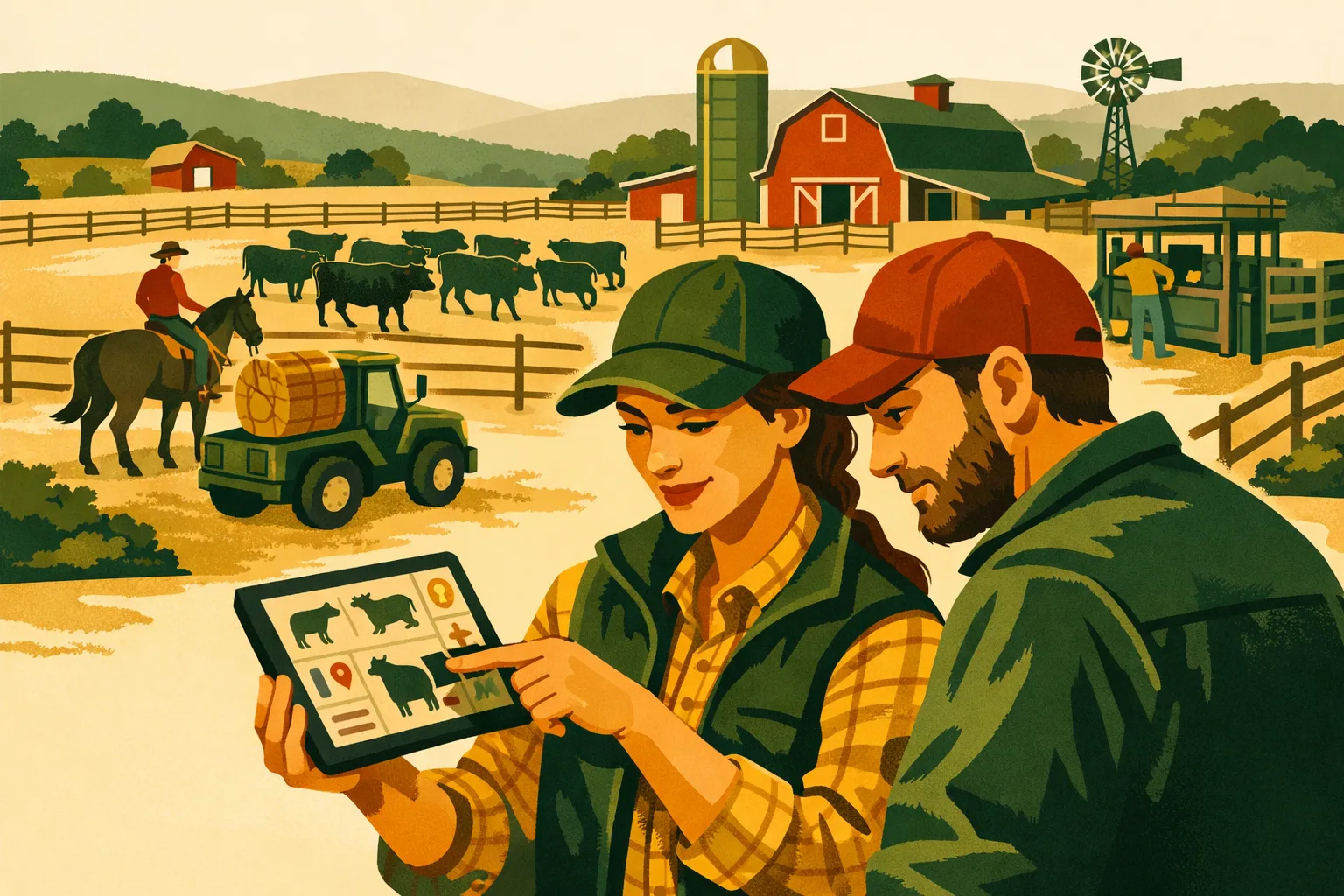
A ranch can look organized from the pickup window and still leak money through missed treatments, incomplete breeding records, delayed tasks, scattered inventory notes, and decisions made from memory. The problem is rarely effort. Most cattle operations already work hard. The gap is visibility: knowing what happened, what needs to happen next, who is responsible, what it cost, and whether the herd is moving the business in the right direction.
For commercial cattle producers, a cattle manager app is no longer just a digital replacement for a notebook. Used correctly, it becomes an operating system for the ranch: animal records, labor coordination, inventory, maintenance, compliance, grazing moves, and financial decisions all connected in one workflow.
Below are three unexpected ways a cattle manager app can improve ranch performance by 2026, especially for operations managing 50 to 5,000+ acres and needing tighter control without adding unnecessary office work.
Why Cattle Operations Are Moving Beyond Paper and Spreadsheets
Paper records, whiteboards, text threads, and spreadsheets can work when the operation is small, the crew is limited, and the manager is involved in every decision. But commercial ranching introduces more moving parts:
- Multiple pastures or grazing units
- Several people handling livestock, equipment, and feed
- Calving, breeding, weaning, vaccination, and treatment schedules
- Purchased feed, mineral, fuel, parts, and veterinary supplies
- Compliance requirements for treatments, withdrawal periods, and animal movement
- Equipment that must be serviced before breakdowns cost working days
- Decisions that depend on accurate cost and performance history
The issue is not that paper records are useless. The issue is that they are slow to retrieve, hard to analyze, easy to lose, and usually disconnected from daily work.
A cattle manager app gives ranch managers one place to capture and use operational information. That is where the value compounds.
If you are comparing broader platforms, FarmsFlo also has guides on farm management software, farm record keeping, and farm task management that pair well with this article.
What a Cattle Manager App Should Actually Manage
Before looking at the three transformation areas, it helps to define what a useful cattle manager app should cover at commercial scale.
A strong cattle management system should support:
- Individual animal and group records
- Breeding, pregnancy, calving, and weaning data
- Health events, treatments, vaccines, and withdrawal periods
- Pasture moves and grazing notes
- Feed, mineral, medicine, and supply inventory
- Work orders and task assignments
- Equipment maintenance and repair logs
- Costs by herd, group, field, enterprise, or season
- Mobile access for field crews
- Reporting for management decisions
Some cattle apps focus narrowly on animal records. That can help, but ranch operations are broader than the herd file. The best results come when livestock records connect to labor, inventory, maintenance, and cost tracking.
Comparison: Paper, Spreadsheets, Generic Apps, and a Cattle Manager App
| System | Best Fit | Strengths | Limitations | Commercial Ranch Use Case |
|---|---|---|---|---|
| Paper notebooks | Very small crews or temporary notes | Fast, familiar, no software cost | Hard to search, easy to lose, no reporting, poor team visibility | Useful as backup, not ideal as the main system |
| Spreadsheets | Managers comfortable with manual data entry | Flexible, inexpensive, customizable | Version control issues, weak mobile use, no built-in reminders, limited field workflow | Works for cost summaries but struggles with day-to-day execution |
| Generic task apps | Basic crew coordination | Simple task lists and reminders | Not built for livestock records, treatments, withdrawal periods, or farm inventory | Helpful for non-livestock chores but incomplete for cattle operations |
| Cattle manager app | Commercial ranches needing connected records | Livestock data, tasks, health records, inventory, reports, mobile access | Requires setup and crew adoption | Best fit for operations that want repeatable systems and better decisions |
| Full farm operations platform | Diversified farms and ranches | Connects cattle, crops, equipment, people, inventory, and costs | Needs thoughtful implementation | Strong fit for ranches managing multiple enterprises or locations |
The key question is not whether a notebook, spreadsheet, or app can store information. The question is whether the system helps the crew act faster, reduce missed work, and make better decisions.
1. It Turns Animal Records Into Daily Operating Instructions
Most ranchers think of cattle records as something used after the work is done: birth dates, dam numbers, weights, vaccinations, preg-check results, treatment history, and sale notes.
That is useful, but limited.
The bigger shift happens when those records drive daily action.
A cattle manager app can turn herd data into work instructions, reminders, and management decisions. Instead of looking back at what happened, the app helps the team know what should happen next.
From Static Records to Actionable Herd Management
A static record says:
- Cow 418 calved on March 12
- Calf 418A was tagged
- Calf received initial vaccine
- Cow was treated for foot rot last season
An operational record helps answer:
- Which calves are due for processing this week?
- Which cows need recheck after treatment?
- Which pairs should move to the next pasture?
- Which calves are approaching weaning weight targets?
- Which animals are still inside withdrawal periods?
- Which bred cows need closer monitoring based on past issues?
That is a different level of management.
Instead of relying on memory, a cattle manager app gives the ranch a forward-looking task list based on real herd data.
Examples of Daily Workflows Improved by a Cattle Manager App
Commercial cattle operations can use app-driven records for:
Calving Season
During calving, speed and accuracy matter. A good system helps crews record:
- Cow ID
- Calf ID
- Birth date
- Sex
- Calving ease
- Pasture or location
- Treatment or assistance
- Notes on mothering ability
- Death loss, if applicable
- Follow-up tasks
The value is not just having cleaner records. It is being able to sort, filter, and act.
For example, the manager can quickly see which assisted births need follow-up, which pairs are ready to move, and which calves still need tagging or processing. That reduces missed steps during the busiest weeks of the year.
Breeding and Pregnancy Management
Breeding data often gets scattered across calendars, vet sheets, AI records, and handwritten notes. A cattle manager app can centralize:
- Bull turnout dates
- AI dates
- Exposure groups
- Preg-check results
- Open cows
- Expected calving windows
- Cull candidates
- Replacement heifer notes
That makes it easier to evaluate breeding groups and make culling decisions based on records instead of impressions.
Health Treatment and Withdrawal Tracking
Health records are one of the strongest reasons to digitize. Treatment details matter for compliance, marketing, and animal welfare.
A cattle manager app should record:
- Animal or group treated
- Date
- Product used
- Dosage
- Route of administration
- Reason for treatment
- Person responsible
- Withdrawal period
- Follow-up date
- Outcome
This is especially valuable when multiple people treat cattle. The app reduces the risk of duplicated treatments, forgotten follow-ups, or sale decisions made without checking withdrawal status.
For more on organizing operational records, see FarmsFlo’s guide to farm record keeping.
Time Estimate: Setting Up Herd Records
A commercial cattle operation can usually phase setup instead of trying to digitize everything at once.
Estimated setup time:
- Basic herd import: 2–6 hours, depending on herd size and record quality
- Tag and group structure: 1–3 hours
- Health product list: 1–2 hours
- Breeding groups and pastures: 1–4 hours
- Crew training: 1–2 short sessions
The time investment is manageable if you start with active animals and current-season priorities. Historical data can be added later as needed.
Cost Considerations
Actual software costs vary by platform, number of users, and feature set. When evaluating cost, look beyond the subscription price and consider:
- Hours spent searching records
- Missed treatments or duplicated work
- Delayed marketing decisions
- Incomplete compliance documentation
- Time spent building reports manually
- Lost knowledge when an employee leaves
A cattle manager app should pay for itself by reducing avoidable mistakes and improving management speed. The clearest return often comes during calving, breeding, treatment, and sale preparation periods.
2. It Connects Cattle, Crew, Inventory, and Equipment Instead of Managing Them Separately
The second surprising benefit is that a cattle manager app can improve more than animal records. The strongest platforms connect livestock work with the operational resources required to complete it.
Ranch work is connected in real life. Software should reflect that.
When the crew vaccinates calves, the job involves:
- Cattle groups
- People
- Vaccine inventory
- Syringes and supplies
- Working facilities
- Equipment
- Time
- Weather
- Follow-up records
- Costs
If these pieces are tracked separately, the ranch manager has to mentally connect them later. That creates delays and blind spots.
Why Disconnected Systems Create Management Drag
Many commercial operations use a mix of:
- Cattle notebook
- Vet invoices
- Feed receipts
- Fuel card statements
- Equipment repair notes
- Text messages
- Whiteboard task lists
- Calendar reminders
- Spreadsheets
Each system may work individually. The problem is that none of them tells the whole story.
For example, if calves were processed last week, you may need to know:
- Which crew members were there?
- How long did it take?
- What vaccine lot was used?
- How much product remains?
- Were any calves missed?
- Did the chute need repair afterward?
- Was the job completed under budget?
- What should change next time?
A cattle manager app that connects records, tasks, inventory, and equipment helps the manager answer these questions without reconstructing the job from memory.
Inventory Management: One of the Most Overlooked Benefits
Inventory control is often treated as a feed room issue, not a management issue. But on a ranch, inventory affects animal health, labor planning, and purchasing.
A cattle manager app or farm operations platform can track:
- Vaccines
- Antibiotics
- Dewormers
- Mineral
- Feed
- Ear tags
- Needles and syringes
- Salt
- Fuel
- Parts
- Fencing supplies
When inventory is tied to tasks, the system can show what was used and what needs reordering.
That reduces problems like:
- Running short on vaccine during processing
- Buying duplicate supplies because no one knows what is on hand
- Letting products expire unnoticed
- Delaying repairs due to missing parts
- Losing track of high-value veterinary products
For a deeper look at this area, read the FarmsFlo guide to farm inventory management.
Equipment Maintenance Becomes Part of the Ranch Workflow
Cattle operations depend on equipment:
- Tractors
- Feed trucks
- ATVs and UTVs
- Stock trailers
- Bale processors
- Hydraulic chutes
- Scales
- Water systems
- Fencing tools
Breakdowns rarely happen at convenient times. A cattle manager app with equipment tracking can help schedule maintenance before the failure happens.
Useful maintenance records include:
- Equipment ID
- Service intervals
- Repairs completed
- Parts used
- Labor time
- Downtime
- Next service date
- Notes from operators
The practical value is simple: the manager can assign service tasks before the busy season, track repair history, and decide when equipment is becoming too costly to keep.
See FarmsFlo’s related guide on equipment maintenance logs if equipment downtime is a recurring issue on your operation.
Crew Coordination Without Endless Phone Calls
A cattle manager app becomes more valuable as the team grows. When two or three people are making decisions in the field, clear task ownership matters.
A good system should help assign:
- Who is moving cattle
- Who is checking water
- Who is treating a sick animal
- Who is hauling feed
- Who is fixing fence
- Who is prepping the working facility
- Who is ordering supplies
- Who is confirming completion
Tasks should include enough detail that the person doing the work does not need to call the manager for every instruction.
For example:
Move pairs from North 80 to Creek Pasture after checking water. Record head count, note fence condition at south gate, and confirm mineral tub level.
That task is much more useful than:
Move cows.
The app becomes the communication layer between management and field execution.
Cost and Time Estimate: Connecting Operations
Expect implementation to take longer if you want to connect inventory, equipment, and labor in addition to cattle records. That said, you can phase the work.
Practical setup estimate:
- Inventory categories: 2–4 hours
- Key supply counts: 2–6 hours
- Equipment list: 1–3 hours
- Maintenance schedules: 2–4 hours
- Task templates: 2–5 hours
- Crew permissions and training: 1–3 hours
This is usually best done over a few weeks, not one long office day. Start with the highest-value workflows: treatments, calving, feeding, pasture moves, and equipment service.
3. It Makes Ranch Decisions Faster Because Data Is Ready When You Need It
The third transformation is decision speed.
Ranch managers make constant decisions:
- Which cows should be culled?
- Should we retain more heifers?
- Which pasture should be rested?
- Is a feed change justified?
- What animals are ready to market?
- Which enterprise is carrying the most cost?
- Which equipment is costing too much?
- Where is labor time going?
- Should we expand the herd or improve current performance first?
A cattle manager app helps by keeping decision data current.
The goal is not to create more reports for the sake of reporting. The goal is to shorten the distance between field activity and management action.
Better Culling Decisions
Culling is one of the most practical areas where records matter.
A manager can use the app to identify cows with:
- Late calving history
- Open preg-check result
- Repeated treatment issues
- Poor mothering notes
- Calving difficulty
- Low-performing calves
- Structural concerns
- Age-related decline
Without records, these decisions depend heavily on memory and visual judgment. Those still matter, but digital records give the manager a better basis for ranking animals.
A cattle manager app can also help prepare sale lists more efficiently by filtering animals based on criteria rather than sorting through handwritten records.
Better Marketing Preparation
Before sale day, managers often need to confirm:
- Animal IDs
- Weights
- Treatment history
- Withdrawal status
- Group history
- Weaning dates
- Vaccination program
- Ownership details
- Transport readiness
When these records are organized, the ranch can respond faster to buyers, vets, transporters, and internal stakeholders.
For commercial operations, this readiness is an advantage. It communicates professionalism and reduces last-minute scrambling.
Better Cost of Production Visibility
A cattle manager app becomes especially powerful when it connects work to cost categories.
Useful cost tracking may include:
- Feed
- Mineral
- Veterinary products
- Custom work
- Fuel
- Labor
- Repairs
- Pasture inputs
- Purchased cattle
- Breeding costs
- Death loss
- Trucking
- Marketing costs
The manager does not need perfect accounting inside the cattle app. But they do need enough operational cost visibility to understand trends and support decisions.
For example:
- Are feed costs rising because of price, usage, waste, or herd size?
- Which group required the most treatments?
- Are repairs concentrated around one machine?
- How much labor is tied up in winter feeding?
- Which pasture improvements are reducing future workload?
For more detail, see FarmsFlo’s guide to farm cost of production.
Better Grazing and Pasture Decisions
A cattle manager app can support grazing management by recording:
- Pasture entry and exit dates
- Head count by group
- Grazing notes
- Water issues
- Fence issues
- Forage observations
- Weather-related notes
- Rest periods
- Supplemental feed events
Even simple pasture records can improve planning.
If a manager can look back and see when each pasture was grazed, what group was there, and what issues occurred, next season’s plan becomes easier to adjust.
This is especially helpful for ranches managing rotational grazing, leased ground, drought risk, or multiple cattle classes.
Faster Reporting for Lenders, Partners, and Advisors
Commercial ranch managers often need to share information with:
- Lenders
- Accountants
- Veterinarians
- Nutritionists
- Landowners
- Business partners
- Family ownership groups
- Insurance providers
- Buyers
If records are scattered, reporting becomes a major time drain. A cattle manager app can make it easier to pull current information without rebuilding the ranch history from invoices and notebooks.
This is not just administrative convenience. Faster reporting can support financing discussions, enterprise analysis, herd health planning, and succession conversations.
What to Look for When Choosing a Cattle Manager App
Not every cattle manager app is built for commercial operations. Some are designed for small herds, show cattle, or hobby use. A farm-scale operation needs software that can support real workflows without creating extra data entry burden.
Mobile Field Access
Ranch records are created in the field, not just at a desk. The app should work well on phones or tablets so crews can enter information when the work happens.
Look for:
- Simple mobile interface
- Fast task completion
- Animal lookup
- Treatment entry
- Notes and photos
- Offline-friendly workflows if service is unreliable
- Easy syncing when back in coverage
If data entry is too slow, the crew will stop using it.
Flexible Animal and Group Tracking
Some cattle work is individual-animal based. Other work is group-based.
The app should support both.
Individual records are useful for:
- Breeding stock
- Registered or seedstock animals
- Replacement heifers
- Treatment cases
- Cull decisions
- High-value animals
Group records are useful for:
- Stockers
- Commercial calf groups
- Pasture groups
- Feed groups
- Processing events
- Marketing lots
For commercial ranching, forcing every event into individual records can waste time. The right app lets the manager choose the right level of detail.
Task and Workflow Management
A cattle manager app should not only store data. It should help work get done.
Look for features such as:
- Task assignment
- Due dates
- Priority levels
- Recurring tasks
- Completion tracking
- Notes and attachments
- Task templates
- Crew accountability
Common recurring tasks include:
- Water checks
- Mineral checks
- Fence inspection
- Feed delivery
- Treatment follow-up
- Calving checks
- Equipment service
- Pasture moves
For more guidance, FarmsFlo’s article on farm task management covers how to structure task systems for farm teams.
Inventory and Input Tracking
Inventory features are valuable when they connect to real use.
Look for:
- Product lists
- Quantity on hand
- Usage records
- Reorder notes
- Expiration dates
- Lot or batch information where needed
- Storage location
- Cost tracking
This is especially useful for veterinary products, feed, mineral, and repair parts.
Reporting That Supports Decisions
Reports should help answer operational questions quickly.
Useful reports might include:
- Calving records
- Open cow list
- Treatment history
- Withdrawal status
- Inventory usage
- Pasture movement history
- Labor task completion
- Equipment maintenance history
- Cost by enterprise or group
- Sale preparation reports
Avoid systems that collect data but make it difficult to extract useful information.
Ease of Adoption
A cattle manager app only works if the crew uses it.
Evaluate:
- How many taps it takes to complete a common task
- Whether older and younger employees can use it
- How permissions work
- Whether data entry can be standardized
- How easy it is to correct mistakes
- Whether managers can review work without micromanaging
The best app is not always the most complex. It is the one your operation can use consistently.
Practical Checklist: How to Implement a Cattle Manager App Without Disrupting the Ranch
Use this checklist to roll out a cattle manager app in a way that improves operations instead of overwhelming the team.
Phase 1: Define the Business Goals
Before entering data, decide what the system must improve.
Choose 3–5 priorities:
- Reduce missed health follow-ups
- Improve calving records
- Track withdrawal periods
- Standardize pasture moves
- Improve feed and mineral inventory
- Assign crew tasks more clearly
- Track equipment service
- Prepare sale groups faster
- Improve culling decisions
- Understand cost by herd or enterprise
Do not try to fix every process at once.
Phase 2: Clean Up Current Records
Gather current records from:
- Notebooks
- Spreadsheets
- Vet sheets
- Sale records
- Breeding records
- Inventory lists
- Equipment logs
- Crew calendars
Decide what is worth importing now.
A practical starting point:
- Active cows, bulls, heifers, and calf groups
- Current pasture groups
- Current treatment records
- Current breeding exposure groups
- Key inventory items
- Main equipment assets
- Current employee or crew list
Leave old historical records for later unless they directly affect current decisions.
Phase 3: Build a Simple Structure
Set up standard categories:
- Herd groups
- Pastures
- Animal classes
- Treatment products
- Feed and mineral items
- Equipment units
- Task types
- Cost categories
- Crew roles
Standard naming prevents messy reports later.
For example, choose one format for pasture names and stick with it. Do not let one person enter “North 80,” another enter “N80,” and another enter “north pasture.”
Phase 4: Start With High-Frequency Workflows
Begin with tasks the crew already does often:
- Calving entries
- Treatment records
- Water checks
- Mineral checks
- Pasture moves
- Feed deliveries
- Equipment service
High-frequency workflows build the habit faster than rare events.
Phase 5: Train the Crew on Real Scenarios
Avoid long software demonstrations. Train using actual ranch jobs.
Examples:
- “Enter a sick calf treatment.”
- “Assign a fence repair.”
- “Record a pasture move.”
- “Check vaccine inventory.”
- “Mark a water check complete.”
- “Find a cow’s calving history.”
Keep training focused on the few actions each person needs to perform.
Phase 6: Review Weekly for the First Month
For the first 30 days, review:
- Missed tasks
- Duplicate entries
- Confusing categories
- Crew questions
- Data entry problems
- Reports that are useful
- Reports that need cleanup
Adjust the system quickly before bad habits become normal.
Phase 7: Expand After the Core Workflow Works
Once the team is using the app consistently, expand into:
- Cost tracking
- More detailed inventory control
- Equipment repair analysis
- Grazing history
- Sale preparation reports
- Enterprise performance review
Implementation works best when the app becomes part of daily ranch work, not a side project.
Common Mistakes That Reduce the Value of a Cattle Manager App
A cattle manager app can deliver strong operational value, but only if it is implemented with discipline.
Mistake 1: Digitizing Bad Processes
If the current workflow is unclear, software will not fix it automatically.
For example, if no one knows who is responsible for treatment follow-up, entering treatments into an app will not solve the accountability problem. The app should support a clear process.
Define:
- Who records the event
- Who receives the follow-up task
- Who verifies completion
- Who reviews exceptions
Mistake 2: Tracking Too Much Too Soon
Managers sometimes try to track every possible detail from day one. That can overload the crew and lead to poor adoption.
Start with data that changes decisions.
Good starting data:
- Animal ID or group
- Date
- Location
- Action performed
- Product used, if applicable
- Person responsible
- Follow-up date
- Notes only when useful
You can add more detail once the core habit is established.
Mistake 3: Letting Everyone Name Things Differently
Inconsistent names create messy reporting.
Create standard lists for:
- Pastures
- Animal groups
- Products
- Equipment
- Task types
- Cost categories
This small step saves hours later.
Mistake 4: Using the App Only in the Office
If field crews do the work but office staff enter the records days later, information becomes less accurate. Whenever possible, capture data close to the moment of work.
Mobile access is one of the biggest advantages of a cattle manager app. Use it.
Mistake 5: Not Reviewing the Data
Data has value only if managers use it.
Schedule recurring reviews:
- Daily during calving or processing
- Weekly during normal operations
- Monthly for inventory and maintenance
- Seasonally for breeding, weaning, culling, and cost review
The review rhythm turns records into management.
Practical Use Cases by Ranch Type
Different cattle operations will get value from different features. The right setup depends on the enterprise.
Cow-Calf Operations
A cow-calf operation should prioritize:
- Cow and calf records
- Calving events
- Breeding groups
- Pregnancy status
- Treatment history
- Weaning records
- Cull lists
- Pasture moves
- Mineral and feed inventory
The biggest wins usually come from calving accuracy, health follow-up, culling decisions, and sale preparation.
Stocker Operations
A stocker operation should prioritize:
- Group records
- Receiving information
- Treatment protocols
- Weight records
- Pasture assignments
- Feed and supplement usage
- Death loss tracking
- Marketing groups
- Cost by group
The app should make it easy to manage cattle by lot or group without excessive individual entries.
Backgrounding and Feeding Operations
These operations should focus on:
- Group intake records
- Feed inventory
- Ration notes
- Health treatments
- Pen or pasture movements
- Labor tasks
- Equipment reliability
- Performance notes
- Sale readiness
Inventory and cost tracking become especially valuable when feed and health inputs are frequent.
Diversified Farms With Cattle and Crops
For farms running both cattle and crops, a narrow cattle-only app may not be enough. A full farm operations platform can connect:
- Livestock tasks
- Crop production work
- Equipment schedules
- Labor planning
- Input inventory
- Field records
- Cost tracking
That is where a platform like FarmsFlo can be useful because it supports the broader operation, not just the herd file.
What Results Should You Expect by 2026?
By 2026, cattle operations using a well-implemented cattle manager app should expect better control in several practical areas:
- Faster access to animal and group history
- Fewer missed follow-up tasks
- Cleaner health and treatment records
- Better crew accountability
- More reliable inventory visibility
- Less time spent searching for information
- More consistent equipment maintenance
- Faster sale preparation
- Better culling and breeding decisions
- Clearer cost visibility across the operation
These outcomes are realistic because they come from better workflow, not from guessing at future technology.
The ranch still needs good people, good judgment, and good stockmanship. The app simply gives those people better information at the right time.
Buyer’s Guide: Questions to Ask Before Choosing a Cattle Manager App
Before committing to a platform, ask practical questions.
Operational Fit
- Does it support both individual and group records?
- Can it handle multiple pastures, locations, or enterprises?
- Can tasks be assigned to crew members?
- Does it support recurring work?
- Can it track inventory and equipment?
- Is it useful for both cattle and broader farm operations?
Field Usability
- Can crew members use it from a phone?
- Is data entry fast enough during busy work?
- Can users add notes, photos, or updates from the field?
- Does it reduce calls and texts, or add more confusion?
Management Reporting
- Can you quickly find treatment history?
- Can you see incomplete tasks?
- Can you prepare sale or cull lists?
- Can you review inventory usage?
- Can you track maintenance history?
- Can you export or share reports when needed?
Implementation
- How long will setup take?
- Can existing records be imported?
- Who will manage categories and permissions?
- What training is needed?
- Can you start simple and expand later?
Long-Term Value
- Will this platform still fit if you add acres, cattle, employees, or enterprises?
- Does it replace several disconnected systems?
- Will it help managers make decisions faster?
- Does it support daily execution, not just record storage?
A good cattle manager app should not feel like another office chore. It should become part of how work is planned, completed, and reviewed.
How FarmsFlo Helps
FarmsFlo helps commercial farm and ranch teams bring cattle records, tasks, inventory, equipment, and operational planning into one practical system.
Instead of managing the ranch through notebooks, spreadsheets, text messages, and disconnected apps, FarmsFlo gives managers a centralized place to:
- Assign and track ranch tasks
- Manage livestock-related workflows
- Record field and operational activity
- Track inventory and supplies
- Organize equipment maintenance
- Improve communication across the crew
- Review work completed across the operation
- Build more consistent farm and ranch processes
For cattle operations, that means your app can support more than animal records. It can help coordinate the real work behind the herd: people, supplies, equipment, timing, and follow-through.
If you are ready to see how a cattle manager app can improve daily ranch execution, start a FarmsFlo trial at farmsflo.com and build a more organized operation before the next busy season.